Browse Questions and Answers
Avg response: 24 HrsFilter Questions
20 of 14228 results
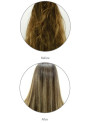
I am seeking assistance to improve my hair straightening formula. Currently, my formula consists of the following ingredients and percentages: * Water: `30.8%` * EDTA: `0.22%` * Betaine: `2.5%` * Silk protein: `1.0%` * Glycerin: `1.64%` * Acrylate (acrylic): `6.0%` * Hair Cond 0949: `1.0%` * Cyclopentasiloxane: `2.0%` * Microquat 16: `2.0%` * Bis-aminopropyl (silicone): `1.0%` * Clear Cond: `0.6%` * Phynyl trimethicone: `0.6%` * Glyoxyloyl 5%: `5.0%` * Glyoxylic acid (50%): `40.0%` * Preservative: `0.6%` * Fragrance: `0.72%` Despite using an 'acid cream maker' to thicken the formula, the texture is *not* like a cream. Furthermore, after washing the hair, it appears dull, lacks shine and hydration, and the straightening effect is very low. I observed that the hair was shiny immediately after applying the formula, but after washing the formula out (before ironing), drying the hair, and then applying the iron, there was no shine. I need to fix this formula to achieve the following: * `100%` straight hair. * A cream-like texture. * Maximum shine and hydration. * Hair repair benefits.
I would like to know if `Mineral Oil Gel (Thixotropic, e.q. Versagel M)` can be used in conjunction with `Hectorite Gel™` in a formulation. What are the considerations or benefits of combining these two ingredients?
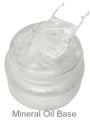
I have a `Mineral Oil Gel` (Thixotropic, e.g., `Versagel M`). I would like to make its texture thicker. What waxes or thickening agents can I add to achieve this?
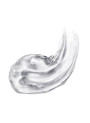
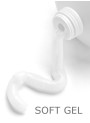
A customer is seeking advice on modifying the preservative system of AquaForce™ products. They intend to: * Replace the existing preservatives, which include `Phenoxyethanol`, `Chlorphenesin`, and `Sodium Benzoate`. * Substitute these with `pentylene glycol`, `1,2-hexanediol`, or `caprylyl glycol`. * Add their own primary preservative to the final formulation. What are the implications and recommendations for this modification?
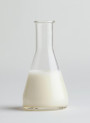
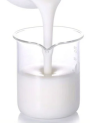
I am looking to experiment with using `Stabilized Mixed Enzyme (for laundry, Liquid)` in a laundry detergent formulation. I have several questions regarding its properties and usage: 1. **Preservation and Shelf Life:** * If I incorporate this enzyme into a laundry detergent, do I need to add a preservative? * What is the expected shelf life in months once it has been added to the laundry detergent? 2. **Scent:** * Does `Stabilized Mixed Enzyme` have an inherent scent? * Will I need to add additional fragrance to my detergent? 3. **Combining with Powder Enzymes:** * If I want to enhance specific performance aspects, can I add powder enzymes such as `Lipase Enzyme (Washing/Cleaning, Powder)` and `Protease Enzyme (for Washing/Cleaning, Powder)` alongside the `Stabilized Mixed Enzyme`? 4. **Key Performance Areas:** * What are the main strengths of your `Stabilized Mixed Enzyme` formula for laundry applications? 5. **Enzyme Ratios:** * Is it possible to know the ratio of each individual enzyme within the `Mixed Enzyme` formula to understand its prominent properties? 6. **Specific Benefits:** * Can the `Mixed Enzyme` help with the following specific concerns: * Reducing musty odors when drying clothes indoors? * Reducing sweat odors? * Making fabrics softer? * Maintaining fabric brightness?
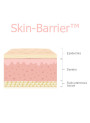
I would like to request a detailed guide for formulating a cream using the following two products: * `Skin-Barrier™ (Skin Mimic Ceramides Liposome)` * `Skin Barrier Cream Base (Emulsifier Free)` As I am currently ordering these ingredients for mixing, I would appreciate additional information to ensure proper formulation. Please provide guidance on the following: * What are the specific conditions for mixing these two ingredients? * What are the recommended mixing quantities or ratios for each product? * Which thickeners can be used in conjunction with this formulation? * What should be the target final pH of the cream? * What is the recommended mixing method (e.g., cold process or hot process)? * Are there any specific precautions or considerations to be aware of during the formulation process?

I would like to inquire about `Hydroxypropylmethyl Cellulose Phthalate (HPMCP, 170cP)`. * Is it soluble? * What percentage of alcohol is required for dissolution (specifically Ethanol, or what type of alcohol is recommended)? * Could you provide recommendations for mixing the solution, including: * Recommended temperature * Stirring method * Soluble concentration * This is for its use as a coating in cosmetics or food. Please provide technical details and precautions for dissolution.
I am seeking information on a specific type of silica that can effectively encapsulate water and subsequently release it upon application. Could you please advise on: * Which type of silica is suitable for this purpose? * How this silica functions to encapsulate and release water? * Its application in formulations, particularly for 'powder-to-cream' products where the powder transforms into a creamy texture when spread on the skin?
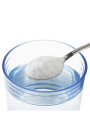
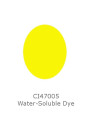
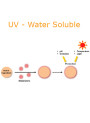
I am encountering a problem with my dishwashing liquid: the color fades over time when the product is displayed in open, sun-exposed retail environments. Currently, I am using food-grade colorants from Best Odour (which are safe for consumption). I would like to consult and request recommendations for alternative colorants that can resolve this issue. I am looking for colors that are: * Safe for the body * Light-stable * Sun-resistant Specifically, if you have **lemon yellow** and **apple green** colors that meet these criteria, I would primarily switch my orders to your store.

Which type of silica can encapsulate oil into a powder form that can then revert back to oil?
Which type of silica should be used to reduce the stickiness of massage oil?
I am formulating a **waterproof sunscreen cream** that is **fragrance-free**. However, the formulation has an unpleasant odor originating from the chemical ingredients, sunscreen agents, and extracts used in the formula. What methods or ingredients can be used to effectively reduce these unwanted odors?
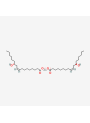

I am working with `Sugarcane Extract (98% Policosanol, 80% Octacosanol)` and encountered an issue where it did not dissolve in `Propylene Glycol (PG)` as per the initial instructions. Could you please provide detailed guidance on the optimal dissolution methods and suitable solvents for this extract, ensuring good solubility in cosmetic formulations? Specifically, I need to know: * What exact temperature is required for dissolution? * Which solvents are recommended (e.g., ethanol, specific oils, or types of glycols such as `Ethoxydiglycol`, `Butylene Glycol`, `Propylene Glycol`)? * If a solubilizer is needed, what type should be used? * What are the approximate ratios for the extract to the solvent? * A step-by-step mixing procedure for both: * **Oil-Free Formulations:** Including details on heating the extract/glycol mixture and the water phase, and the role of heat-activated cream makers (e.g., `Butter Cream Maker`, `Soft Cream Maker`, `Milk Lotion Maker`). * **Oil-Based Formulations:** Including details on dissolving in the oil phase and combining with the water phase. * What are the pH and temperature limitations for using `Sugarcane Extract (98% Policosanol, 80% Octacosanol)` in cosmetic formulations?
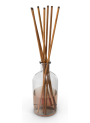
I would like to understand the performance of `DiffuseFix™ Fixative for Diffuser` when used in a **reed diffuser** formulation. Specifically, I need to know: * Does `DiffuseFix™` *increase* or *decrease* the fragrance evaporation rate? * How does it affect the overall scent longevity and diffusion (scent throw) in a reed diffuser? * Could you provide a brief summary of its mechanism of action? * What is the recommended usage range for `DiffuseFix™` in a reed diffuser formula (e.g., as a percentage of the fragrance oil or the total formula)? * What are the important precautions to consider regarding its impact on the flow through the reed sticks and the scent throw? * Please specify its compatibility range with commonly used solvents such as `DPG`, `Ethanol/SD Alcohol`, and `IPM/isoDodecane` to ensure correct formulation adjustments.
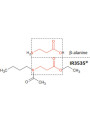
I need guidance on using `Ethyl butylacetylaminopropionate (IR3535)` for a mosquito repellent lotion suitable for children aged 3 and above. Please provide the following information: * **Manufacturing Process:** 1. Which phase of the production process should `IR3535` be added to (e.g., Water phase, Oil phase, after heat removal)? 2. What is the appropriate temperature for adding `IR3535`? * **Dosage for Children (3+ years):** 1. What is the safe and effective usage percentage range for children aged 3 and above? 2. What is the maximum recommended limit, if any? 3. Are there any reference documents or general guidelines for these dosages? * **Compatibility and Stability:** 1. What is the suitable pH range for `IR3535`? 2. Is it compatible with common preservatives, fragrances, and emulsifiers? 3. What ingredients or conditions should be avoided when formulating with `IR3535`? * **Sample Formulation:** 1. Could you provide an example guide formula for a children's mosquito repellent lotion, including its structure and a summary of the manufacturing steps?
I am interested in producing lactose-free milk. Could you please provide information on an enzyme suitable for digesting lactose in milk and other dairy products? I would appreciate details on: * The enzyme's properties, such as its concentration (`100,000U/g`). * Optimal usage conditions, including the recommended temperature range (`37-55°C`, ideally `38-40°C`) and pH range (`4.5-5.5`, ideally `pH 5.0`). * How it helps in preventing lactose crystallization in the final product.
The user is experiencing issues with `ZeoHeat™` not generating heat in their anhydrous cosmetic formulation, which is intended for topical use. The current formulation uses `propylene glycol` as a base, includes `oil`, `kaolin`, and `bentonite`, and contains `15% ZeoHeat™`. The user requires advice on the following: * How does `ZeoHeat™` activate to generate heat? * Is water (free water or humidity) required for activation, and if so, what is the minimum level? * What is the compatibility of `ZeoHeat™` with `propylene glycol` and other anhydrous/oil-based systems? * What are the recommended usage percentage ranges and processing methods (order of addition, mixing speed, particle dispersion)? * What are the tips to maximize the heating effect and its duration (e.g., adding a small water phase, using humectants, occlusion)? * What are the common reasons for a lack of heating in anhydrous systems, and how can these issues be fixed? * Are there any safety or user-sensation cautions to be aware of?
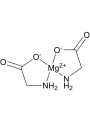
Could you please provide information on the **puffing** or **expansion quantity** of `Magnesium Glycinate (11% Magnesium)` powder? Specifically, how many milligrams does it expand per tablet?
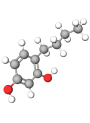
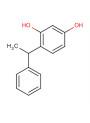
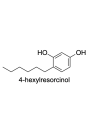
I am considering using the following resorcinol derivatives in a skincare formulation: * `4-Hexylresorcinol` at 0.5% * `Phenylethyl Resorcinol` at 0.5% * `4-Butylresorcinol` at 1% I have a few questions regarding their use for skin brightening: 1. Based on the recommended usage amounts for each, which of these ingredients would you recommend for achieving skin brightening results, ordered from most to least recommended? 2. Can these ingredients be used together in a single formulation? If so, which specific combinations (e.g., two ingredients or all three) are advisable without overlapping effects? 3. If all three ingredients are used together at their recommended percentages, besides potential increased cost, what other effects might they have on the skin?

Could you please confirm if the PhosphoMax™ (Natural Phospholipid Emulsifier) is derived from non-GMO soybeans?