Browse Questions and Answers
Avg response: 24 HrsFilter Questions
20 of 14236 results
I want to try mixing fragrance, but I don't have knowledge in this area. I'd like to ask if it's possible to use both **Fractionated Coconut Oil** and **Alcohol** by using **Fractionated Coconut Oil** as a carrier oil for **Fragrance** and **Essential Oils** (I learned from old posts that they can be mixed directly without any oil, but I want to use oil to reduce the amount of **Alcohol**) and then mix it with **Alcohol**. Is this method possible? Also, I would like to ask for recommendations for a **Fragrance** that has a soft, powdery scent. Are there any recommended scents or ingredients?
I'm asking about using color. I'm using D&C Red 27, which is said to change color. I want to ask what needs to be done if it's used in a lip product formula so that the lip color is light and then becomes dark when applied, ensuring the formula contains no water at all.

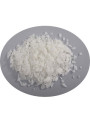
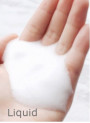
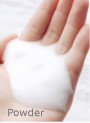
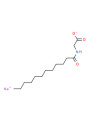
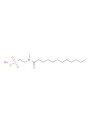
I would like to know if Sodium Lauroyl Methylaminopropionate is not available, what can be used as a substitute? Thank you.
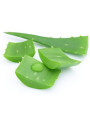
What preservatives can be used with fresh natural ingredients such as pureed aloe vera and pureed papaya to extend their shelf life?

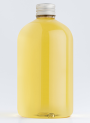
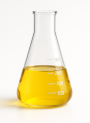
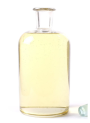
I would like to ask if I can use **Aloe Vera Oil** to make lip balm? Also, do I need to add **preservative** to the lip balm?
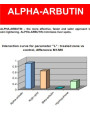
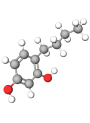
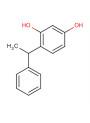
Based on the provided ingredient "Z white (Zinc Glycinate)", which I understand is GlyciWhite™ (Glycinamide HCL), I have the following questions: 1. Can it be used together with the following ingredients? Will it reduce their properties? * Sym White (Phenylethyl Resorcinol) * Activated Resorcinol (4-Butyl Resorcinol) * perfect c (Ascorbyl Tetraisopalmitate / Tetrahexyldecyl Ascorbate) * Ume Extract * Ethyl Ascorbic acid (3-O-Ethyl Ascorbic Acid) * Alpha Arbutin * B3 (Niacinamide) 2. Can it be dissolved in water and added at any step? 3. Should Disodium EDTA be included, and at what amount, to prevent degradation, similar to Sym White or other types? 4. The recommended usage rate is 1.5%, but I experience tingling on my face even at 1%. If I use 1.5%, the tingling is either more than at 1% or feels similar. If it feels similar, should I use 1.5% for the recommended efficacy? Thank you.
If I purchase a cream base from your company, can I add the following chemicals: * Pal-GHK, Pal-GQPR (eq. Matrixyl 3000) * Acetyl Hexapeptide-8 (eq. Argireline) * Ethyl Ascorbic acid (Vitamin C Ethyl Ether) If so, which cream base would you recommend that is suitable for both the eye area and the face?

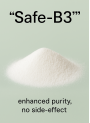
I am making a facial serum with the following formula: * Silky Serum Base 15% * vit c (L-ascorbic acid) (ultra-fine) 15% * Vit E (Tocopheryl Acetate) 0.5% * Vit E (dl-alpha tocopherol) 1% * Phospholipid (Hydrogenated Lecithin) 3% * 1,2-Hexanediol 5% * MOIST24 5% * Phenoxyethanol SA 0.5% * vit B5 ExtraLite 3% * Encapsulated Retinol 2% * disodum sdta(2nd EDTA) 0.2% * sefe-B3 5% * Water 40.3% Please help adjust the percentages to be suitable and advise if any ingredients are incompatible. If so, please recommend alternative ingredients or suggest removing them from the formula.
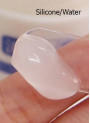

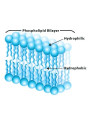

If I want to add oil (with other ingredients already dissolved in it) into a formula with the following ingredients: * Water * Dipropylene glycol * Dimethicone * Pentaerythrityl tetraethylhexanoate * Alcohol * Butylene Glycol * Glycerin * Trehalose * Potassium Methoxysalicylate * Behenyl Alcohol * Phenoxyethanol * Batyl Alcohol * Carbomer * Potassium Hydroxide * Peg/ppg-14/7 dimethyl ether * Xanthan Gum * Isostearic acid * Disodium EDTA * parfum * Lauryl Betaine * Ascorbyl Tetraisopalmitate * Betaine * Magnesium Ascorbyl Phosphate * Tocopheryl Acetate * Acrylates/c10-30 alkyl acrylate crosspolymer * Sodium Metabisulfite * Magnesium chloride * Lilium candidum bulb extract * Olea Europaea (olive) leaf extract * Calcium chloride * sodium benzoate * Hydrolyzed conchiolin protein Can I just add the oil (with dissolved ingredients) directly into the formula? Or do I need to add an emulsifier? If so, which emulsifier should I use and at what usage percentage? Thank you in advance.
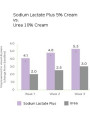
Hello, I tried making a lotion according to the following formula, but the texture is watery. Initially, I wasn't sure what caused it to be watery, but after several attempts, I found that it becomes watery in two stages: 1. It becomes slightly watery after adding Sodium Lactate Plus. However, it's not completely liquid yet; the texture is still somewhat acceptable. 2. When LipidSoft Lite is added, it immediately becomes watery. This happens whether I add it directly to the lotion or dissolve it with Horse Oil using heat first. I also tried adding it to other lotion bases, and it still turned watery. Is there a way to prevent it from becoming watery? Thank you. Here is the lotion formula: * Water 84.6% * Aquamax 3% * Sodium Lactate Plus 2% * Water 5% * Arbutin 0.1% * Allantoin 0.3% * Horse Oil 1.5% (60°) * Pure Baicalin 0.2% (60°) * Hya matrix 0.1% * Phenoxy 0.7% * LipidSoft Lite 1% * Perfume 1.5%

I have a whitening serum formulation with the following ingredients and percentages: * `Activated Resorcinol` 1% * `MSH White` 2% * `Tranexamic Acid` 3% * `Gluco Bright` 4% * `Niacinamide` 5% * `Dimethyl Isosorbide` 3% * `Natural Bisabolol` 1% * `Light Cream Maker` 1% * `Xanthan Gum` 0.5% * `Tocopheryl Acetate` 0.5% * `Allantoin` 0.5% * `Disodium EDTA` 0.2% * `Mild Preserved Eco` 1% * Water (remaining percentage) Regarding the formula above, can **MSH White** be mixed directly? Or should I use a substance to help dissolve it first, as the product information states it dissolves in oil with heat? If I use **Squalane** 5% to dissolve **MSH White** with heat, can I then mix it into the formula?
Which preservatives can be used with thin aloe vera gel? Also, how should it be extracted safely for facial use?

I would like to ask if it's possible to add foundation into this formula: * TiO2 liquid 10% * ZnO liquid 10% * Silicone Blender 3% * Glydent plus 1% * Silicone Gel 28% * Purified Water 47.85% * Beige Iron Oxides EasyMix™ 0.15% I also want to add Silk Mica Powder and vitamins. I would like advice on which parts to increase or decrease.
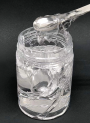
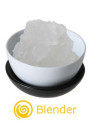
I would like to inquire about skin nourishing oil for sensitive, dry, and allergy-prone skin. I intend to make a massage oil that can help with skin strength and moisture. I am interested in **Shea Butter Light Oil**. I have used a liquid soap product containing this ingredient and it suited my skin quite well. However, I noticed that there are several types of **shea butter**. Therefore, I would like to ask for advice on the following: * Which type of shea butter can be used to make massage oil? * Is the scent of shea butter acceptable for a massage oil? * Do I need to mix it with other oils? If so, which ones should I use? * I would like it to have a pleasant floral scent. Can I mix floral fragrance into it? * Will the floral scent clash with the shea butter scent? * Do I need any special tools for mixing? I am also open to private classes if available. Please provide your recommendations. Thank you.
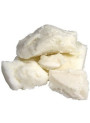
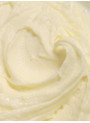
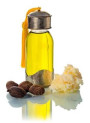
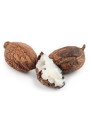
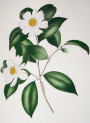
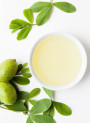
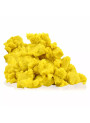
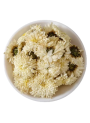
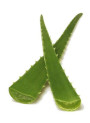
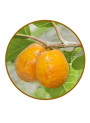
Regarding a hair tonic formulation for hair and scalp nourishment (leave-on product) focusing on: * Nourishing the scalp * Strengthening new hair * Nourishing hair * Helping to restore hair roots * Slowing down hair loss * Promoting new hair growth for thicker, darker, healthy-looking hair Desired ingredients include Thai herbs such as: * หญ้าดอกขาว * มะหาด * ขิง * อัญชัน * ว่านหางจระเข้ * กาแฟ For hair and scalp nourishment. Specifically, หญ้าดอกขาว is desired for reducing fungal and bacterial accumulation, controlling scalp oil, preventing รังแค, promoting new hair growth, and providing scalp moisture. The formula should be free from แอลกอฮอล์ and suitable for all hair types. The listed components are: * น้ำ * Artocarpus Lakoocha * Vernonia Cinerea Whole * Propylene Glycol * Methylparaben * Propylparaben Properties: Helps restore hair roots and scalp to be strong, slows down breakage and shedding, promotes new hair growth for thicker, darker hair. Usage: Spray Hair Tonic onto dry or damp scalp, massage gently, leave to dry without rinsing. Should be used daily morning and night, or as often as needed. I want to create my own formula and arrange manufacturing with the company. Please contact me back.
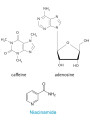
I want to make a gel for acne spot treatment and would like to use Retinal A as an ingredient. I'm not sure if Retinal A is a natural extract or a synthetic ingredient, and if it is effective. Are there any other active ingredients you would recommend?
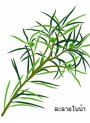
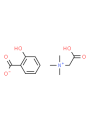
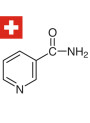
Could you please explain why Niacinamide and L-ascorbic acid cannot be formulated together? If a formula contains both of these ingredients combined in the same formula, what kind of reaction will occur to the serum? What effects will it have on the facial skin if a formula contains both of the aforementioned ingredients mixed together? Are there currently any serums that contain both Niacinamide and L-ascorbic acid combined in the same formula?
Could you recommend Mica types (considering color tone and particle size) that can help achieve a luminous, warm glow similar to the effect of the BECCA Backlight Priming Filter in cosmetic formulations?
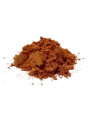
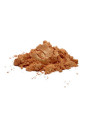
Regarding the following oils: * Sea Buckthorn (Fruit) Oil (Organic - Virgin) * Argan Oil (Organic - Virgin - Deodorized) I would like to inquire about the storage methods for these oils. Specifically, how should they be stored to avoid air exposure, and are there any recommended packaging types? Can any preservatives be used, and if so, which ones do you recommend? Additionally, can I mix these two oils together and store them in a bottle?
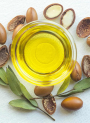
I accidentally mixed two ingredients, **Repair Activator™ BG (Bifida Ferment Lysate, Butylene Glycol Base)** and **Alaria Esculenta Extract**, into the same bottle. I understand one is water-soluble and the other is oil-soluble. Can this mixture be salvaged or corrected in any way?