Browse Questions and Answers
Avg response: 24 HrsFilter Questions
20 of 14240 results
I am currently formulating a lip balm and would like to add the following ingredients: * Sunscreen * Antioxidant to prevent rancidity * Preservative to prevent microbial growth Could you please recommend specific ingredients suitable for a lip balm formula for each of these purposes, especially those available for purchase on MySkinRecipes?
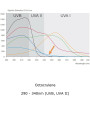

Hello, Is it possible to mix: * `Tocotrienols` 2% * `Stabilized Vitamin C (Natural-C Glycol™) Serum` 98% to create a Vitamin C & E formula that is not oily? When I used the Vitamin C E Ferulic formula, my skin felt very oily. Thank you.
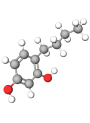
Activated Resorcinol and Sym White are oil-soluble. Can they also be dissolved in Propylene Glycol or Butylene Glycol?
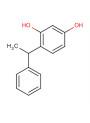
Could you please recommend ingredients that can help combine approximately 5-10% oil with water to create a gel texture that is not opaque white, but rather clear or near-clear, is tolerant to electrolytes, and is stable within the pH range of 3-7?
Could you recommend ingredients that can blend approximately 5-10% oil with water to create a clear or near-clear gel texture, which is also tolerant to electrolytes and works within a pH range of 3-7?
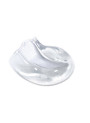
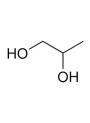
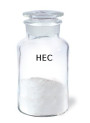
Could you please provide a formula for a clear, water-based lubricant gel that dries slowly? I previously tried mixing the following ingredients, but the resulting gel dried very quickly and I would like it to feel more 'wet': * Glycerin * Propylene Glycol * Hydroxyethyl Cellulose (HEC) * Mild Preserved Eco Thank you.
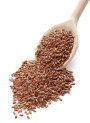
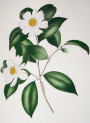
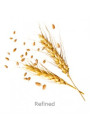
Besides Fractionated Coconut Oil and Jojoba Oil recommended for use in Oil Soap, are there other oils you recommend to be used as the main ingredient (around 50% or more)? I am looking for oils that are low in odor and resistant to oxidation. Specifically, I would like to know your recommendation regarding the following oils: 1. Apricot Kernel Oil (Refined) 2. Sweet Almond Oil (Refined) 3. Safflower Seed Oil (High Oleic, Refined) 4. Grape Seed Oil (Refined) 5. Flaxseed Oil (High Omega) 6. Wheat Germ Oil (Virgin) 7. Tea (Camellia oleifera) Seed Oil (Refined)
I would like to make an air freshener spray without using Alcohol, as I am allergic to Alcohol. What ingredient should I use to combine Fragrance Oil and Essential Oil with water?
Looking for a serum formulation for treating melasma, brightening the face, and reducing pores. The serum should be fast-absorbing, non-sticky, and non-comedogenic. Please include **TXC** in the formulation.

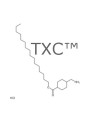
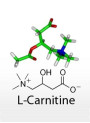
I am looking to create a lightweight, thin serum suitable for all skin types, targeting the following benefits: * Skin lifting for sagging skin * Reducing deep wrinkles * Skin brightening/whitening I have a list of ingredients I am interested in using, with some percentages already decided. I plan to have the formulation consist of approximately 50% Distilled Water, 25% water-soluble actives, and 25% oil phase. Here is the list of ingredients I am considering (percentages are preliminary for some): 1. Cell Energy 3% 2. beta glucan 3. Japanese Cedar 1% 4. Mineral Ready 2% 5. DMI 3% 6. Mild Preserved Eco 1% 7. Wrinkle-Lax 0.5% 8. Repair Activator 9. Pep-Coll 10. RETINAT 11. Marine Plankton 12. Ectoin 13. Methylsilanol Mannuronate 14. Quick-Coll 15. Safe-B3 2% 16. Gluco Bright 4% 17. Panthenol B5 18. น้ำมันมะกอก 10% 19. โรสฮิป 5% 20. LipidSoft Lite 5% 21. MSH White 2% 22. Tea Tree Oil 0.4% 23. German Chamomile Extract 1% 24. Thickener and Emulsifier I would appreciate advice on the following points: 1. Are there any ingredients in this list that have redundant functions? 2. Which ingredients require a blender for mixing and cannot be incorporated by hand stirring? 3. Which ingredients are difficult to dissolve? 4. What percentage of Panthenol B5 is effective without causing stickiness? 5. Which thickener and emulsifier would you recommend for a lightweight serum that can be made with cold process and hand stirring? 6. Should I use LipidSoft Lite or LipidSoft Dry? 7. If I dissolve MSH White in LipidSoft by heating to 80°C, let it cool, add the remaining oils, and then pour this oil phase into the water phase, will it cause precipitation? 8. Do Japanese Cedar, L-Carnitine, and FruitPeel have similar effects? Which one is easier to dissolve and less complicated to use? 9. Besides Panthenol B5, are there any other ingredients with high stickiness? 10. Which ingredients might cause irritation? 11. Are there any other ingredients that require heat for dissolution? 12. Could you provide mixing steps for a beginner?


I have created a Promade formula with the following composition: * Water: 60% * Oil: 25% * Wax: 15% However, the resulting texture is too liquid. How can I modify this formula to achieve a thicker consistency suitable for a pomade?
I have the following 5 ingredients: * Galactomyces * Repair Activator * Pep-Coll * Argireline * Copper Peptide Can these 5 types of ingredients be mixed together in the same bottle? Also, should I add a preservative? After mixing, the total volume will be approximately 160 ml. Only Galactomyces has a shelf life of 180 days, while the others have a shelf life of 60 days. (Note: I plan to use Galactomyces as the base.)
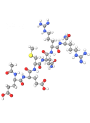
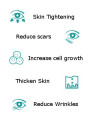
Can I add the following ingredients to Atoplam Intensive Moisturizing (MLE) cream to make a night cream? I want to target wrinkles, firmness, and uneven skin tone. Please advise if this is possible and provide any additional recommendations. * Copper Peptide 3g * Repair Activator 5g * Palmitoyl Tripeptide-5 5g * Matrixyl 3000 5g * Argireline 10g * Vitamin B3, Niacinamide 10g * Encapsulated Retinol 2g

I am making a Snail Secretion cream, but the feeling after applying it is sticky and quite greasy. What ingredients can I add to fix this?
Which cream maker is highly resistant to electrolytes?
I have formulated a lotion with the goal of focusing on exfoliation for brighter skin. Below is the formula and mixing method I used: **Ingredients:** * Fractionated Coconut Oil: 30 % * Distilled Water: 25 % * Vitamin C (L-ascorbic acid) (Standard): 20 % * Polysorbate 20 (Tween 20): 10 % * Vitamin E (Tocopheryl Acetate): 5 % * Glycerin: 5 % * Synthetic White Beeswax: 5 % **Mixing Method:** * Part A: Mix Distilled Water + Glycerin + Vitamin C (L-ascorbic acid) (Standard) until combined. Set aside. * Part B: Mix Fractionated Coconut Oil + Vitamin E (Tocopheryl Acetate) + Polysorbate 20 (Tween 20) until combined. Set aside. * Part C: Double-boiler Synthetic White Beeswax until melted. Then, add Part A and stir until combined, followed by Part B and stir until combined. Remove from heat and measure the pH to be 3-4. I would like to ask the following: 1. Based on this formula, are there any ingredient percentages that need adjusting (increasing or decreasing)? 2. Are there any other ingredients that should be added to help with skin brightening? 3. The resulting lotion texture is not very smooth, it seems like it's not well-combined. I'm not sure if there was an error in the mixing procedure. 4. Without adding a preservative, would this formula last up to 1 year? If not, which preservative should be added that will not affect the other ingredients? 5. If I want to add fragrance, can I just add Essential Oil together with the oil phase?
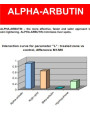
I have created a cosmetic formula and would like to request analysis and suggestions for improvement. Here is the formula: 1. Pro Polymer 1% 2. Avocado Oil 9% 3. Mild Preserved Eco 1% 4. น้ำกลั่น 73.8% 5. Activated Resorcinol 1% 6. Natural Bisabolol 1% 7. Vitamin B3 (safe-niaciamide) 4% 8. GlucoBright 4% 9. Allantoin 0.2% 10. Glycerin 5% Please provide feedback and suggestions for this formula.
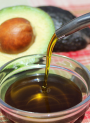
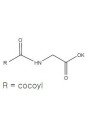
I would like to ask the following questions: * For sensitive skin facial cleansing products, what is the maximum recommended usage percentage for Sodium Cocoyl Isethionate? * Are Disodium Cocoyl Glutamate and Sodium Cocoyl Glutamate the same? And for sensitive skin facial cleansing products, what is their maximum recommended usage percentage? * If using multiple `สารชะล้าง` (cleansing agents) together in a sensitive skin facial cleansing product, what is the maximum recommended total percentage?
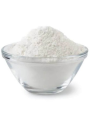
I would like to ask the team the following questions: * Since both Niacinamide and Acetyl Glucosamine provide similar results such as strengthening the skin, reducing dark spots, and counteracting melanin in the skin layers, I would like to ask: If I want to use only one of these ingredients, which one does the team recommend? And what are the highlights, pros, and cons of each ingredient? * Another question: If I apply Vitamin C (L-ascorbic acid) to my skin, can it cause yellow stains on clothes due to the degradation of Vitamin C?
I purchased an anti-wrinkle face cream kit. Based on the ingredients, it contains mild silicones (Tween 60, 80, 85), a cream base, preservative, Hyaluronic Acid, pancratium maritimum extract, and several other emulsifiers. In the first attempt, I added an anti-wrinkle agent according to the recommended ratio, and the cream remained normal at room temperature. In the second attempt, I added several more extracts: * Vitamin C (L-Ascorbic Acid ultra-fine powder) * Snail secretion extract * Another anti-wrinkle agent * Aloe Vera extract I added these according to the recommended ratios. However, one jar left at room temperature separated into a water layer and a cream layer, and the cream turned a light yellowish-orange color. Another jar stored in the refrigerator remained normal, but when a portion was transferred to room temperature, it also separated and changed color. Could you please identify which of the added ingredients caused this issue?