


บริการวัดค่า
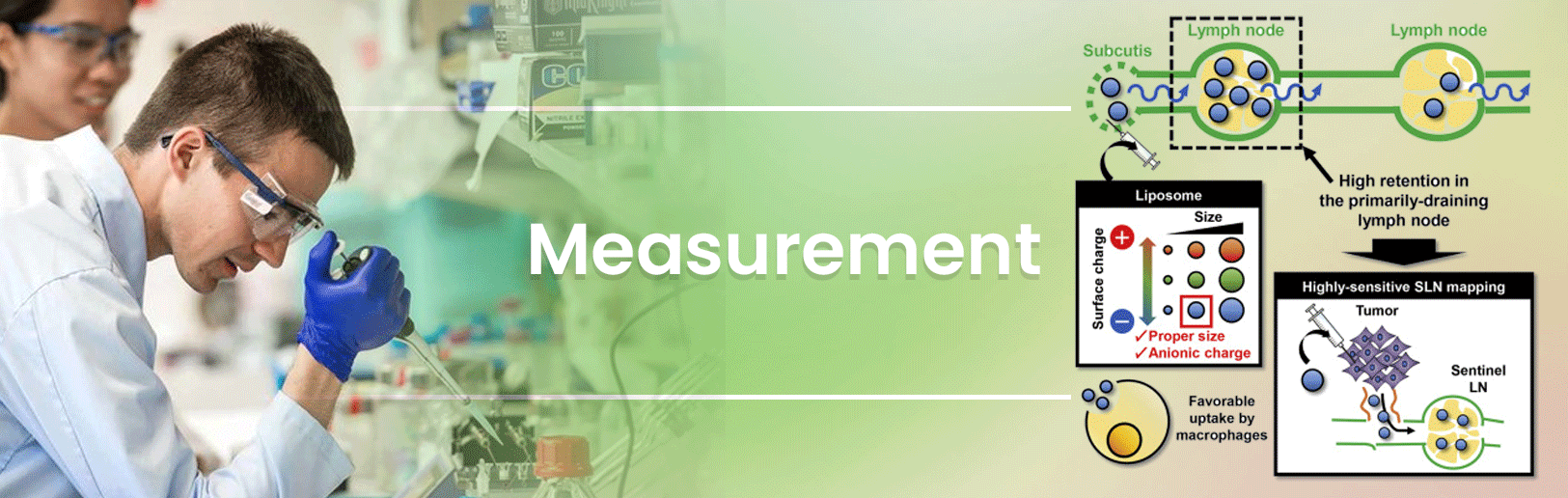
บริการวัดค่า ต่างๆ เช่น วัดค่า SPF, วัดค่า emulsion size , วัดค่า particle size
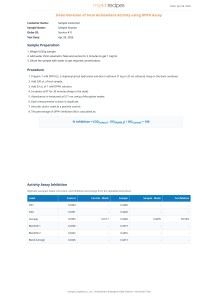
Determination of total Antioxidant Activity using DPPH Assay
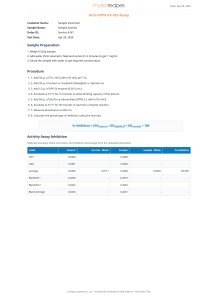
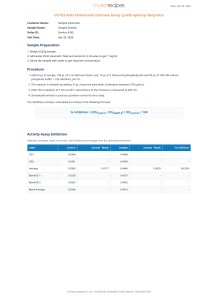
Antioxidant activity was measured with the DPPH (2,2-diphenyl-1-picrylhydrazyl) assay by UV-Vis spectrophotometer which is a common method to evaluate the ability of compounds to scavenge free radicals. This assay was widely applied to assess the antioxidant properties of natural products, extracts, and compounds.
Sample Count:
Accepts exactly 1 sample.
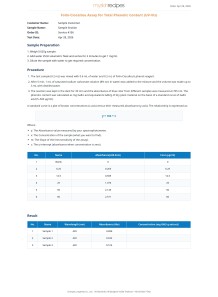
Folin-Ciocalteu Assay for Total Phenolic Content (UV-Vis)
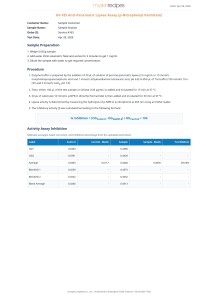
Spectrophotometric method measuring total phenolics in plant extracts via reaction with Folin-Ciocalteu reagent, absorbance at 765 nm, expressed as gallic acid equivalents.
Sample Requirement:
plant extract (lyophilized or dry) · 0.1 · grams
Sample Count:
Accepts exactly 1 sample.
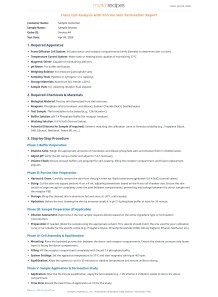
Franz Cell Analysis with Porcine Skin Permeation Report
The porcine skin permeation test using a Franz diffusion cell is a method commonly used in pharmaceutical and cosmetic research to evaluate the permeation of substances through porcine skin. It provides valuable information on the transdermal delivery potential of pharmaceutical and cosmetic products and aids in the development of formulations with enhanced skin permeability.
Sample Count:
Accepts between 1 and 6 samples.
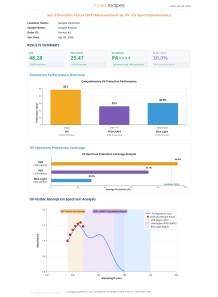
Sun Protection Factor (SPF) Measurement by UV- Vis Spectrophotometry
Experiment to test the SPF and PA value for active sample to determine the sunburn protection rate on human skin.
Sample Requirement:
Take a sample volume of 30 grams. The sample must be homogeneous and not separated.
Sample Count:
Accepts exactly 1 sample.
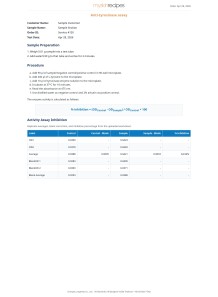
Anti-tyrosinase assay
This anti-tyrosinase assay evaluates how effectively a substance inhibits the enzyme tyrosinase, which is key in melanin production. Such assessments are important for developing skincare formulations to reduce hyperpigmentation, antioxidants in food preservation to prevent browning, and other applications in cosmetics, pharmaceuticals, and agriculture. Tyrosinase catalyzes the oxidation of L-tyrosine to colored intermediates (e.g., dopachrome), detectable at 475 nm. Inhibitors reduce the formation of these colored products, lowering absorbance. By comparing the sample’s absorbance to a negative control, the percentage of enzyme inhibition is calculated, indicating the anti-tyrosinase potential of the test substance.
Sample Count:
Accepts exactly 1 sample.
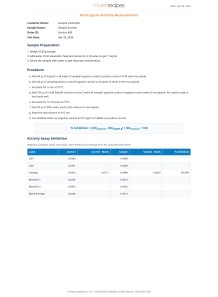
Antitrypsin Activity Measurement
This antitrypsin activity assay is important because it measures the ability of a sample (e.g., plant extract) to inhibit the proteolytic enzyme trypsin, which is crucial in many biological and industrial contexts (e.g., therapeutic enzyme modulation, functional food ingredient evaluation). The method uses BApNA, a chromogenic substrate that releases a yellow-colored product (p-nitroaniline) upon hydrolysis by trypsin. By comparing absorbances of control vs. sample, one can calculate the percentage inhibition of trypsin activity. Tris-HCl buffer is used instead of phosphate buffer to avoid unwanted buffer-catalyzed BApNA hydrolysis, ensuring reliable and accurate measurement.
Sample Count:
Accepts exactly 1 sample.
ตะกร้า
ไม่มีสินค้า
Subtotal:
0.00
รวมทั้งสิ้น
0.00
THB
Loading Researcher Network details...