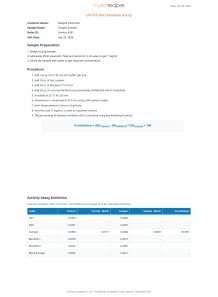
Anti-tyrosinase assay
This anti-tyrosinase assay evaluates how effectively a substance inhibits the enzyme tyrosinase, which is key in melanin production. Such assessments are important for developing skincare formulations to reduce hyperpigmentation, antioxidants in food preservation to prevent browning, and other applications in cosmetics, pharmaceuticals, and agriculture. Tyrosinase catalyzes the oxidation of L-tyrosine to colored intermediates (e.g., dopachrome), detectable at 475 nm. Inhibitors reduce the formation of these colored products, lowering absorbance. By comparing the sample’s absorbance to a negative control, the percentage of enzyme inhibition is calculated, indicating the anti-tyrosinase potential of the test substance.
Sample Count:
Accepts exactly 1 sample.
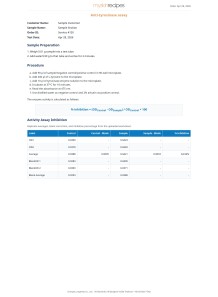
Antitrypsin Activity Measurement
This antitrypsin activity assay is important because it measures the ability of a sample (e.g., plant extract) to inhibit the proteolytic enzyme trypsin, which is crucial in many biological and industrial contexts (e.g., therapeutic enzyme modulation, functional food ingredient evaluation). The method uses BApNA, a chromogenic substrate that releases a yellow-colored product (p-nitroaniline) upon hydrolysis by trypsin. By comparing absorbances of control vs. sample, one can calculate the percentage inhibition of trypsin activity. Tris-HCl buffer is used instead of phosphate buffer to avoid unwanted buffer-catalyzed BApNA hydrolysis, ensuring reliable and accurate measurement.
Sample Count:
Accepts exactly 1 sample.

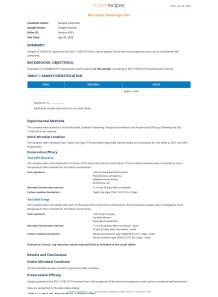
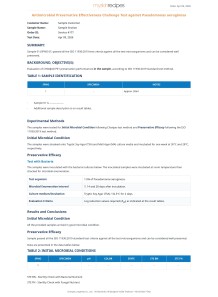
Antimicrobial Preservative Effectiveness Challenge Test against Pseudomonas aeruginosa
Microbial Challenge Test for testing the effectiveness of preservatives used in formulas. To ensure that it is effective enough to control infection using ISO 11930.
Sample Requirement:
100 g
Sample Count:
Accepts exactly 1 sample.
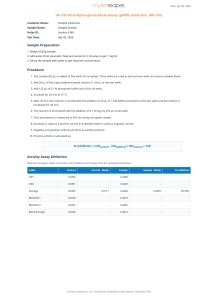
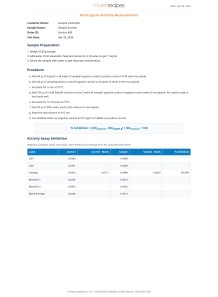
UV-VIS Anti-alpha-glucosidase Assay (pNPG substrate, 405 nm)
Spectrophotometric assay measuring inhibition of yeast alpha-glucosidase by sample extracts using p-nitrophenyl-α-D-glucopyranoside (pNPG) hydrolysis to p-nitrophenolate, detected at 405 nm. Alpha-glucosidase inhibitors inhibit the absorption of carbohydrates from the small intestine. They competitively inhibit enzymes that convert complex non absorbable carbohydrates into simple absorbable carbohydrates. These enzymes include glucoamylase, sucrase, maltase, and isomaltase.
Sample Requirement:
cosmetic product (cream, lotion, serum) · 5 · g
Sample Count:
Accepts exactly 1 sample.
ตะกร้า
ไม่มีสินค้า
Subtotal:
0.00
รวมทั้งสิ้น
0.00
THB
Loading Researcher Network details...