Protein denaturation inhibition

Protein denaturation inhibition
  • Product Code: 253507
The protein denaturation inhibition assay is essential for evaluating the anti-inflammatory properties of plant extracts and compounds. By assessing the ability of a sample to prevent or reduce the denaturation of egg albumin, researchers can identify potential anti-inflammatory agents that stabilize protein structures, thereby mitigating inflammation and tissue damage. This assay is valuable in pharmaceutical development, natural product research, and the formulation of anti-inflammatory therapies. The assay employs egg albumin as a model protein whose denaturation is induced by heat. Anti-inflammatory agents are hypothesized to stabilize the protein structure, preventing denaturation. By measuring the extent of albumin denaturation through absorbance at 660 nm, the method provides a reli
฿1.00

science Sample Names

assignment Instructions

info Please include any specific requirements or conditions for testing

description Service Overview

The protein denaturation inhibition assay is essential for evaluating the anti-inflammatory properties of plant extracts and compounds. By assessing the ability of a sample to prevent or reduce the denaturation of egg albumin, researchers can identify potential anti-inflammatory agents that stabilize protein structures, thereby mitigating inflammation and tissue damage. This assay is valuable in pharmaceutical development, natural product research, and the formulation of anti-inflammatory therapies. The assay employs egg albumin as a model protein whose denaturation is induced by heat. Anti-inflammatory agents are hypothesized to stabilize the protein structure, preventing denaturation. By measuring the extent of albumin denaturation through absorbance at 660 nm, the method provides a reliable and quantitative means to assess the inhibitory effects of the tested samples. The use of controls ensures the accuracy and reproducibility of the results, making this method both reasonable and dependable for evaluating protein stabilization and anti-inflammatory potential.

timeline Service Steps

Step Procedure Expected Result
1

Sample Preparation:...

check_circle_outline

A 1 mg/mL plant extract solution ready for use in the assay.

2

Preparation of...

check_circle_outline

A clear 5% albumin solution prepared for the assay.

3

Preparation of...

check_circle_outline

A 1 L PBS solution at pH 6.4, ready for use in the denaturation assay.

4

Preparation of...

check_circle_outline

A 2 mg/mL Diclofenac solution prepared as the positive control.

5

Measurement of...

check_circle_outline

Absorbance readings at 660 nm indicating the extent of albumin denaturation inhibition by each sample.

6

Calculation of...

check_circle_outline

Percentage inhibition values indicating the anti-inflammatory potential of each sample.

You will receive a report for the Percentage Inhibition of Protein Denaturation Sample fields when we provide this service

Protein denaturation inhibition
No image available
The protein denaturation inhibition assay is essential for evaluating the anti-inflammatory properties of plant extracts and compounds. By assessing the ability of a sample to prevent or reduce the denaturation of egg albumin, researchers can identify potential anti-inflammatory agents that stabilize protein structures, thereby mitigating inflammation and tissue damage. This assay is valuable in pharmaceutical development, natural product research, and the formulation of anti-inflammatory therapies. The assay employs egg albumin as a model protein whose denaturation is induced by heat. Anti-inflammatory agents are hypothesized to stabilize the protein structure, preventing denaturation. By measuring the extent of albumin denaturation through absorbance at 660 nm, the method provides a reli
The protein denaturation inhibition assay is essential for evaluating the anti-inflammatory properties of plant extracts and compounds. By assessing the ability of a sample to prevent or reduce the denaturation of egg albumin, researchers can identify potential anti-inflammatory agents that stabilize protein structures, thereby mitigating inflammation and tissue damage. This assay is valuable in pharmaceutical development, natural product research, and the formulation of anti-inflammatory therapies. The assay employs egg albumin as a model protein whose denaturation is induced by heat. Anti-inflammatory agents are hypothesized to stabilize the protein structure, preventing denaturation. By measuring the extent of albumin denaturation through absorbance at 660 nm, the method provides a reliable and quantitative means to assess the inhibitory effects of the tested samples. The use of controls ensures the accuracy and reproducibility of the results, making this method both reasonable and dependable for evaluating protein stabilization and anti-inflammatory potential.
Mechanism -
Appearance -
Longevity -
Strength -
Storage -
Shelf Life -
Allergen(s) -
Dosage (Range) -
Dosage (Per Day) -
Mix Method -
Heat Resistance -
Stable in pH range -
Solubility -
Product Types -
INCI -
Service Steps
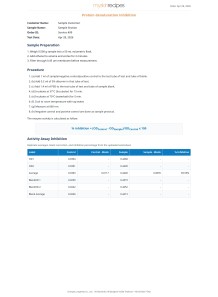
Step Procedure Expected Result
1

Sample Preparation:...

A 1 mg/mL plant extract solution ready for use in the assay.

2

Preparation of...

A clear 5% albumin solution prepared for the assay.

3

Preparation of...

A 1 L PBS solution at pH 6.4, ready for use in the denaturation assay.

4

Preparation of...

A 2 mg/mL Diclofenac solution prepared as the positive control.

5

Measurement of...

Absorbance readings at 660 nm indicating the extent of albumin denaturation inhibition by each sample.

6

Calculation of...

Percentage inhibition values indicating the anti-inflammatory potential of each sample.