


“Closest Nymphaea alba evidence: leaf extracts showed antioxidant and anti-inflammatory activity, supporting soothing/antioxidant rationale but not proving topical sodium palmitoyl proline efficacy.”
Skin-conditioning amino-acid derivative that soothes sensitive, stressed skin, supports gentle brightening of post-inflammatory hyperpigmentation, and provides antioxidant/matrix support; amphiphilic, sparingly water-soluble powder best pre-dispersed in glycols before addition.
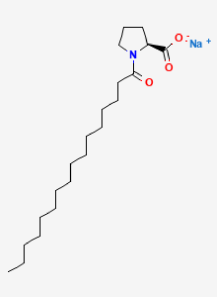
Sodium Palmitoyl Proline is an amphiphilic palmitoylated amino-acid derivative used as a skin-conditioning active for sensitive, stressed and hyperpigmented skin. The molecule combines a long-chain palmitic acid with the amino acid L-proline, giving a surfactant-like structure that can interact with both lipid interfaces and aqueous phases.
Regulatory ingredient directories classify it primarily as a skin-conditioning agent. In practice it is employed as a soothing, brightening and anti-ageing co-active, particularly in complexes where sodium palmitoyl proline is vectorized together with Nymphaea alba (white water-lily) flower extract and used at around 3% in finished formulas.
Formulators choose sodium palmitoyl proline-based systems when they want to calm irritation, reduce stress-induced pigmentation and support overall skin comfort without resorting to harsh depigmenting drugs. The raw material is sparingly soluble in water but can be handled efficiently via glycol-based concentrates or microemulsions.
In vitro and ex vivo data on sodium palmitoyl proline–water-lily complexes show a multi-modal profile. In UV- or heat-stressed keratinocytes the complex reduces pro-inflammatory mediators such as IL-1α and endothelin-1 and attenuates cyclo-oxygenase-2 (COX-2) and PGE2 signalling, consistent with soothing and anti-redness effects. Neurocosmetics work also reports decreased IL-6 and IL-8 expression and increased β-endorphin production in skin models, aligning with improved comfort sensation in sensitive or reactive skin.
On pigmentation pathways the same complex reduces both stress-induced and basal melanogenesis. In 3D pigmented epidermis models a 3% use level produced sizeable drops in melanin content (≈31–49%) and tyrosinase activity (≈54%), together with modulation of key genes: MIC-1 upregulation and MITF/tyrosinase downregulation. These changes translate into reduced intensity and area of age spots and an increase in ITA° (instrumental lightness) in small volunteer studies over 2–3 months of use.
The complex also shows strong antioxidant and matrix-protective behaviour in cell-free assays, with high superoxide radical scavenging capacity, inhibition of elastase and hyaluronidase (supporting preservation of elastin and hyaluronic acid), measurable anti-COX activity and protection of plasmid DNA under UVA stress. Together with the anti-inflammatory profile, this positions sodium palmitoyl proline-based systems as gentle anti-ageing supporters that help maintain an even, calm complexion rather than aggressive bleaching agents.
Evidence is mainly manufacturer-sponsored (technical dossiers and a peer-reviewed neurocosmetics review summarising the data) rather than large independent clinical trials. However, the mechanistic coherence – less inflammation and oxidative stress, reduced melanogenesis signalling and preserved matrix components – plus consistent small-scale human readouts make sodium palmitoyl proline a robust choice as a secondary soothing/brightening amino-acid derivative in modern formulations.
| Model/System | Key Endpoints | Implication |
|---|---|---|
| UV/heat-stressed keratinocytes | ↓ IL-1α, ↓ endothelin-1; ↓ COX-2/PGE2; ↓ IL-6/IL-8; ↑ β-endorphin | Soothing/anti-redness; improved comfort for sensitive skin |
| 3D pigmented epidermis / melanocytes | ≈31–49% ↓ melanin; ≈54% ↓ tyrosinase activity; MIC‑1 ↑; MITF/tyrosinase gene ↓ | Gentle brightening; addresses stress-induced and basal pigmentation |
| Small in vivo tests (UV erythema, lactic-acid stinging) | ↓ redness and heat after UV; ↓ stinging scores vs. placebo and benchmark soothing agent | Perceptible soothing in sensitive or reactive skin |
| Biochemical assays (radical, enzymes, DNA) | Strong superoxide scavenging; anti-elastase; anti-hyaluronidase; anti-COX; DNA protection under UVA | Matrix and DNA support; anti-ageing maintenance role |
Usage: Brightening and tone-evening serums, anti-ageing moisturisers, after-sun and post-acne/post-procedure care, and sensitive-skin products where calming and reduction of post-inflammatory hyperpigmentation are desired. Use as a co-active alongside UV filters and other proven actives (e.g. niacinamide, vitamin C, retinoids) rather than as the sole whitening agent.
Mixing method:
- For pure sodium palmitoyl proline, pre-disperse in a suitable polyol (e.g. propylene glycol, butylene glycol) with gentle stirring and, if needed, mild heat; then add this concentrate to the aqueous phase or cool-down of an emulsion below 40°C.
- In water-rich serums, combine the glycol concentrate with a solubiliser or mild surfactant system and adjust pH into the cosmetic window (≈4.5–6.5); verify clarity or controlled opalescence and re-check stability under temperature cycling.
- In emulsions/creams and after-sun products, add during cool-down (<40°C) together with other heat-sensitive actives; avoid strong alkaline conditions and minimise prolonged high-temperature exposure to protect the amino-acid moiety.
Usage rate: 0.05–0.5% sodium palmitoyl proline in the finished product (typical 0.2–0.3%). When working with a vectorised complex that contains sodium palmitoyl proline plus botanical extract and is used at ~3% of the formula, adjust the level of the complex to deliver a comparable 0.05–0.5% sodium palmitoyl proline on skin.
Product characteristics: White to off-white, fine crystalline powder; essentially odourless; amphiphilic N-acyl amino-acid sodium salt.
Solubility: Sparingly soluble in pure water (reported around 40–60 mg/L at 25°C); logP ≈3 indicates significant lipophilicity. Readily soluble in polyols (e.g. propylene/butylene glycol) and miscible into surfactant systems as a clear or slightly opalescent concentrate. Use glycols, co-solvents and/or solubilisers for robust incorporation into aqueous formulas; do not rely on simple cold-water dissolution at high percentages.
Store tightly closed in a cool, dry place away from moisture and strong oxidisers. The raw material can be irritating to eyes and skin at 100% and should be handled with appropriate protection, although finished-use levels in cosmetics are generally considered low hazard in standard safety evaluations.
| Test Name | Specification |
|---|---|
| Appearance | White to light yellow solid |
| pH value | 9.0-10.0 |
| Active matter content (%) | ≥94.0 |
| Water content (%) | ≤5.0 |
| Sodium chloride content (%) | ≤1.0 |
No products
Skin-conditioning amino-acid derivative that soothes sensitive, stressed skin, supports gentle brightening of post-inflammatory hyperpigmentation, and provides antioxidant/matrix support; amphiphilic, sparingly water-soluble powder best pre-dispersed in glycols before addition.
Sodium Palmitoyl Proline is an amphiphilic palmitoylated amino-acid derivative used as a skin-conditioning active for sensitive, stressed and hyperpigmented skin. The molecule combines a long-chain palmitic acid with the amino acid L-proline, giving a surfactant-like structure that can interact with both lipid interfaces and aqueous phases.
Regulatory ingredient directories classify it primarily as a skin-conditioning agent. In practice it is employed as a soothing, brightening and anti-ageing co-active, particularly in complexes where sodium palmitoyl proline is vectorized together with Nymphaea alba (white water-lily) flower extract and used at around 3% in finished formulas.
Formulators choose sodium palmitoyl proline-based systems when they want to calm irritation, reduce stress-induced pigmentation and support overall skin comfort without resorting to harsh depigmenting drugs. The raw material is sparingly soluble in water but can be handled efficiently via glycol-based concentrates or microemulsions.
In vitro and ex vivo data on sodium palmitoyl proline–water-lily complexes show a multi-modal profile. In UV- or heat-stressed keratinocytes the complex reduces pro-inflammatory mediators such as IL-1α and endothelin-1 and attenuates cyclo-oxygenase-2 (COX-2) and PGE2 signalling, consistent with soothing and anti-redness effects. Neurocosmetics work also reports decreased IL-6 and IL-8 expression and increased β-endorphin production in skin models, aligning with improved comfort sensation in sensitive or reactive skin.
On pigmentation pathways the same complex reduces both stress-induced and basal melanogenesis. In 3D pigmented epidermis models a 3% use level produced sizeable drops in melanin content (≈31–49%) and tyrosinase activity (≈54%), together with modulation of key genes: MIC-1 upregulation and MITF/tyrosinase downregulation. These changes translate into reduced intensity and area of age spots and an increase in ITA° (instrumental lightness) in small volunteer studies over 2–3 months of use.
The complex also shows strong antioxidant and matrix-protective behaviour in cell-free assays, with high superoxide radical scavenging capacity, inhibition of elastase and hyaluronidase (supporting preservation of elastin and hyaluronic acid), measurable anti-COX activity and protection of plasmid DNA under UVA stress. Together with the anti-inflammatory profile, this positions sodium palmitoyl proline-based systems as gentle anti-ageing supporters that help maintain an even, calm complexion rather than aggressive bleaching agents.
Evidence is mainly manufacturer-sponsored (technical dossiers and a peer-reviewed neurocosmetics review summarising the data) rather than large independent clinical trials. However, the mechanistic coherence – less inflammation and oxidative stress, reduced melanogenesis signalling and preserved matrix components – plus consistent small-scale human readouts make sodium palmitoyl proline a robust choice as a secondary soothing/brightening amino-acid derivative in modern formulations.
| Model/System | Key Endpoints | Implication |
|---|---|---|
| UV/heat-stressed keratinocytes | ↓ IL-1α, ↓ endothelin-1; ↓ COX-2/PGE2; ↓ IL-6/IL-8; ↑ β-endorphin | Soothing/anti-redness; improved comfort for sensitive skin |
| 3D pigmented epidermis / melanocytes | ≈31–49% ↓ melanin; ≈54% ↓ tyrosinase activity; MIC‑1 ↑; MITF/tyrosinase gene ↓ | Gentle brightening; addresses stress-induced and basal pigmentation |
| Small in vivo tests (UV erythema, lactic-acid stinging) | ↓ redness and heat after UV; ↓ stinging scores vs. placebo and benchmark soothing agent | Perceptible soothing in sensitive or reactive skin |
| Biochemical assays (radical, enzymes, DNA) | Strong superoxide scavenging; anti-elastase; anti-hyaluronidase; anti-COX; DNA protection under UVA | Matrix and DNA support; anti-ageing maintenance role |
Usage: Brightening and tone-evening serums, anti-ageing moisturisers, after-sun and post-acne/post-procedure care, and sensitive-skin products where calming and reduction of post-inflammatory hyperpigmentation are desired. Use as a co-active alongside UV filters and other proven actives (e.g. niacinamide, vitamin C, retinoids) rather than as the sole whitening agent.
Mixing method:
- For pure sodium palmitoyl proline, pre-disperse in a suitable polyol (e.g. propylene glycol, butylene glycol) with gentle stirring and, if needed, mild heat; then add this concentrate to the aqueous phase or cool-down of an emulsion below 40°C.
- In water-rich serums, combine the glycol concentrate with a solubiliser or mild surfactant system and adjust pH into the cosmetic window (≈4.5–6.5); verify clarity or controlled opalescence and re-check stability under temperature cycling.
- In emulsions/creams and after-sun products, add during cool-down (<40°C) together with other heat-sensitive actives; avoid strong alkaline conditions and minimise prolonged high-temperature exposure to protect the amino-acid moiety.
Usage rate: 0.05–0.5% sodium palmitoyl proline in the finished product (typical 0.2–0.3%). When working with a vectorised complex that contains sodium palmitoyl proline plus botanical extract and is used at ~3% of the formula, adjust the level of the complex to deliver a comparable 0.05–0.5% sodium palmitoyl proline on skin.
Product characteristics: White to off-white, fine crystalline powder; essentially odourless; amphiphilic N-acyl amino-acid sodium salt.
Solubility: Sparingly soluble in pure water (reported around 40–60 mg/L at 25°C); logP ≈3 indicates significant lipophilicity. Readily soluble in polyols (e.g. propylene/butylene glycol) and miscible into surfactant systems as a clear or slightly opalescent concentrate. Use glycols, co-solvents and/or solubilisers for robust incorporation into aqueous formulas; do not rely on simple cold-water dissolution at high percentages.
Store tightly closed in a cool, dry place away from moisture and strong oxidisers. The raw material can be irritating to eyes and skin at 100% and should be handled with appropriate protection, although finished-use levels in cosmetics are generally considered low hazard in standard safety evaluations.
| Mechanism | - |
| Appearance | - |
| Longevity | - |
| Strength | - |
| Storage | - |
| Shelf Life | - |
| Allergen(s) | - |
| Dosage (Range) | - |
| Recommended Dosage | - |
| Dosage (Per Day) | - |
| Recommended Dosage (Per Day) | - |
| Mix Method | - |
| Heat Resistance | - |
| Stable in pH range | - |
| Solubility | - |
| Product Types | - |
| INCI | - |