


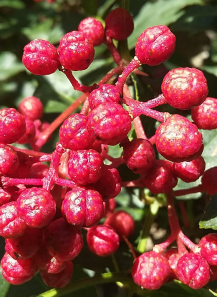
“Sanshool-family evidence: sanshool protected UVB-irradiated human dermal fibroblasts and mouse skin by reducing ROS, MMP-1/MMP-3 and JAK2/STAT3-linked photodamage pathways.”
Zanthox™ (Zanthoxylum Bungeanum Fruit Extract, Botox-Like) is a special‑grade Zanthoxylum bungeanum fruit extract (Sichuan pepper pericarp) standardized for a very high sanshool content (2.2–3.5%). This grade delivers one of the highest sanshool levels compared with typical Zanthoxylum bungeanum extracts on the market.
Sanshools are lipophilic alkamides known for strong peripheral neuroactivity (a characteristic tingling/numbing sensation). In cosmetics this mechanism is most aligned with rapid, temporary smoothing of dynamic expression lines, rather than slow dermal remodeling.
Zanthox focuses on higher delivered sanshools to support stronger short‑term efficacy at realistic leave‑on use levels, while remaining suitable for routine formulation when used and tested appropriately.
Product Description: Zanthox is designed as a ‘botox‑like’ cosmetic active primarily through neuromodulatory / myorelaxant activity of sanshools.
- Rapid smoothing: a sanshool‑rich lipophilic fraction from Z. bungeanum fruit husks has been reported to inhibit synaptic transmission, and was studied for subcutaneous muscle relaxation with an immediate lifting/smoothing effect on skin roughness parameters. Overall tolerability was described as good, with only limited desensitization on repeated use; longer‑term anti‑wrinkle changes were modest.
- Human controlled evidence: a randomized, vehicle‑controlled, double‑blind, split‑face study (n=20, 30 days) reported that a formulation containing 2% Z. bungeanum pericarp extract significantly improved crow’s‑feet roughness versus vehicle, with supportive changes in hydration and elasticity and no adverse effects reported during the study period.
- Photoaging‑relevant biology: sanshool has been studied in UVB‑irradiated human dermal fibroblasts and in UVB hairless mouse skin, showing reduced ROS, reduced MMP‑1/MMP‑3 (collagen‑degrading enzymes), and pathway‑consistent modulation of autophagy with attenuation of JAK2/STAT3 signaling. This profile is mechanistically aligned with helping preserve extracellular matrix integrity under UV stress.
- Sensory/ion‑channel basis: hydroxy‑α‑sanshool can modulate neuronal ion channels (including inhibition of specific K2P potassium channels such as KCNK3/KCNK9/KCNK18), consistent with the characteristic tingling/numbing sensation and a neurocosmetic use.
Claim focus: the best‑supported use is fast, temporary smoothing of expression‑line wrinkles (dynamic lines) and short‑term improvement of crow’s feet appearance; long‑duration clinical evidence for dermal remodeling is not yet established.
| Model/System | Key Endpoints | Implication |
|---|---|---|
| Human split-face study (2% pericarp extract, 30 days) | Improved crow’s-feet roughness; supportive hydration/elasticity changes | Short-term wrinkle appearance improvement |
| Sanshool-rich fraction (lifting study) | Immediate lifting/smoothing; neuromodulatory/myorelaxant rationale | Fast cosmetic effect on dynamic lines |
| UVB-stressed dermal fibroblasts | ↓ ROS; ↓ MMP-1/MMP-3; autophagy/JAK2-STAT3 modulation | Photoaging-relevant matrix preservation |
| UVB hairless mouse skin (topical) | Reduced inflammation progression; pathway-consistent changes | Support for UV-stress mitigation |
Usage: Leave‑on anti‑aging skincare where temporary expression‑line smoothing is desired: creams, lotions, clear gels, toners, and masks (including eye‑area formulations only when tolerability is verified). Suitable for day or night products; consider pairing with UV filters/antioxidant systems for photoaging support.
Mixing method:
- Pre‑dissolve or pre‑disperse in the water phase or in glycols (e.g., propylene glycol / butylene glycol) before combining with the main batch.
- Add at the final step / cool‑down and avoid prolonged heating above 40°C.
- Formulate and verify finished‑formula sensory profile: sanshools can cause tingling/numbing; start low, avoid use on compromised skin, and keep away from eyes/mucosa unless specifically tested.
Usage rate: 0.1–3%
Typical range: ~0.5–2% for leave‑on anti‑aging; a 2% pericarp extract formula has been studied clinically for crow’s‑feet appearance over 30 days.
Product characteristics: Light yellow to brown powder (water‑dispersible); characteristic odor; may produce a mild tingling sensation on skin depending on dose and formula.
Solubility: Soluble/dispersible in water and glycols; may be difficult to incorporate directly into anhydrous oils—pre‑dissolve in water/glycol, then add to emulsions/serums. Always confirm clarity/stability in the finished formula.
Storage: Store tightly closed, dry, and protected from heat/light. Avoid moisture exposure; reseal promptly after use.
| Test Name | Specification |
|---|---|
| Characteristics | Light yellow to yellow Liquid |
| Odor | Characteristic odor |
| Heavy Metal | ≤10 ppm |
| Lead | ≤3ppm |
| Cadmium | ≤1ppm |
| Arsenic | ≤2ppm |
| Mercury | ≤0.1ppm |
| Total Plate Count | <1000cfu/g |
| Yeast & Mold | <100cfu/g |
| E. Coli | Negative |
| Salmonella | Negative |
No products
Zanthox™ (Zanthoxylum Bungeanum Fruit Extract, Botox-Like) is a special‑grade Zanthoxylum bungeanum fruit extract (Sichuan pepper pericarp) standardized for a very high sanshool content (2.2–3.5%). This grade delivers one of the highest sanshool levels compared with typical Zanthoxylum bungeanum extracts on the market.
Sanshools are lipophilic alkamides known for strong peripheral neuroactivity (a characteristic tingling/numbing sensation). In cosmetics this mechanism is most aligned with rapid, temporary smoothing of dynamic expression lines, rather than slow dermal remodeling.
Zanthox focuses on higher delivered sanshools to support stronger short‑term efficacy at realistic leave‑on use levels, while remaining suitable for routine formulation when used and tested appropriately.
Product Description: Zanthox is designed as a ‘botox‑like’ cosmetic active primarily through neuromodulatory / myorelaxant activity of sanshools.
- Rapid smoothing: a sanshool‑rich lipophilic fraction from Z. bungeanum fruit husks has been reported to inhibit synaptic transmission, and was studied for subcutaneous muscle relaxation with an immediate lifting/smoothing effect on skin roughness parameters. Overall tolerability was described as good, with only limited desensitization on repeated use; longer‑term anti‑wrinkle changes were modest.
- Human controlled evidence: a randomized, vehicle‑controlled, double‑blind, split‑face study (n=20, 30 days) reported that a formulation containing 2% Z. bungeanum pericarp extract significantly improved crow’s‑feet roughness versus vehicle, with supportive changes in hydration and elasticity and no adverse effects reported during the study period.
- Photoaging‑relevant biology: sanshool has been studied in UVB‑irradiated human dermal fibroblasts and in UVB hairless mouse skin, showing reduced ROS, reduced MMP‑1/MMP‑3 (collagen‑degrading enzymes), and pathway‑consistent modulation of autophagy with attenuation of JAK2/STAT3 signaling. This profile is mechanistically aligned with helping preserve extracellular matrix integrity under UV stress.
- Sensory/ion‑channel basis: hydroxy‑α‑sanshool can modulate neuronal ion channels (including inhibition of specific K2P potassium channels such as KCNK3/KCNK9/KCNK18), consistent with the characteristic tingling/numbing sensation and a neurocosmetic use.
Claim focus: the best‑supported use is fast, temporary smoothing of expression‑line wrinkles (dynamic lines) and short‑term improvement of crow’s feet appearance; long‑duration clinical evidence for dermal remodeling is not yet established.
| Model/System | Key Endpoints | Implication |
|---|---|---|
| Human split-face study (2% pericarp extract, 30 days) | Improved crow’s-feet roughness; supportive hydration/elasticity changes | Short-term wrinkle appearance improvement |
| Sanshool-rich fraction (lifting study) | Immediate lifting/smoothing; neuromodulatory/myorelaxant rationale | Fast cosmetic effect on dynamic lines |
| UVB-stressed dermal fibroblasts | ↓ ROS; ↓ MMP-1/MMP-3; autophagy/JAK2-STAT3 modulation | Photoaging-relevant matrix preservation |
| UVB hairless mouse skin (topical) | Reduced inflammation progression; pathway-consistent changes | Support for UV-stress mitigation |
Usage: Leave‑on anti‑aging skincare where temporary expression‑line smoothing is desired: creams, lotions, clear gels, toners, and masks (including eye‑area formulations only when tolerability is verified). Suitable for day or night products; consider pairing with UV filters/antioxidant systems for photoaging support.
Mixing method:
- Pre‑dissolve or pre‑disperse in the water phase or in glycols (e.g., propylene glycol / butylene glycol) before combining with the main batch.
- Add at the final step / cool‑down and avoid prolonged heating above 40°C.
- Formulate and verify finished‑formula sensory profile: sanshools can cause tingling/numbing; start low, avoid use on compromised skin, and keep away from eyes/mucosa unless specifically tested.
Usage rate: 0.1–3%
Typical range: ~0.5–2% for leave‑on anti‑aging; a 2% pericarp extract formula has been studied clinically for crow’s‑feet appearance over 30 days.
Product characteristics: Light yellow to brown powder (water‑dispersible); characteristic odor; may produce a mild tingling sensation on skin depending on dose and formula.
Solubility: Soluble/dispersible in water and glycols; may be difficult to incorporate directly into anhydrous oils—pre‑dissolve in water/glycol, then add to emulsions/serums. Always confirm clarity/stability in the finished formula.
Storage: Store tightly closed, dry, and protected from heat/light. Avoid moisture exposure; reseal promptly after use.
| Mechanism | - |
| Appearance | - |
| Longevity | - |
| Strength | - |
| Long-term storage | - |
| Shelf Life | - |
| Allergen(s) | - |
| Dosage (Range) | - |
| Recommended Dosage | - |
| Dosage (Per Day) | - |
| Recommended Dosage (Per Day) | - |
| Mix Method | - |
| Heat Resistance | - |
| Stable in pH range | - |
| Solubility | - |
| Product Types | - |
| INCI | - |