


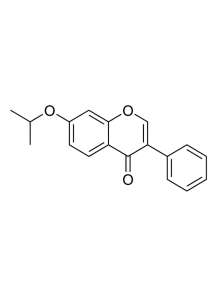
Ipriflavone — synthetic isoflavone research compound; bone-study evidence is mixed; safety flags include lymphocyte lowering and interaction potential.
Ipriflavone is a synthetic isoflavone (soy-related scaffold) used as a research compound in studies of bone metabolism and related biomarkers.
⚠️ For research use only. Not a dietary supplement. Not for human consumption.
Human literature has investigated ipriflavone mainly in postmenopausal populations for osteopenia/osteoporosis, with mixed efficacy signals and notable safety flags reported in long-term use.
Chemical Information:
CAS Number: 35212-22-7
Molecular Formula: C18H16O3
Molecular Weight: 280.3 g/mol
IUPAC Name: 3-phenyl-7-propan-2-yloxychromen-4-one
Evidence Snapshot (Human Data):
| Evidence Type | Main Findings | Practical Takeaway |
|---|---|---|
| Systematic review / meta-analysis | Suggests modest improvements in bone mineral density in some settings, with heterogeneity across trials. | Efficacy signals are inconsistent; interpret cautiously. |
| Long-term randomized controlled trial | Did not prevent bone loss vs placebo and reported a notable rate of subclinical lymphocytopenia. | Safety monitoring is a key concern in oral-use contexts. |
Key Safety Notes (from clinical/literature reports):
- Lymphocytopenia (lower lymphocyte counts) has been reported in a multi-year randomized trial; monitoring is a key concern for oral use.
- Gastrointestinal discomfort is among the commonly reported adverse effects.
- Potential drug-interaction risk via effects on CYP enzymes; literature includes reports involving theophylline metabolism and a case report suggesting a possible warfarin interaction.
Recommended Lab Uses:
- Reference/analyte for HPLC/LC-MS method development and identity confirmation
- Stability and degradation profiling in formulation or matrix studies
- QC reference for incoming material checks (when used with appropriate standards/COA)
Handling & Storage:
- Handle with standard laboratory PPE (gloves, eye protection) and avoid inhalation/ingestion.
- Store tightly closed, protected from light and moisture.
- Recommended storage: cool, dry place (15–25°C) unless supplier COA specifies otherwise.
No products
Ipriflavone — synthetic isoflavone research compound; bone-study evidence is mixed; safety flags include lymphocyte lowering and interaction potential.
Ipriflavone is a synthetic isoflavone (soy-related scaffold) used as a research compound in studies of bone metabolism and related biomarkers.
⚠️ For research use only. Not a dietary supplement. Not for human consumption.
Human literature has investigated ipriflavone mainly in postmenopausal populations for osteopenia/osteoporosis, with mixed efficacy signals and notable safety flags reported in long-term use.
Chemical Information:
CAS Number: 35212-22-7
Molecular Formula: C18H16O3
Molecular Weight: 280.3 g/mol
IUPAC Name: 3-phenyl-7-propan-2-yloxychromen-4-one
Evidence Snapshot (Human Data):
| Evidence Type | Main Findings | Practical Takeaway |
|---|---|---|
| Systematic review / meta-analysis | Suggests modest improvements in bone mineral density in some settings, with heterogeneity across trials. | Efficacy signals are inconsistent; interpret cautiously. |
| Long-term randomized controlled trial | Did not prevent bone loss vs placebo and reported a notable rate of subclinical lymphocytopenia. | Safety monitoring is a key concern in oral-use contexts. |
Key Safety Notes (from clinical/literature reports):
- Lymphocytopenia (lower lymphocyte counts) has been reported in a multi-year randomized trial; monitoring is a key concern for oral use.
- Gastrointestinal discomfort is among the commonly reported adverse effects.
- Potential drug-interaction risk via effects on CYP enzymes; literature includes reports involving theophylline metabolism and a case report suggesting a possible warfarin interaction.
Recommended Lab Uses:
- Reference/analyte for HPLC/LC-MS method development and identity confirmation
- Stability and degradation profiling in formulation or matrix studies
- QC reference for incoming material checks (when used with appropriate standards/COA)
Handling & Storage:
- Handle with standard laboratory PPE (gloves, eye protection) and avoid inhalation/ingestion.
- Store tightly closed, protected from light and moisture.
- Recommended storage: cool, dry place (15–25°C) unless supplier COA specifies otherwise.
| Mechanism | - |
| Appearance | - |
| Longevity | - |
| Strength | - |
| Long-term storage | - |
| Shelf Life | - |
| Allergen(s) | - |
| Dosage (Range) | - |
| Recommended Dosage | - |
| Dosage (Per Day) | - |
| Recommended Dosage (Per Day) | - |
| Mix Method | - |
| Heat Resistance | - |
| Stable in pH range | - |
| Solubility | - |
| Product Types | - |
| INCI | - |