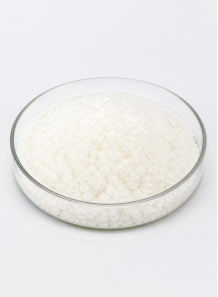
Candle Wax Polymer Modifier

RM Fragrance/Flavor/Aroma Chemicals Code: 254304
Polymer wax additive for scented candles; supports fragrance-oil binding, wax structure, opacity, and surface uniformity.
฿1,580.00
gram
Min: 0g
pieces
trending_down

Unit price will be cheaper for larger size

The price will be calculated based on the size you enter

Candle Wax Polymer Modifier is a white to off-white polymer wax additive for scented candle wax systems. It is used at low levels to adjust wax structure, support fragrance-oil binding, improve opacity and surface texture, and reduce oil migration or surface sweating when the wax base and fragrance load are prone to separation.

The material is intended for non-aqueous candle formulations rather than for direct odor contribution. It is most relevant for paraffin-rich wax systems and paraffin-blend waxes, and it can be evaluated in other wax systems when a formulator needs a firmer, more cohesive wax matrix with better fragrance holding behavior.

Product Description:

- Physical form: white to off-white pellets/granules

- Function: candle wax structure modifier and fragrance-oil retention aid

- Odor contribution: mild/low odor; not intended as a fragrance note

- System fit: melted candle wax and wax/oil phases

- Water compatibility: not for aqueous systems

Formulation Benefits:

- Helps hold fragrance oil within the wax matrix

- May reduce sweating, surface oiliness, or fragrance-oil migration

- Helps improve wax body, firmness, opacity, and structural consistency

- Can improve surface uniformity in highly fragranced candles

- Useful for adjusting texture, creaminess, and visual finish of candle wax

Applications:

- Scented candles where fragrance oil tends to migrate, bleed, or sweat

- Container candles requiring improved wax cohesion and surface finish

- Paraffin and paraffin-blend candles with medium to high fragrance loading

- Wax blends needing higher oil-binding capacity or a more uniform appearance

- Candle development work where opacity, texture, hardness, and surface quality need fine adjustment

Mixing method:

Pre-melt the wax base completely, then add Candle Wax Polymer Modifier into the melted wax phase with steady mixing until fully melted and uniformly dispersed. Add oil-soluble colorants if used, cool to the normal fragrance-addition temperature for the wax system, then add fragrance oil and mix thoroughly but gently. Pour at the optimized pour temperature for the selected wax system.

Run a small batch test for each wax/fragrance system because performance depends on wax composition, fragrance oil polarity, fragrance dosage, dye level, cooling rate, container geometry, pour temperature, and wick selection.

Usage rate: 0.2-2.0% of total candle formula. Typical starting point: 0.5%. Increase gradually when higher fragrance-oil binding, opacity, wax firmness, or surface uniformity is needed. Excessive use may increase hardness, opacity, melt viscosity, shrinkage, or change burn behavior, so wick and burn testing are required before scale-up.

Compatibility testing:

Compatibility should be confirmed in the final candle system, especially for soy wax, palm wax, gel wax, beeswax, coconut wax, and waxes with high natural-wax content. Evaluate fragrance retention, sweating/oil migration, surface cracking or frosting, wax hardness, shrinkage, cold throw, hot throw, wick compatibility, flame height, soot, melt-pool behavior, and container temperature.

Product characteristics:

- Appearance: white to off-white pellets/granules

- Physical state: solid

- pH: not applicable for non-aqueous wax systems

- Solubility/compatibility: melts and disperses into melted candle wax or wax/oil phase; insoluble in water

Storage: Store tightly closed in a dry room-temperature area. Keep away from moisture, excessive heat, direct sunlight, and contamination. Prolonged high temperature may soften or agglomerate pellets/granules.

Handling precautions: Use standard industrial hygiene practices. Avoid inhalation of dust or fumes generated during heating. Use suitable eye protection, heat-resistant gloves, and local ventilation when handling molten wax. Final candles must be evaluated for burn safety before commercial release.


Candle Wax Polymer Modifier
Polymer wax additive for scented candles; supports fragrance-oil binding, wax structure, opacity, and surface uniformity.

Candle Wax Polymer Modifier is a white to off-white polymer wax additive for scented candle wax systems. It is used at low levels to adjust wax structure, support fragrance-oil binding, improve opacity and surface texture, and reduce oil migration or surface sweating when the wax base and fragrance load are prone to separation.

The material is intended for non-aqueous candle formulations rather than for direct odor contribution. It is most relevant for paraffin-rich wax systems and paraffin-blend waxes, and it can be evaluated in other wax systems when a formulator needs a firmer, more cohesive wax matrix with better fragrance holding behavior.

Product Description:

- Physical form: white to off-white pellets/granules

- Function: candle wax structure modifier and fragrance-oil retention aid

- Odor contribution: mild/low odor; not intended as a fragrance note

- System fit: melted candle wax and wax/oil phases

- Water compatibility: not for aqueous systems

Formulation Benefits:

- Helps hold fragrance oil within the wax matrix

- May reduce sweating, surface oiliness, or fragrance-oil migration

- Helps improve wax body, firmness, opacity, and structural consistency

- Can improve surface uniformity in highly fragranced candles

- Useful for adjusting texture, creaminess, and visual finish of candle wax

Applications:

- Scented candles where fragrance oil tends to migrate, bleed, or sweat

- Container candles requiring improved wax cohesion and surface finish

- Paraffin and paraffin-blend candles with medium to high fragrance loading

- Wax blends needing higher oil-binding capacity or a more uniform appearance

- Candle development work where opacity, texture, hardness, and surface quality need fine adjustment

Mixing method:

Pre-melt the wax base completely, then add Candle Wax Polymer Modifier into the melted wax phase with steady mixing until fully melted and uniformly dispersed. Add oil-soluble colorants if used, cool to the normal fragrance-addition temperature for the wax system, then add fragrance oil and mix thoroughly but gently. Pour at the optimized pour temperature for the selected wax system.

Run a small batch test for each wax/fragrance system because performance depends on wax composition, fragrance oil polarity, fragrance dosage, dye level, cooling rate, container geometry, pour temperature, and wick selection.

Usage rate: 0.2-2.0% of total candle formula. Typical starting point: 0.5%. Increase gradually when higher fragrance-oil binding, opacity, wax firmness, or surface uniformity is needed. Excessive use may increase hardness, opacity, melt viscosity, shrinkage, or change burn behavior, so wick and burn testing are required before scale-up.

Compatibility testing:

Compatibility should be confirmed in the final candle system, especially for soy wax, palm wax, gel wax, beeswax, coconut wax, and waxes with high natural-wax content. Evaluate fragrance retention, sweating/oil migration, surface cracking or frosting, wax hardness, shrinkage, cold throw, hot throw, wick compatibility, flame height, soot, melt-pool behavior, and container temperature.

Product characteristics:

- Appearance: white to off-white pellets/granules

- Physical state: solid

- pH: not applicable for non-aqueous wax systems

- Solubility/compatibility: melts and disperses into melted candle wax or wax/oil phase; insoluble in water

Storage: Store tightly closed in a dry room-temperature area. Keep away from moisture, excessive heat, direct sunlight, and contamination. Prolonged high temperature may soften or agglomerate pellets/granules.

Handling precautions: Use standard industrial hygiene practices. Avoid inhalation of dust or fumes generated during heating. Use suitable eye protection, heat-resistant gloves, and local ventilation when handling molten wax. Final candles must be evaluated for burn safety before commercial release.

Mechanism -
Function -
Appearance -
Longevity -
Strength -
Storage -
Shelf Life -
Allergen(s) -
Dosage (Range) -
Dosage (Per Day) -
Mix Method -
Heat Resistance -
Stable in pH range -
Solubility -
Product Types -
INCI -

Purchase History for

Loading purchase history...