


“Exact EDDS evidence in hair care: EDDS suppressed copper-driven hydroxyl radical formation and reduced cuticle/protein damage in oxidative hair-coloring conditions.”
30% aqueous EDDS chelating agent for cosmetic formulas. Helps bind copper and other trace metals to improve oxidative stability, hard-water tolerance, and formula robustness in cleansers, hair care, skin care, and oral care.
Trisodium Ethylenediamine Disuccinate (EDDS, 30% Solution) is a 30% aqueous solution of a readily biodegradable chelating agent used to bind trace metal ions in cosmetic formulas.
Formulators use EDDS to reduce copper- and iron-driven oxidation, discoloration, malodor, and hard-water interference in systems containing surfactants, fragrances, botanical extracts, colorants, or other metal-sensitive components. In practice it is used as a more biodegradable alternative to traditional EDTA-type chelators.
This liquid grade is easy to meter into the water phase. This water-soluble raw material is supplied at about pH 9.0-10.5 and fits shampoos, body wash, soap, skin care, oral care, and other personal-care systems where metal control supports stability.
Product Description: EDDS works by sequestering trace metals before they catalyze peroxide breakdown, fragrance drift, color change, off-odor formation, or surfactant instability. Its strongest practical value is formula protection rather than a direct skin-active claim. EDDS also supports preservative robustness and hard-water tolerance by reducing metal interference. In the Cosmetic Ingredient Review safety assessment, trisodium ethylenediamine disuccinate was concluded to be safe in present practices of use and concentration; reported maximum use concentrations were about 0.64% in leave-on hair-grooming products and 0.56% in moisturizing products.
Usage: Shampoos, body wash, liquid soap, cleansers, conditioners, skin-care emulsions and gels, oral-care products, and selected oxidative hair systems where trace-metal control improves robustness.
Mixing method:
- Add to the water phase or during aqueous make-up so the chelator is present before metal-sensitive materials are introduced.
- The solution is water-soluble and generally compatible with normal aqueous processing. The raw material is alkaline, so always re-check final formula pH after addition, especially in weakly buffered acidic systems.
- Use caution in formulas that intentionally rely on free metal ions or metal salts for performance, color, crosslinking, deposition, or antimicrobial action, because EDDS can reduce metal availability.
- EDDS may support preservative robustness by reducing metal interference, but it is not a preservative by itself; confirm any preservative optimization with challenge testing in the finished formula.
Usage rate: 0.1-2.0%
At 0.1-2.0% of this 30% solution, the delivered active EDDS level is about 0.03-0.60%. Typical use is around 0.2-0.5% for routine chelation and stability support, with higher levels reserved for difficult hard-water, oxidative, or strongly metal-sensitive systems.
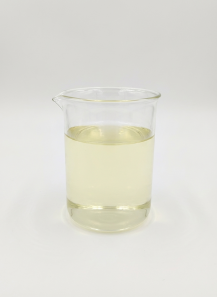
Product characteristics: Clear to pale yellow liquid; characteristic odor; alkaline as supplied.
Solubility: Soluble in water; easiest to use in the water phase of shampoos, cleansers, emulsions, gels, and oral-care systems.
Storage: Store tightly closed at room temperature, protected from excessive heat and direct light. Keep the container clean and well sealed to avoid contamination and evaporation shift.
| Test Name | Specification |
|---|---|
| Appearance | Pale, clear liquid free of foreign matter |
| Concentration: as free acid, % m/m | 27-33 |
| Optical purity of [S,S] form, % m/m | >= 99 |
| Species purity of [S,S]-isomer of total amino acid, % m/m | >= 95 |
| pH | 9.0-10.0 |
| Total metals (Fe, Cu, Mn, Ni, As), mg/kg | <= 10 |
No products
30% aqueous EDDS chelating agent for cosmetic formulas. Helps bind copper and other trace metals to improve oxidative stability, hard-water tolerance, and formula robustness in cleansers, hair care, skin care, and oral care.
Trisodium Ethylenediamine Disuccinate (EDDS, 30% Solution) is a 30% aqueous solution of a readily biodegradable chelating agent used to bind trace metal ions in cosmetic formulas.
Formulators use EDDS to reduce copper- and iron-driven oxidation, discoloration, malodor, and hard-water interference in systems containing surfactants, fragrances, botanical extracts, colorants, or other metal-sensitive components. In practice it is used as a more biodegradable alternative to traditional EDTA-type chelators.
This liquid grade is easy to meter into the water phase. This water-soluble raw material is supplied at about pH 9.0-10.5 and fits shampoos, body wash, soap, skin care, oral care, and other personal-care systems where metal control supports stability.
Product Description: EDDS works by sequestering trace metals before they catalyze peroxide breakdown, fragrance drift, color change, off-odor formation, or surfactant instability. Its strongest practical value is formula protection rather than a direct skin-active claim. EDDS also supports preservative robustness and hard-water tolerance by reducing metal interference. In the Cosmetic Ingredient Review safety assessment, trisodium ethylenediamine disuccinate was concluded to be safe in present practices of use and concentration; reported maximum use concentrations were about 0.64% in leave-on hair-grooming products and 0.56% in moisturizing products.
Usage: Shampoos, body wash, liquid soap, cleansers, conditioners, skin-care emulsions and gels, oral-care products, and selected oxidative hair systems where trace-metal control improves robustness.
Mixing method:
- Add to the water phase or during aqueous make-up so the chelator is present before metal-sensitive materials are introduced.
- The solution is water-soluble and generally compatible with normal aqueous processing. The raw material is alkaline, so always re-check final formula pH after addition, especially in weakly buffered acidic systems.
- Use caution in formulas that intentionally rely on free metal ions or metal salts for performance, color, crosslinking, deposition, or antimicrobial action, because EDDS can reduce metal availability.
- EDDS may support preservative robustness by reducing metal interference, but it is not a preservative by itself; confirm any preservative optimization with challenge testing in the finished formula.
Usage rate: 0.1-2.0%
At 0.1-2.0% of this 30% solution, the delivered active EDDS level is about 0.03-0.60%. Typical use is around 0.2-0.5% for routine chelation and stability support, with higher levels reserved for difficult hard-water, oxidative, or strongly metal-sensitive systems.
Product characteristics: Clear to pale yellow liquid; characteristic odor; alkaline as supplied.
Solubility: Soluble in water; easiest to use in the water phase of shampoos, cleansers, emulsions, gels, and oral-care systems.
Storage: Store tightly closed at room temperature, protected from excessive heat and direct light. Keep the container clean and well sealed to avoid contamination and evaporation shift.
| Mechanism | - |
| Appearance | - |
| Longevity | - |
| Strength | - |
| Storage | - |
| Shelf Life | - |
| Allergen(s) | - |
| Dosage (Range) | - |
| Recommended Dosage | - |
| Dosage (Per Day) | - |
| Recommended Dosage (Per Day) | - |
| Mix Method | - |
| Heat Resistance | - |
| Stable in pH range | - |
| Solubility | - |
| Product Types | - |
| INCI | - |