


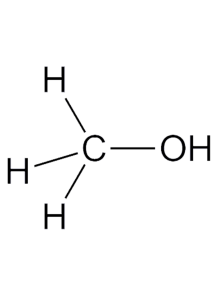
often called wood alcohol, is the simplest alcohol with the chemical formula CH₃OH. It is a colorless, volatile, and flammable liquid at room temperature, with a characteristic faintly sweet odor
Methanol, often called wood alcohol, is the simplest alcohol with the chemical formula CH₃OH. It is a colorless, volatile, and flammable liquid at room temperature, with a characteristic faintly sweet odor. Methanol is produced both naturally and synthetically, and it has numerous industrial and commercial applications.
Key Properties:
Production:
Historically, methanol was produced by the destructive distillation of wood, giving rise to the name “wood alcohol.” Today, it is predominantly synthesized from syn-gas (a mixture of carbon monoxide and hydrogen) using a copper-based catalyst. Another emerging method involves converting methane (the primary component of natural gas) into methanol, representing a key component in natural gas-to-liquids (GTL) technologies.
Uses and Applications:
| Test Name | Specification |
|---|---|
| ASSAY | 97–100 |
| CA | 0–200 |
| CD | 0–50 |
| CO | 0–50 |
| Cu | 0–50 |
| K | 0–100 |
| IRON(FE) | 0–50 |
| Melting point | 60–70 |
| NI | 0–50 |
| PB | 0–50 |
| ZN | 0–50 |
| X-RAY DIFFRACTION | Conforms to Structure |
| Appearance | WHITE POWDER OR CRYSTALS |
No products
often called wood alcohol, is the simplest alcohol with the chemical formula CH₃OH. It is a colorless, volatile, and flammable liquid at room temperature, with a characteristic faintly sweet odor
Methanol, often called wood alcohol, is the simplest alcohol with the chemical formula CH₃OH. It is a colorless, volatile, and flammable liquid at room temperature, with a characteristic faintly sweet odor. Methanol is produced both naturally and synthetically, and it has numerous industrial and commercial applications.
Key Properties:
Production:
Historically, methanol was produced by the destructive distillation of wood, giving rise to the name “wood alcohol.” Today, it is predominantly synthesized from syn-gas (a mixture of carbon monoxide and hydrogen) using a copper-based catalyst. Another emerging method involves converting methane (the primary component of natural gas) into methanol, representing a key component in natural gas-to-liquids (GTL) technologies.
Uses and Applications:
| Mechanism | - |
| Appearance | - |
| Longevity | - |
| Strength | - |
| Long-term storage | - |
| Shelf Life | - |
| Allergen(s) | - |
| Dosage (Range) | - |
| Recommended Dosage | - |
| Dosage (Per Day) | - |
| Recommended Dosage (Per Day) | - |
| Mix Method | - |
| Heat Resistance | - |
| Stable in pH range | - |
| Solubility | - |
| Product Types | - |
| INCI | - |