
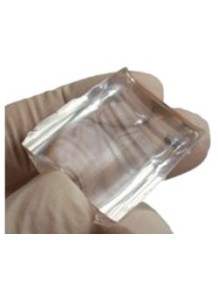
PDMS Silicone Elastomer (Base SE-1700, High Viscosity, Clear)

General Code: 253841

PDMS Silicone Elastomer (Base)

฿9,865.00
gram
Min: 0g
pieces
trending_down

Unit price will be cheaper for larger size

The price will be calculated based on the size you enter

PDMS Silicone Elastomer (Base)


To create a complete texture:

use Base 10 sections: Curing Agent 1 part mix well

If there are bubbles May need to expel air bubbles as well Vacuum pot

Leave it at room temperature for about 2 hours, will cure completely by itself.

SYLGARD™ 184 vs DOWSIL™ SE 1700 (Technical Comparison)

SYLGARD™ 184 and DOWSIL™ SE 1700 are both platinum‑cured PDMS silicone elastomers from Dow, but they are designed for different mechanical behavior and applications. The comparison below is intended for materials engineers or formulators.

SYLGARD™ 184 vs SE 1700

PropertySYLGARD™ 184DOWSIL™ SE 1700
Silicone typeTwo‑part PDMS elastomerTwo‑part PDMS elastomer
Typical mix ratio10:1 (base:curing agent)Usually 10:1
Viscosity (mixed)~3500 mPa·sHigher viscosity
Shore hardness~43 Shore ASofter elastomer (lower modulus)
Optical clarityTransparentOften opaque/white
Elastic modulusHigher (stiffer)Lower (more flexible)
Typical cureRoom‑temperature cure or heat‑acceleratedRoom‑temperature cure or heat
Main applicationsMicrofluidics, encapsulation, opticsStretchable electronics, soft robotics
Solvent swellingModerateHigher swelling tendency

Key functional differences

1) Mechanical stiffness

  • SYLGARD™ 184: medium‑stiff elastomer, higher Young’s modulus, more dimensionally stable.
  • SE 1700: much softer elastomer, higher elongation, more flexible and stretchable (often chosen for large deformation).

2) Solvent absorption

SE 1700 generally shows higher solvent absorption and swelling than SYLGARD™ 184, consistent with a looser network structure.

3) Optical properties

  • SYLGARD™ 184: optically clear; commonly used in optics, microfluidic chips, and lenses.
  • SE 1700: typically more opaque; less preferred for optical devices.

4) Processing

Both are platinum addition‑cure, 2‑component systems (mix and degas before casting). Practical tendencies:

AspectOften better suited
Mixing and degassingSYLGARD™ 184
Very soft structuresSE 1700
Mold replication / microfluidic moldsSYLGARD™ 184

Typical applications

SYLGARD™ 184

  • Microfluidic chips
  • MEMS devices
  • Optical elastomers
  • Electronic encapsulation
  • Soft lithography

SE 1700

  • Stretchable sensors
  • Soft robotics
  • Dielectric elastomer actuators
  • Flexible electronics

Rule of thumb

If you wantChoose
Optical claritySYLGARD™ 184
Higher stiffnessSYLGARD™ 184
Very soft elastomerSE 1700
Large strain / stretchSE 1700
Microfluidic moldsSYLGARD™ 184

Practical note (research use): Many labs blend SYLGARD™ 184 with SE 1700 to tune modulus and swelling, creating intermediate mechanical properties for soft actuators and flexible electronics.


  • Cool (15-25C)
  • 24 Months from manufacturing or testing date.
  • Add at last step. Avoid temperature above 40C.
  • Avoid heat above 40C
  • 0.00 - 0.00

Cart

No products

Subtotal: 0.00
Total 0.00 THB
PDMS Silicone Elastomer (Base SE-1700, High Viscosity, Clear)

PDMS Silicone Elastomer (Base)

PDMS Silicone Elastomer (Base)


To create a complete texture:

use Base 10 sections: Curing Agent 1 part mix well

If there are bubbles May need to expel air bubbles as well Vacuum pot

Leave it at room temperature for about 2 hours, will cure completely by itself.

SYLGARD™ 184 vs DOWSIL™ SE 1700 (Technical Comparison)

SYLGARD™ 184 and DOWSIL™ SE 1700 are both platinum‑cured PDMS silicone elastomers from Dow, but they are designed for different mechanical behavior and applications. The comparison below is intended for materials engineers or formulators.

SYLGARD™ 184 vs SE 1700

PropertySYLGARD™ 184DOWSIL™ SE 1700
Silicone typeTwo‑part PDMS elastomerTwo‑part PDMS elastomer
Typical mix ratio10:1 (base:curing agent)Usually 10:1
Viscosity (mixed)~3500 mPa·sHigher viscosity
Shore hardness~43 Shore ASofter elastomer (lower modulus)
Optical clarityTransparentOften opaque/white
Elastic modulusHigher (stiffer)Lower (more flexible)
Typical cureRoom‑temperature cure or heat‑acceleratedRoom‑temperature cure or heat
Main applicationsMicrofluidics, encapsulation, opticsStretchable electronics, soft robotics
Solvent swellingModerateHigher swelling tendency

Key functional differences

1) Mechanical stiffness

2) Solvent absorption

SE 1700 generally shows higher solvent absorption and swelling than SYLGARD™ 184, consistent with a looser network structure.

3) Optical properties

4) Processing

Both are platinum addition‑cure, 2‑component systems (mix and degas before casting). Practical tendencies:

AspectOften better suited
Mixing and degassingSYLGARD™ 184
Very soft structuresSE 1700
Mold replication / microfluidic moldsSYLGARD™ 184

Typical applications

SYLGARD™ 184

SE 1700

Rule of thumb

If you wantChoose
Optical claritySYLGARD™ 184
Higher stiffnessSYLGARD™ 184
Very soft elastomerSE 1700
Large strain / stretchSE 1700
Microfluidic moldsSYLGARD™ 184

Practical note (research use): Many labs blend SYLGARD™ 184 with SE 1700 to tune modulus and swelling, creating intermediate mechanical properties for soft actuators and flexible electronics.

Mechanism -
Appearance -
Longevity -
Strength -
Storage -
Shelf Life -
Allergen(s) -
Dosage (Range) -
Dosage (Per Day) -
Mix Method -
Heat Resistance -
Stable in pH range -
Solubility -
Product Types -
INCI -

Purchase History for

Loading purchase history...