


“Human split-face evidence: micellar oleanolic acid, not this exact cyclodextrin SKU, improved peri-orbital wrinkle/roughness parameters after 8 weeks without irritation.”
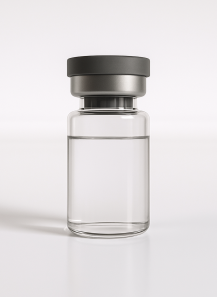
ActiveRelease™ Oleanolic is a water-based cyclodextrin complex delivering ~11% oleanolic acid (from olive-derived source) to improve OA dispersion in skin and scalp formulas.
Designed for leave-on products where raw oleanolic acid is difficult to use due to poor water solubility.
ActiveRelease™ Oleanolic is a water-based, cyclodextrin-enabled concentrate designed to deliver oleanolic acid (OA) in skin and scalp formulations where raw OA is difficult to disperse.
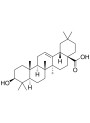
Oleanolic acid is a pentacyclic triterpenoid found widely in plants (including olive-derived sources) and has been studied for anti-inflammatory and antioxidant activity in skin-relevant models; a key practical limitation is very poor water solubility unless formulated in a delivery system.
Human evidence exists for well-formulated topical OA: in a double-blind split-face study, a polymeric-micelle OA ampoule applied around the eyes for 8 weeks improved wrinkle/roughness measurements versus control; additional cell and animal studies support barrier recovery/differentiation signaling and oxidative-stress modulation (evidence strength varies by endpoint).
Product Description: This SKU contains 11% oleanolic acid pre-complexed with cyclodextrin in purified water (high-active concentrate), giving a water-compatible format intended for leave-on products.
- Anti-aging texture support (human): improved peri-orbital wrinkle appearance in an 8-week split-face study when OA was delivered via micelles (human cosmetic study; delivery system dependent).
- Barrier support (preclinical): topical OA/related triterpenoids increased keratinocyte differentiation markers and supported barrier recovery with increases in epidermal lipids/ceramides via PPAR-α–linked pathways in model systems.
- Oxidative/inflammatory modulation (in vitro): OA reduced oxidative-stress readouts (e.g., ROS) and inflammatory signaling outputs (e.g., iNOS/NO) in keratinocyte models under exogenous stress.
- Sebum/acne claims: there is mechanistic rationale involving androgen/5α-reductase pathways, but robust clinical acne/sebum trials for OA alone are limited; position oily-skin benefits cautiously.
- Scalp/hair biology (preclinical): OA increased hair shaft elongation and proliferation markers in human hair follicle organ culture and promoted pro-growth signaling (e.g., β-catenin/Wnt) in a testosterone-induced alopecia mouse model; human data is mainly from multi-ingredient regimens that include OA.
| Model/System | Key Endpoints | Implication |
|---|---|---|
| Human split-face cosmetic study (peri-orbital) | Improved wrinkle/roughness parameters after 8 weeks (micellar OA delivery) | Anti-wrinkle appearance support when properly delivered |
| Keratinocyte models (oxidative stress) | ↓ ROS; modulation of iNOS/NO outputs under stress | Supports “anti-oxidant / calming” positioning |
| Skin barrier models (mouse + keratinocytes) | Faster barrier recovery; differentiation/barrier markers; ceramide-related changes (PPAR-α linked) | Barrier resilience / texture support |
| Human hair follicle organ culture (ex vivo) | ↑ hair shaft elongation; ↑ Ki-67; ↑ β-catenin | Pro-growth signaling support (preclinical) |
| Testosterone-induced alopecia mouse model | Hair growth improvement with pathway shifts including β-catenin and androgen/inflammation readouts | Scalp/hair-care positioning (preclinical) |
Usage: Eye-area and face anti-aging products, barrier-support and calming products, and scalp serums/tonics for hair and scalp conditioning (leave-on preferred).
Mixing method:
- Add to the aqueous phase during cool-down (≤ 40°C) and mix until uniform.
- Recommended finished-formula pH: ~3.5–7.0; always confirm clarity and stability in your base.
- For emulsions: post-add during cool-down to the water phase or finished emulsion with moderate shear.
Usage rate: 0.5–5%
This concentrate delivers 11% oleanolic acid: use 0.5–5% to deliver ~0.06–0.55% OA. Typical: ~2% delivers ~0.22% OA.
Product characteristics: Clear to slightly opalescent aqueous solution.
Solubility: Water-compatible (cyclodextrin complex). Note that the solubilization capacity is finite—validate clarity at your intended use level, especially in very low-solvent or high-salt systems.
Storage: Store at 4–8 °C, protect from light, and keep tightly closed for long-term quality.
| Test Name | Specification |
|---|---|
| Appearance | Clear to slightly opalescent liquid |
| Odor | Mild characteristic |
| Identification (HPLC) | Retention time matches oleanolic acid reference |
| Assay (Oleanolic Acid, HPLC) | 10.5–11.5% w/w |
| Solubility | Water-soluble |
| Heavy Metals (as Pb) | ≤20 ppm |
| Arsenic (As) | ≤2 ppm |
| Total Aerobic Microbial Count (TAMC) | ≤100 cfu/g |
| Yeast & Mold | ≤100 cfu/g |
| Pathogens (S. aureus, P. aeruginosa, C. albicans) | Absent/25 g |
No products
ActiveRelease™ Oleanolic is a water-based cyclodextrin complex delivering ~11% oleanolic acid (from olive-derived source) to improve OA dispersion in skin and scalp formulas.
Designed for leave-on products where raw oleanolic acid is difficult to use due to poor water solubility.
ActiveRelease™ Oleanolic is a water-based, cyclodextrin-enabled concentrate designed to deliver oleanolic acid (OA) in skin and scalp formulations where raw OA is difficult to disperse.
Oleanolic acid is a pentacyclic triterpenoid found widely in plants (including olive-derived sources) and has been studied for anti-inflammatory and antioxidant activity in skin-relevant models; a key practical limitation is very poor water solubility unless formulated in a delivery system.
Human evidence exists for well-formulated topical OA: in a double-blind split-face study, a polymeric-micelle OA ampoule applied around the eyes for 8 weeks improved wrinkle/roughness measurements versus control; additional cell and animal studies support barrier recovery/differentiation signaling and oxidative-stress modulation (evidence strength varies by endpoint).
Product Description: This SKU contains 11% oleanolic acid pre-complexed with cyclodextrin in purified water (high-active concentrate), giving a water-compatible format intended for leave-on products.
- Anti-aging texture support (human): improved peri-orbital wrinkle appearance in an 8-week split-face study when OA was delivered via micelles (human cosmetic study; delivery system dependent).
- Barrier support (preclinical): topical OA/related triterpenoids increased keratinocyte differentiation markers and supported barrier recovery with increases in epidermal lipids/ceramides via PPAR-α–linked pathways in model systems.
- Oxidative/inflammatory modulation (in vitro): OA reduced oxidative-stress readouts (e.g., ROS) and inflammatory signaling outputs (e.g., iNOS/NO) in keratinocyte models under exogenous stress.
- Sebum/acne claims: there is mechanistic rationale involving androgen/5α-reductase pathways, but robust clinical acne/sebum trials for OA alone are limited; position oily-skin benefits cautiously.
- Scalp/hair biology (preclinical): OA increased hair shaft elongation and proliferation markers in human hair follicle organ culture and promoted pro-growth signaling (e.g., β-catenin/Wnt) in a testosterone-induced alopecia mouse model; human data is mainly from multi-ingredient regimens that include OA.
| Model/System | Key Endpoints | Implication |
|---|---|---|
| Human split-face cosmetic study (peri-orbital) | Improved wrinkle/roughness parameters after 8 weeks (micellar OA delivery) | Anti-wrinkle appearance support when properly delivered |
| Keratinocyte models (oxidative stress) | ↓ ROS; modulation of iNOS/NO outputs under stress | Supports “anti-oxidant / calming” positioning |
| Skin barrier models (mouse + keratinocytes) | Faster barrier recovery; differentiation/barrier markers; ceramide-related changes (PPAR-α linked) | Barrier resilience / texture support |
| Human hair follicle organ culture (ex vivo) | ↑ hair shaft elongation; ↑ Ki-67; ↑ β-catenin | Pro-growth signaling support (preclinical) |
| Testosterone-induced alopecia mouse model | Hair growth improvement with pathway shifts including β-catenin and androgen/inflammation readouts | Scalp/hair-care positioning (preclinical) |
Usage: Eye-area and face anti-aging products, barrier-support and calming products, and scalp serums/tonics for hair and scalp conditioning (leave-on preferred).
Mixing method:
- Add to the aqueous phase during cool-down (≤ 40°C) and mix until uniform.
- Recommended finished-formula pH: ~3.5–7.0; always confirm clarity and stability in your base.
- For emulsions: post-add during cool-down to the water phase or finished emulsion with moderate shear.
Usage rate: 0.5–5%
This concentrate delivers 11% oleanolic acid: use 0.5–5% to deliver ~0.06–0.55% OA. Typical: ~2% delivers ~0.22% OA.
Product characteristics: Clear to slightly opalescent aqueous solution.
Solubility: Water-compatible (cyclodextrin complex). Note that the solubilization capacity is finite—validate clarity at your intended use level, especially in very low-solvent or high-salt systems.
Storage: Store at 4–8 °C, protect from light, and keep tightly closed for long-term quality.
| Mechanism | - |
| Appearance | - |
| Longevity | - |
| Strength | - |
| Long-term storage | - |
| Shelf Life | - |
| Allergen(s) | - |
| Dosage (Range) | - |
| Recommended Dosage | - |
| Dosage (Per Day) | - |
| Recommended Dosage (Per Day) | - |
| Mix Method | - |
| Heat Resistance | - |
| Stable in pH range | - |
| Solubility | - |
| Product Types | - |
| INCI | - |