


“Human dry-skin study: 5% glycerol + 5% xylitol for 14 days increased hydration and filaggrin, reduced TEWL, and improved biomechanical skin parameters.”
Water-soluble polyol humectant for hydration and barrier-support concepts; dissolves in the water phase and pairs well with glycerol.
Xylitol is a low-molecular-weight sugar alcohol (polyol) used in cosmetics primarily as a humectant and skin-conditioning agent.
Because it is highly water soluble and has multiple hydroxyl groups, it strongly hydrogen-bonds with water and helps increase near-surface hydration and reduce a tight/dry feel in aqueous systems—especially when paired with complementary polyols (e.g., glycerol).
Beyond simple water-binding, published skin-model data support barrier-relevant effects (e.g., differentiation-marker and junction-related signaling in keratinocytes), which helps position xylitol for hydration + barrier-support and soothing/anti-irritant concepts in leave-on and rinse-off products.
Product Description: Xylitol is described in cosmetic safety assessments as a white, water-soluble material functioning as a humectant/skin-conditioning agent and considered safe in cosmetics under the reported conditions of use. In a controlled human in vivo study, a topical polyol regimen containing glycerol + xylitol (5% + 5%, 14 days) improved stratum corneum hydration and reduced TEWL versus baseline/vehicle, with additional barrier-relevant readouts reported (including increased filaggrin immunostaining). In keratinocyte models, xylitol has been reported to upregulate differentiation/barrier-associated markers (e.g., filaggrin/loricrin/involucrin, and tight-junction–associated occludin) and to modulate inflammatory signaling under stress/inflammation challenges; these mechanistic results support a barrier-support rationale beyond humectancy alone. In an acute irritant model (SLS-induced irritation), xylitol solutions were reported to inhibit TEWL elevation and moderate irritant-associated inflammatory changes, supporting soothing/anti-irritant use in sensitive-feeling skin concepts. Skin-microflora/biofilm work suggests xylitol can contribute to microbiome-friendly strategies (notably in combination systems, e.g., with farnesol), where the goal is to reduce pathogenic dominance while maintaining commensal balance; build microbiome-friendly claims around the tested combination system and supporting data.
| Model/System | Key Endpoints | Implication |
|---|---|---|
| Human topical study (polyol regimen) | ↑ hydration; ↓ TEWL; barrier-relevant epidermal markers reported | Moisturizing + barrier-support claims support |
| Keratinocytes (in vitro) | Differentiation/junction markers; stress/inflammation modulation | Barrier reinforcement rationale beyond humectancy |
| Acute irritant model (SLS challenge) | Inhibited TEWL elevation; moderated irritation-associated inflammation | Soothing / sensitive-feeling skin concepts |
| Biofilm/microflora (combination systems) | Reduced biofilm formation; improved microflora balance in combination use | Microbiome-friendly use (conservative) |
Usage: Hydration-focused leave-on products (serums, toners, gels, creams/lotions, masks), after-cleansing comfort concepts, and rinse-off systems where improved skin feel is desired. Often paired with glycerol or other polyols.
Mixing method:
- Dissolve in the water phase (or pre-dissolve in water/glycols) under mixing until clear; gentle heating can be used to speed dissolution if needed.
- Add into the aqueous phase before emulsification for emulsions; in clear gels/toners, dissolve before polymer thickener neutralization to avoid local over-concentration.
- Xylitol is not a preservative; maintain an appropriate preservative system for the final formula.
Usage rate: 0.1–5%
As a 100% active raw material, the delivered active level equals the use level (e.g., 2% use delivers 2% xylitol in the finished formula). For leave-on products, industry-reported maxima are commonly in the low-percent range; higher levels are typically used for specific barrier-support regimens.
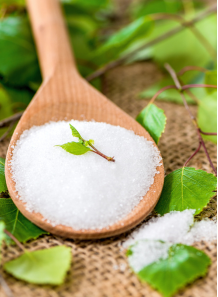
Product characteristics: White crystalline powder; essentially odorless; highly water soluble.
Solubility: Soluble in water and many glycols. Not oil soluble; for emulsions, dissolve in the water phase.
Storage: Store tightly closed in a cool, dry place. Hygroscopic; protect from moisture uptake.
| Test Name | Specification |
|---|---|
| Identification | White crystalline powder |
| Xylitol content (on a dry basis) (%) | 98.5-101 |
| Other polyol content (%) | 1 Max |
| Loss on drying (%) | 0.5 Max |
| Reducing sugar (in terms of glucose) (%) | 0.2 Max |
| Residue on ignition (%) | 0.1 Max |
| Melting point (C) | 92-96 |
| Nickel, mg/kg | 1.0 Max |
| Lead, mg/kg | 1.0 Max |
| Total arsenic (as As), mg/kg | 3.0 Max |
No products
Water-soluble polyol humectant for hydration and barrier-support concepts; dissolves in the water phase and pairs well with glycerol.
Xylitol is a low-molecular-weight sugar alcohol (polyol) used in cosmetics primarily as a humectant and skin-conditioning agent.
Because it is highly water soluble and has multiple hydroxyl groups, it strongly hydrogen-bonds with water and helps increase near-surface hydration and reduce a tight/dry feel in aqueous systems—especially when paired with complementary polyols (e.g., glycerol).
Beyond simple water-binding, published skin-model data support barrier-relevant effects (e.g., differentiation-marker and junction-related signaling in keratinocytes), which helps position xylitol for hydration + barrier-support and soothing/anti-irritant concepts in leave-on and rinse-off products.
Product Description: Xylitol is described in cosmetic safety assessments as a white, water-soluble material functioning as a humectant/skin-conditioning agent and considered safe in cosmetics under the reported conditions of use. In a controlled human in vivo study, a topical polyol regimen containing glycerol + xylitol (5% + 5%, 14 days) improved stratum corneum hydration and reduced TEWL versus baseline/vehicle, with additional barrier-relevant readouts reported (including increased filaggrin immunostaining). In keratinocyte models, xylitol has been reported to upregulate differentiation/barrier-associated markers (e.g., filaggrin/loricrin/involucrin, and tight-junction–associated occludin) and to modulate inflammatory signaling under stress/inflammation challenges; these mechanistic results support a barrier-support rationale beyond humectancy alone. In an acute irritant model (SLS-induced irritation), xylitol solutions were reported to inhibit TEWL elevation and moderate irritant-associated inflammatory changes, supporting soothing/anti-irritant use in sensitive-feeling skin concepts. Skin-microflora/biofilm work suggests xylitol can contribute to microbiome-friendly strategies (notably in combination systems, e.g., with farnesol), where the goal is to reduce pathogenic dominance while maintaining commensal balance; build microbiome-friendly claims around the tested combination system and supporting data.
| Model/System | Key Endpoints | Implication |
|---|---|---|
| Human topical study (polyol regimen) | ↑ hydration; ↓ TEWL; barrier-relevant epidermal markers reported | Moisturizing + barrier-support claims support |
| Keratinocytes (in vitro) | Differentiation/junction markers; stress/inflammation modulation | Barrier reinforcement rationale beyond humectancy |
| Acute irritant model (SLS challenge) | Inhibited TEWL elevation; moderated irritation-associated inflammation | Soothing / sensitive-feeling skin concepts |
| Biofilm/microflora (combination systems) | Reduced biofilm formation; improved microflora balance in combination use | Microbiome-friendly use (conservative) |
Usage: Hydration-focused leave-on products (serums, toners, gels, creams/lotions, masks), after-cleansing comfort concepts, and rinse-off systems where improved skin feel is desired. Often paired with glycerol or other polyols.
Mixing method:
- Dissolve in the water phase (or pre-dissolve in water/glycols) under mixing until clear; gentle heating can be used to speed dissolution if needed.
- Add into the aqueous phase before emulsification for emulsions; in clear gels/toners, dissolve before polymer thickener neutralization to avoid local over-concentration.
- Xylitol is not a preservative; maintain an appropriate preservative system for the final formula.
Usage rate: 0.1–5%
As a 100% active raw material, the delivered active level equals the use level (e.g., 2% use delivers 2% xylitol in the finished formula). For leave-on products, industry-reported maxima are commonly in the low-percent range; higher levels are typically used for specific barrier-support regimens.
Product characteristics: White crystalline powder; essentially odorless; highly water soluble.
Solubility: Soluble in water and many glycols. Not oil soluble; for emulsions, dissolve in the water phase.
Storage: Store tightly closed in a cool, dry place. Hygroscopic; protect from moisture uptake.
| Mechanism | - |
| Appearance | - |
| Longevity | - |
| Strength | - |
| Long-term storage | - |
| Shelf Life | - |
| Allergen(s) | - |
| Dosage (Range) | - |
| Recommended Dosage | - |
| Dosage (Per Day) | - |
| Recommended Dosage (Per Day) | - |
| Mix Method | - |
| Heat Resistance | - |
| Stable in pH range | - |
| Solubility | - |
| Product Types | - |
| INCI | - |