


“Closest HA-family clinical evidence: topical hyaluronic acid serum significantly increased skin hydration and improved plumping/smoothness; not specific to Sodium N-Hyaluronoyl Glutamate.”
Water-soluble sodium hyaluronoyl glutamate powder linking low-MW HA with glutamate for barrier hydration, AQP3 support, TEWL reduction, and calming support in leave-on skincare.
AminoHA (Sodium N-Hyaluronoyl Glutamate) is a water-soluble bioactive powder made by covalently linking low-molecular-weight hyaluronic acid with glutamic acid through an amide bond.
The technology combines a selected HA fraction in the approximate 30k-50k Da range with the skin-relevant glutamate structure. The HA segment is designed for CD44-related barrier and repair signaling, while the glutamate segment supports the skin's natural moisturizing factor (NMF) environment and indirectly supports ceramide/lipid-barrier biology.
Use AminoHA in leave-on formulas for hydration, barrier recovery, sensitive-skin support, acne-prone skin support, and fragile barrier care where a low-dose, water-phase active is preferred.
Product Description: AminoHA is based on acyl-glutamate technology: the carboxyl group of low-molecular-weight hyaluronic acid is bonded to the amino group of glutamic acid, forming a dual-effect molecule that supports moisture binding, skin-barrier recovery, and calm-skin use. This grade uses low-molecular-weight HA selected around 30k-50k Da for interaction with CD44 receptor biology, which is associated with keratinocyte/fibroblast activity, cell proliferation and migration, immune regulation, and moderation of inflammatory response. The glutamate side contributes to the NMF pool, helps maintain a weakly acidic skin surface environment, and is designed to support ceramide synthesis and lipid-barrier quality.
The AminoHA efficacy package includes a 3D SLS injury model, keratinocyte AQP3 expression, in-vivo TEWL response, and UV-stressed fibroblast inflammatory-marker data. The evidence supports ingredient-level support data for cosmetic barrier, hydration, and soothing claims, not as a drug or wound-treatment claim.
| Model/System | Use Level / Groups | Endpoint / Result | Formulation Meaning |
|---|---|---|---|
| 3D skin-SLS injury model | Control; SLS model; PC: Pirinixic acid; 500 ppm AminoHA; 50 um scale bar | AminoHA accelerated reconstruction and repair of damaged skin in this model, strengthened newly formed skin, and helped revitalize damaged skin. | Barrier-recovery support for stressed or compromised skin formulas. |
| Human keratinocyte HaCaT model vs deionized-water placebo | 0.01%, 0.05%, 0.10% AminoHA | AQP3 relative expression increased +7.08% (*), +9.66% (**), and +10.27% (***) respectively. | Supports hydration-channel and barrier-function use. |
| SLS damage model, in-vivo forearm flexor, 30 volunteers aged 23-60 years | 0.1% and 0.5% AminoHA vs deionized-water placebo | TEWL change rate: day 1, 0.1% = -13.52% (*); day 1, 0.5% bar shown without numeric source label; day 7, 0.1% = -5.62% (**); day 7, 0.5% = -3.82% (*). | Useful in barrier-repair serums, gels, creams, lotions, masks, and sensitive-skin products. |
| Fibroblast HDFs-UV model | AminoHA 150 ppm vs UV model and physical mixture 150 ppm | IL-6 gene relative expression: AminoHA -86.8% (*** vs UV; significant vs physical mixture), physical mixture -38.5% (* vs UV). IL-1alpha: AminoHA -23.4% (** vs UV), physical mixture -17.5% (** vs UV). The comparison with the physical mixture is marked ##p<0.01. | Supports soothing and immune-homeostasis language for UV- or irritation-stressed skin. |
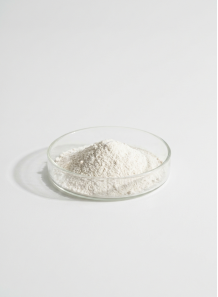
The COA profile supports a white powder with characteristic odor, readily soluble in water and almost insoluble in ethanol. Key QC values include pH 4.0-7.0 in 0.2% aqueous solution (batch result 6.2), transparency >=99.0% (result 99.8%), degree of substitution 40.0-60.0% (result 55.56%), molecular weight 10-200 kDa (result 47 kDa), assay 85.0-105.0% on dried substance (result 99.98%), loss on drying <=15.0% (result 8.70%), metals as lead <=10 ppm, arsenic <=2 ppm, bacteria <=100 CFU/g, mold & yeast <=50 CFU/g, and negative results for Staphylococcus aureus, Pseudomonas aeruginosa, and thermotolerant coliform bacteria.
Usage: Suitable for leave-on facial serums, water gels, creams, lotions, toners, masks, sensitive-skin products, acne-prone skin support formulas, post-stress barrier products, and fragile-barrier skincare.
Mixing method:
- Dissolve in the water phase or pre-dissolve in purified water before addition. Add during cool-down or at room temperature; avoid prolonged high heat.
- Keep the final formula in a skin-compatible pH range, preferably around pH 4.0-7.0. Avoid strongly acidic or strongly alkaline systems.
- Stir gently until fully dissolved. Avoid excessive high-shear mixing after hydration to preserve polymer-like sensory and performance behavior.
- Compatible with typical aqueous humectant systems such as glycerin, propanediol, butylene glycol, betaine, panthenol, sodium PCA, and conventional emulsion/gel bases.
Usage rate: 0.01-0.5%
For targeted barrier and soothing use, 0.1% is a practical starting level; 0.5% is suitable when a stronger active-use story is desired and the formula can tolerate the added polymer/humectant load.
Product characteristics: White to off-white powder; characteristic odor; molecular weight range 10-200 kDa with batch result 47 kDa; assay 85.0-105.0% on dried substance.
Solubility: Readily soluble in water; almost insoluble in ethanol. Not oil-soluble.
Storage: Store tightly closed in a cool, dry place away from moisture and direct light. Reseal immediately after use to limit moisture uptake.
| Test Name | Specification |
|---|---|
| Character | White or white like powder or |
| Odor | Characteristic odor |
| Solubility | Readily soluble in water, almost insoluble in ethanol |
| infrared spectrum | The infrared spectrum of the test sample exhibits absorption peaks near the following wavenumbers (cm-1).3418cm⁻¹(b), 1651cm⁻¹(s), 1558cm⁻¹(m), 1317cm⁻¹, 1150cm⁻¹ |
| Transparency, % | ≥99.0 |
| pH value (0.2% aqueous solution) | 4.0~7.0 |
| *Degree of substitution, % | 40.0~60.0 |
| Molecular weight, KDa | 10~200 |
| Assay (dried substance), % | 85.0~105.0 |
| Loss on drying, % | ≤15.0 |
| Metal (calculated as lead), ppm (equivalent to mg/kg) | ≤10 |
| Arsenic, ppm | ≤2 |
| Bacteria counts, CFU/g | ≤100 |
| Mold & Yeast, CFU/g | ≤50 |
| Staphylococcus aureus/g | Negative |
| Pseudomonas aeruginosa/g | Negative |
| Thermotolerant coliform bacteria /g | Negative |
No products
Water-soluble sodium hyaluronoyl glutamate powder linking low-MW HA with glutamate for barrier hydration, AQP3 support, TEWL reduction, and calming support in leave-on skincare.
AminoHA (Sodium N-Hyaluronoyl Glutamate) is a water-soluble bioactive powder made by covalently linking low-molecular-weight hyaluronic acid with glutamic acid through an amide bond.
The technology combines a selected HA fraction in the approximate 30k-50k Da range with the skin-relevant glutamate structure. The HA segment is designed for CD44-related barrier and repair signaling, while the glutamate segment supports the skin's natural moisturizing factor (NMF) environment and indirectly supports ceramide/lipid-barrier biology.
Use AminoHA in leave-on formulas for hydration, barrier recovery, sensitive-skin support, acne-prone skin support, and fragile barrier care where a low-dose, water-phase active is preferred.
Product Description: AminoHA is based on acyl-glutamate technology: the carboxyl group of low-molecular-weight hyaluronic acid is bonded to the amino group of glutamic acid, forming a dual-effect molecule that supports moisture binding, skin-barrier recovery, and calm-skin use. This grade uses low-molecular-weight HA selected around 30k-50k Da for interaction with CD44 receptor biology, which is associated with keratinocyte/fibroblast activity, cell proliferation and migration, immune regulation, and moderation of inflammatory response. The glutamate side contributes to the NMF pool, helps maintain a weakly acidic skin surface environment, and is designed to support ceramide synthesis and lipid-barrier quality.
The AminoHA efficacy package includes a 3D SLS injury model, keratinocyte AQP3 expression, in-vivo TEWL response, and UV-stressed fibroblast inflammatory-marker data. The evidence supports ingredient-level support data for cosmetic barrier, hydration, and soothing claims, not as a drug or wound-treatment claim.
| Model/System | Use Level / Groups | Endpoint / Result | Formulation Meaning |
|---|---|---|---|
| 3D skin-SLS injury model | Control; SLS model; PC: Pirinixic acid; 500 ppm AminoHA; 50 um scale bar | AminoHA accelerated reconstruction and repair of damaged skin in this model, strengthened newly formed skin, and helped revitalize damaged skin. | Barrier-recovery support for stressed or compromised skin formulas. |
| Human keratinocyte HaCaT model vs deionized-water placebo | 0.01%, 0.05%, 0.10% AminoHA | AQP3 relative expression increased +7.08% (*), +9.66% (**), and +10.27% (***) respectively. | Supports hydration-channel and barrier-function use. |
| SLS damage model, in-vivo forearm flexor, 30 volunteers aged 23-60 years | 0.1% and 0.5% AminoHA vs deionized-water placebo | TEWL change rate: day 1, 0.1% = -13.52% (*); day 1, 0.5% bar shown without numeric source label; day 7, 0.1% = -5.62% (**); day 7, 0.5% = -3.82% (*). | Useful in barrier-repair serums, gels, creams, lotions, masks, and sensitive-skin products. |
| Fibroblast HDFs-UV model | AminoHA 150 ppm vs UV model and physical mixture 150 ppm | IL-6 gene relative expression: AminoHA -86.8% (*** vs UV; significant vs physical mixture), physical mixture -38.5% (* vs UV). IL-1alpha: AminoHA -23.4% (** vs UV), physical mixture -17.5% (** vs UV). The comparison with the physical mixture is marked ##p<0.01. | Supports soothing and immune-homeostasis language for UV- or irritation-stressed skin. |
The COA profile supports a white powder with characteristic odor, readily soluble in water and almost insoluble in ethanol. Key QC values include pH 4.0-7.0 in 0.2% aqueous solution (batch result 6.2), transparency >=99.0% (result 99.8%), degree of substitution 40.0-60.0% (result 55.56%), molecular weight 10-200 kDa (result 47 kDa), assay 85.0-105.0% on dried substance (result 99.98%), loss on drying <=15.0% (result 8.70%), metals as lead <=10 ppm, arsenic <=2 ppm, bacteria <=100 CFU/g, mold & yeast <=50 CFU/g, and negative results for Staphylococcus aureus, Pseudomonas aeruginosa, and thermotolerant coliform bacteria.
Usage: Suitable for leave-on facial serums, water gels, creams, lotions, toners, masks, sensitive-skin products, acne-prone skin support formulas, post-stress barrier products, and fragile-barrier skincare.
Mixing method:
- Dissolve in the water phase or pre-dissolve in purified water before addition. Add during cool-down or at room temperature; avoid prolonged high heat.
- Keep the final formula in a skin-compatible pH range, preferably around pH 4.0-7.0. Avoid strongly acidic or strongly alkaline systems.
- Stir gently until fully dissolved. Avoid excessive high-shear mixing after hydration to preserve polymer-like sensory and performance behavior.
- Compatible with typical aqueous humectant systems such as glycerin, propanediol, butylene glycol, betaine, panthenol, sodium PCA, and conventional emulsion/gel bases.
Usage rate: 0.01-0.5%
For targeted barrier and soothing use, 0.1% is a practical starting level; 0.5% is suitable when a stronger active-use story is desired and the formula can tolerate the added polymer/humectant load.
Product characteristics: White to off-white powder; characteristic odor; molecular weight range 10-200 kDa with batch result 47 kDa; assay 85.0-105.0% on dried substance.
Solubility: Readily soluble in water; almost insoluble in ethanol. Not oil-soluble.
Storage: Store tightly closed in a cool, dry place away from moisture and direct light. Reseal immediately after use to limit moisture uptake.
| Mechanism | - |
| Appearance | - |
| Longevity | - |
| Strength | - |
| Storage | - |
| Shelf Life | - |
| Allergen(s) | - |
| Dosage (Range) | - |
| Recommended Dosage | - |
| Dosage (Per Day) | - |
| Recommended Dosage (Per Day) | - |
| Mix Method | - |
| Heat Resistance | - |
| Stable in pH range | - |
| Solubility | - |
| Product Types | - |
| INCI | - |