


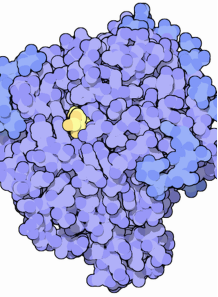
“Direct process evidence: amyloglucosidase with CGTase increased α-arbutin yield; this supports use as a process aid for a skin-lightening active, not direct topical amyloglucosidase efficacy.”
Amyloglucosidase cosmetic enzyme for enzyme peels, oral-care enzyme systems, and glucoside-conversion/process applications; add during cool-down in water-based systems.
Amyloglucosidase is a starch-hydrolyzing cosmetic enzyme for formulators who need controlled breakdown of glucan, starch, or other alpha-glucosidic residues in water-based personal-care systems.
In practical cosmetic development, it is most relevant where enzymatic conversion or gentle exfoliation is desired without relying only on mechanical scrub particles. Real-world use includes multi-enzyme peel blends, powder or mask-style enzyme cleansers, and oral-care enzyme systems used together with glucose oxidase and lactoperoxidase.
Product Description: This raw material is suited to technical formulations where enzyme activity must be preserved during processing and storage. Beyond direct use in finished personal-care products, amyloglucosidase can also function as an upstream process aid for generating cosmetically useful materials. Published cosmetic literature describes amyloglucosidase in alpha-arbutin synthesis workflows and in enzyme treatment of rice bran to produce extracts designed for whitening, anti-wrinkle, and antioxidant applications. For finished formulas, the strongest fit is rinse-off or short-contact systems where controlled enzymatic action can support exfoliation or substrate conversion while the full formula is still validated for stability and safety.
Usage: Multi-enzyme peel powders and masks, enzyme cleanser blends for enzymatic exfoliation, oral-care enzyme systems such as toothpaste, and bioprocess/process-aid workflows used to prepare cosmetic actives or functional botanical extracts.
Mixing method:
- Add into the water phase at the final step or during cool-down.
- Keep process temperature below 40°C.
- Maintain formulation pH in the range 3-7; pH 4-6 is generally preferred for stability and performance screening.
- Avoid strong oxidants, prolonged holding at elevated temperature, and excessive shear.
Usage rate: 0.1-2.0% depending on target activity, enzyme system design, and finished-formula validation.
Product characteristics: Off-white to pale cream powder.
Solubility: Soluble to dispersible in water-phase systems.
Storage: Store refrigerated and keep tightly closed to preserve enzyme activity.
| Test Name | Specification |
|---|---|
| Antibiotic | none |
| Appearance | brown liquid |
| Escherichia coli | none detected |
| Salmonella | none detected |
| Absorption value(680nm) | 0 - 0.2 |
| Aflatoxin | 0 ppm - 0.005 ppm |
| Arsenic(As) | 0% - 0.0003 % |
| Coliform | 0 cfu/ml(/) - 30 cfu/ml(/) |
| Enzyme activity | 0 IU/ml OR u/ml - =100000 IU/ml OR u/ml |
| Glucose turn glucoside enzyme | 0 IU/ml OR u/ml - 1500 IU/ml OR u/ml |
| Heavy metals | 0 % - 0.004 % |
| lead (Pb) | 0 % - 0.001 % |
| PH | 3.5 - 4.5 |
| Total number of bacteria | 0 cfu/ml(/) - 30000 cfu/ml(/) |
| Total yeasts and molds | 0 cfu/ml(/) - 200 cfu/ml(/) |
| unit weight | 0 g/ml / - 1.25 g/ml / |
No products
Amyloglucosidase cosmetic enzyme for enzyme peels, oral-care enzyme systems, and glucoside-conversion/process applications; add during cool-down in water-based systems.
Amyloglucosidase is a starch-hydrolyzing cosmetic enzyme for formulators who need controlled breakdown of glucan, starch, or other alpha-glucosidic residues in water-based personal-care systems.
In practical cosmetic development, it is most relevant where enzymatic conversion or gentle exfoliation is desired without relying only on mechanical scrub particles. Real-world use includes multi-enzyme peel blends, powder or mask-style enzyme cleansers, and oral-care enzyme systems used together with glucose oxidase and lactoperoxidase.
Product Description: This raw material is suited to technical formulations where enzyme activity must be preserved during processing and storage. Beyond direct use in finished personal-care products, amyloglucosidase can also function as an upstream process aid for generating cosmetically useful materials. Published cosmetic literature describes amyloglucosidase in alpha-arbutin synthesis workflows and in enzyme treatment of rice bran to produce extracts designed for whitening, anti-wrinkle, and antioxidant applications. For finished formulas, the strongest fit is rinse-off or short-contact systems where controlled enzymatic action can support exfoliation or substrate conversion while the full formula is still validated for stability and safety.
Usage: Multi-enzyme peel powders and masks, enzyme cleanser blends for enzymatic exfoliation, oral-care enzyme systems such as toothpaste, and bioprocess/process-aid workflows used to prepare cosmetic actives or functional botanical extracts.
Mixing method:
- Add into the water phase at the final step or during cool-down.
- Keep process temperature below 40°C.
- Maintain formulation pH in the range 3-7; pH 4-6 is generally preferred for stability and performance screening.
- Avoid strong oxidants, prolonged holding at elevated temperature, and excessive shear.
Usage rate: 0.1-2.0% depending on target activity, enzyme system design, and finished-formula validation.
Product characteristics: Off-white to pale cream powder.
Solubility: Soluble to dispersible in water-phase systems.
Storage: Store refrigerated and keep tightly closed to preserve enzyme activity.
| Mechanism | - |
| Appearance | - |
| Longevity | - |
| Strength | - |
| Storage | - |
| Shelf Life | - |
| Allergen(s) | - |
| Dosage (Range) | - |
| Recommended Dosage | - |
| Dosage (Per Day) | - |
| Recommended Dosage (Per Day) | - |
| Mix Method | - |
| Heat Resistance | - |
| Stable in pH range | - |
| Solubility | - |
| Product Types | - |
| INCI | - |