


“A surfactin oleogel reduced P. acnes-induced inflammatory acne signs, oxidative stress, bacterial load, and TLR/NF-kB inflammatory signaling in a mouse model; formulated surfactin evidence.”
High-purity Sodium Surfactin biosurfactant powder for emulsification support, solubilization, and delivery-focused cosmetic systems.
BioSorb™ (Bioferment Delivery Enhancer) is a high-purity Sodium Surfactin powder made by Bacillus subtilis fermentation for cosmetic systems that need efficient biosurfactant performance and active-delivery support.
Sodium Surfactin is an amphiphilic lipopeptide biosurfactant. Published surfactin research supports very strong interfacial activity, self-assembly into micellar/colloidal structures, and the ability to stabilize fine oil-in-water dispersions. In formulation practice this makes BioSorb™ useful when wetting, solubilization, droplet-size reduction, or interfacial transport limits the performance of an active system.
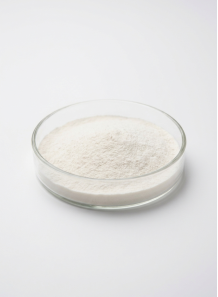
The material is supplied as a white to almost white powder with characteristic odor. The quality profile is Sodium Surfactin content 95.0-105.0%, loss on drying ≤10.0%, and pH 6.0-8.0 for a 1% aqueous solution.
Product Description: BioSorb™ can be used as a multifunctional bioferment delivery platform: biosurfactant, co-surfactant, emulsification aid, solubilization aid, active-delivery enhancer, nanoemulsion support, and interfacial stabilizer for modern skin-care and cleansing systems. Its main technical value is not only foam or cleansing; it helps formulators manage the interface between water, oil, lipophilic actives, fragrances, botanical fractions, and skin-contact phases.
For emulsions and fine dispersions, BioSorb™ can help reduce interfacial tension, improve wetting of hydrophobic materials, support smaller droplet formation during homogenization, and improve resistance to coalescence when paired with an appropriate primary emulsifier, polymer, or lamellar structurant. For delivery-focused products, the same surface activity and self-assembly behavior can support carrier formation and improve the distribution of poorly water-soluble actives in serums, creams, masks, and cleanser systems.
Use performance should be validated in the finished formula. Surfactin literature supports the general biosurfactant, micelle, emulsion, and carrier-system rationale, while product-specific effects such as delivery enhancement, soothing support, antioxidant-positioned systems, and anti-pollution concepts should be confirmed with the chosen active, vehicle, and claim model.
| Formulation Role | Technical Contribution | Typical Use Context |
|---|---|---|
| Biosurfactant / co-surfactant | Reduces interfacial tension and improves wetting of oil or active phases | Serums, creams, essences, low-foam cleansers |
| Emulsion support | Supports smaller droplet size and O/W emulsion stability when the system is properly structured | Creams, lotions, masks, high-oil emulsions |
| Delivery-system builder | Micelle/self-assembly behavior can support carrier-style distribution of lipophilic actives | Retinoid, vitamin, botanical, fragrance, and barrier-active systems |
| Sensory and load reduction aid | May allow lower conventional surfactant load when optimized with the full emulsifier package | Sensitive-skin, clean-beauty, and mildness-oriented formulas |
Usage: Suitable for serums, essences, creams, lotions, masks, cleanser systems, body care, sensitive-skin concepts, solubilized active concentrates, fine emulsions, nanoemulsion-oriented systems, and delivery-focused products for lipophilic or amphiphilic actives.
Mixing method:
- Pre-disperse slowly into the water phase while stirring gently. Avoid dumping the powder directly into a high-shear vortex because surfactin can foam.
- For emulsions, add to the water phase or pre-solubilized active phase before homogenization. Combine with a primary emulsifier, polymer, gum, or lamellar structurant when long-term emulsion stability is required.
- Keep processing below 60°C when possible. For heat-sensitive actives, add BioSorb™ in cool-down below 40°C after pre-wetting or pre-dissolving.
- Check final pH and electrolyte level. Start development in pH 4-8 systems, then confirm clarity, viscosity, droplet size, foam tendency, and active compatibility after stability cycling.
Usage rate: 0.05-1.0%
Typical starting point: 0.1-0.3% as a co-surfactant or delivery aid; 0.3-1.0% when stronger solubilization, emulsification support, or carrier formation is needed. Increase gradually because excessive level can raise foam, tack, or irritation risk depending on the formula.
Product characteristics: White to almost white powder; characteristic odor.
Solubility: Soluble/dispersible in water and surfactant systems; supports aqueous interfacial activity. Pre-wetting in water or glycerin/glycol can improve handling and reduce clumping.
Store sealed in a dry area at room temperature. Protect from moisture and repeated exposure to air after opening.
| Test Name | Specification |
|---|---|
| 1. Appearance | White or almost white powder |
| 2. Odor | Characteristic odor |
| 3. Loss on drying | ≤10.0% |
| 4. pH (1% solution) | 6.0~8.0 |
| 5. Heavy metals | ≤20 ppm |
| 6. As | ≤2 ppm |
| 7. Acid precipitation | Positive |
| 8. Ninhydrin test | Negative |
| 9. Biuret test | Positive |
| 10. Bacteria counts | <100 cfu/g |
| 11. Mold &Yeast | <50 cfu/g |
| 12. Staphylococcus aureus | Negative/g |
| 13. Pseudomonas aeruginosa | Negative/g |
| 14. Thermotolerant coliform bacteria | Negative/g |
| 15. Sodium surfactin Content | 95.0%~105.0% |
No products
High-purity Sodium Surfactin biosurfactant powder for emulsification support, solubilization, and delivery-focused cosmetic systems.
BioSorb™ (Bioferment Delivery Enhancer) is a high-purity Sodium Surfactin powder made by Bacillus subtilis fermentation for cosmetic systems that need efficient biosurfactant performance and active-delivery support.
Sodium Surfactin is an amphiphilic lipopeptide biosurfactant. Published surfactin research supports very strong interfacial activity, self-assembly into micellar/colloidal structures, and the ability to stabilize fine oil-in-water dispersions. In formulation practice this makes BioSorb™ useful when wetting, solubilization, droplet-size reduction, or interfacial transport limits the performance of an active system.
The material is supplied as a white to almost white powder with characteristic odor. The quality profile is Sodium Surfactin content 95.0-105.0%, loss on drying ≤10.0%, and pH 6.0-8.0 for a 1% aqueous solution.
Product Description: BioSorb™ can be used as a multifunctional bioferment delivery platform: biosurfactant, co-surfactant, emulsification aid, solubilization aid, active-delivery enhancer, nanoemulsion support, and interfacial stabilizer for modern skin-care and cleansing systems. Its main technical value is not only foam or cleansing; it helps formulators manage the interface between water, oil, lipophilic actives, fragrances, botanical fractions, and skin-contact phases.
For emulsions and fine dispersions, BioSorb™ can help reduce interfacial tension, improve wetting of hydrophobic materials, support smaller droplet formation during homogenization, and improve resistance to coalescence when paired with an appropriate primary emulsifier, polymer, or lamellar structurant. For delivery-focused products, the same surface activity and self-assembly behavior can support carrier formation and improve the distribution of poorly water-soluble actives in serums, creams, masks, and cleanser systems.
Use performance should be validated in the finished formula. Surfactin literature supports the general biosurfactant, micelle, emulsion, and carrier-system rationale, while product-specific effects such as delivery enhancement, soothing support, antioxidant-positioned systems, and anti-pollution concepts should be confirmed with the chosen active, vehicle, and claim model.
| Formulation Role | Technical Contribution | Typical Use Context |
|---|---|---|
| Biosurfactant / co-surfactant | Reduces interfacial tension and improves wetting of oil or active phases | Serums, creams, essences, low-foam cleansers |
| Emulsion support | Supports smaller droplet size and O/W emulsion stability when the system is properly structured | Creams, lotions, masks, high-oil emulsions |
| Delivery-system builder | Micelle/self-assembly behavior can support carrier-style distribution of lipophilic actives | Retinoid, vitamin, botanical, fragrance, and barrier-active systems |
| Sensory and load reduction aid | May allow lower conventional surfactant load when optimized with the full emulsifier package | Sensitive-skin, clean-beauty, and mildness-oriented formulas |
Usage: Suitable for serums, essences, creams, lotions, masks, cleanser systems, body care, sensitive-skin concepts, solubilized active concentrates, fine emulsions, nanoemulsion-oriented systems, and delivery-focused products for lipophilic or amphiphilic actives.
Mixing method:
- Pre-disperse slowly into the water phase while stirring gently. Avoid dumping the powder directly into a high-shear vortex because surfactin can foam.
- For emulsions, add to the water phase or pre-solubilized active phase before homogenization. Combine with a primary emulsifier, polymer, gum, or lamellar structurant when long-term emulsion stability is required.
- Keep processing below 60°C when possible. For heat-sensitive actives, add BioSorb™ in cool-down below 40°C after pre-wetting or pre-dissolving.
- Check final pH and electrolyte level. Start development in pH 4-8 systems, then confirm clarity, viscosity, droplet size, foam tendency, and active compatibility after stability cycling.
Usage rate: 0.05-1.0%
Typical starting point: 0.1-0.3% as a co-surfactant or delivery aid; 0.3-1.0% when stronger solubilization, emulsification support, or carrier formation is needed. Increase gradually because excessive level can raise foam, tack, or irritation risk depending on the formula.
Product characteristics: White to almost white powder; characteristic odor.
Solubility: Soluble/dispersible in water and surfactant systems; supports aqueous interfacial activity. Pre-wetting in water or glycerin/glycol can improve handling and reduce clumping.
Store sealed in a dry area at room temperature. Protect from moisture and repeated exposure to air after opening.
| Mechanism | - |
| Appearance | - |
| Longevity | - |
| Strength | - |
| Long-term storage | - |
| Shelf Life | - |
| Allergen(s) | - |
| Dosage (Range) | - |
| Recommended Dosage | - |
| Dosage (Per Day) | - |
| Recommended Dosage (Per Day) | - |
| Mix Method | - |
| Heat Resistance | - |
| Stable in pH range | - |
| Solubility | - |
| Product Types | - |
| INCI | - |