


“Formula scope: face serum containing Palmitoyl Tripeptide-38 improved hydration, elasticity, roughness/fine lines, and brightness over 30 days.”
Palmitoyl Tripeptide-38 is a synthetic matrikine-mimetic lipopeptide powder for premium anti-aging formulations. It is selected for products that target visible wrinkles, smoother-looking skin, firmness, elasticity, and refined skin texture.
Physical form: This product is supplied as a freeze-dried powder.
This peptide is especially suitable for peptide serums, eye creams, neck creams, facial creams, firming lotions, and wrinkle-care essences where long skin contact time and mild processing allow the peptide to perform well in the finished product.
Product Description: Palmitoyl Tripeptide-38 is positioned as a matrix-support peptide for forehead lines, crow's feet, fine lines, loss of firmness, and uneven skin texture. The palmitoyl structure gives the ingredient a premium lipopeptide profile, making it a strong choice for high-end anti-wrinkle and firming products.
This SKU is the powder raw material, not a pre-diluted commercial peptide solution. Formulation dosage should be based on this supplied powder form, with a typical starting level around 0.5% and a practical range of 0.1-1.0% in finished cosmetics.
Usage: Suitable for leave-on anti-aging serum, peptide serum, facial cream, eye cream, neck cream, firming lotion, wrinkle-care essence, and premium repair-positioned cosmetic products.
Mixing method:
- Add during cool-down below 40°C; avoid prolonged heating after peptide addition.
- Pre-disperse or pre-dissolve in a compatible water/glycol premix before adding to the main batch. Confirm clarity and stability in the complete formula.
- Keep final product pH around 4.0-5.5. Avoid high-pH systems, strong oxidizers, and unnecessary high-shear processing after addition.
- Use light-protective or airless packaging when possible and perform stability, pH drift, viscosity, color/odor, and preservative-challenge checks.
Usage rate: 0.1-1.0% of the finished formula. Typical starting level: 0.5%.
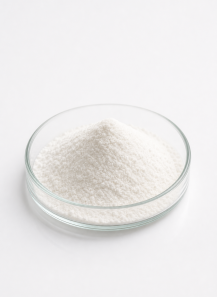
Product characteristics: White to off-white powder.
Solubility: Process in water/glycol-compatible leave-on systems. Prepare a small premix and verify clarity, pH, and stability in the finished formula.
Storage: Keep tightly closed, protected from heat, light, moisture, and oxidation.
| Test Name | Specification |
|---|---|
| Appearance | white or almost white powder |
| Molecular Ion Mass | 675.97 |
| Purity (HPLC) | NLT 95.0% |
| Water Content (K.F) | NMT 8.0% |
| Cl- Content (IC) | NMT 15.0% |
No products
Palmitoyl Tripeptide-38 is a synthetic matrikine-mimetic lipopeptide powder for premium anti-aging formulations. It is selected for products that target visible wrinkles, smoother-looking skin, firmness, elasticity, and refined skin texture.
Physical form: This product is supplied as a freeze-dried powder.
This peptide is especially suitable for peptide serums, eye creams, neck creams, facial creams, firming lotions, and wrinkle-care essences where long skin contact time and mild processing allow the peptide to perform well in the finished product.
Product Description: Palmitoyl Tripeptide-38 is positioned as a matrix-support peptide for forehead lines, crow's feet, fine lines, loss of firmness, and uneven skin texture. The palmitoyl structure gives the ingredient a premium lipopeptide profile, making it a strong choice for high-end anti-wrinkle and firming products.
This SKU is the powder raw material, not a pre-diluted commercial peptide solution. Formulation dosage should be based on this supplied powder form, with a typical starting level around 0.5% and a practical range of 0.1-1.0% in finished cosmetics.
Usage: Suitable for leave-on anti-aging serum, peptide serum, facial cream, eye cream, neck cream, firming lotion, wrinkle-care essence, and premium repair-positioned cosmetic products.
Mixing method:
- Add during cool-down below 40°C; avoid prolonged heating after peptide addition.
- Pre-disperse or pre-dissolve in a compatible water/glycol premix before adding to the main batch. Confirm clarity and stability in the complete formula.
- Keep final product pH around 4.0-5.5. Avoid high-pH systems, strong oxidizers, and unnecessary high-shear processing after addition.
- Use light-protective or airless packaging when possible and perform stability, pH drift, viscosity, color/odor, and preservative-challenge checks.
Usage rate: 0.1-1.0% of the finished formula. Typical starting level: 0.5%.
Product characteristics: White to off-white powder.
Solubility: Process in water/glycol-compatible leave-on systems. Prepare a small premix and verify clarity, pH, and stability in the finished formula.
Storage: Keep tightly closed, protected from heat, light, moisture, and oxidation.
| Mechanism | - |
| Appearance | - |
| Longevity | - |
| Strength | - |
| Long-term storage | - |
| Shelf Life | - |
| Allergen(s) | - |
| Dosage (Range) | - |
| Recommended Dosage | - |
| Dosage (Per Day) | - |
| Recommended Dosage (Per Day) | - |
| Mix Method | - |
| Heat Resistance | - |
| Stable in pH range | - |
| Solubility | - |
| Product Types | - |
| INCI | - |