


“KTTKS-family scope: procollagen-derived KTTKS supports ECM protein production in fibroblast-type cells.”
Myristoyl Pentapeptide-4 is a high-purity cosmetic signal peptide powder for premium anti-aging and fine-line care. It is a myristoylated KTTKS-type lipopeptide designed for leave-on formulas that target smoother-looking skin, visible firmness, and a better-conditioned skin appearance.
Physical form: This product is supplied as a freeze-dried powder.
The myristoyl chain gives this peptide a lipopeptide profile while the KTTKS sequence supports familiar ECM-focused cosmetic positioning. It is a strong choice for peptide serums, eye gels, facial creams, hydrogel masks, light lotions, and lash/brow conditioning products where long contact time is available.
Product Description: Myristoyl Pentapeptide-4 is supplied as a concentrated high-purity powder for professional cosmetic formulation. It is positioned for anti-aging, fine-line appearance care, smoother-looking skin, visible firmness, and peptide-based skin conditioning. The ingredient is not a drug-like growth or tissue-repair active.
This raw material has HPLC purity NLT 98.0%, molecular ion mass 774.02, acetic acid content NMT 20.0%, and water content NMT 8.0%. Because the powder is highly concentrated, dose by ppm or prepare a pre-diluted water/glycol stock for accurate batching.
Usage: Suitable for leave-on anti-aging serum, eye serum, peptide gel, cream/lotion, hydrogel mask, skin-firming product, and lash/brow conditioning serum. Rinse-off formats are possible but less efficient because contact time is short.
Mixing method:
- Pre-dissolve in purified water, water/propanediol, water/butylene glycol, or water/glycerin to make a low-concentration stock solution before final batching.
- Add during cool-down or at the final step when the formula is below 40°C. Avoid hot emulsification, hot-fill processing, and prolonged heating.
- Recommended finished-product pH: 5.0-7.0. Development range may extend to pH 4.5-7.5 if peptide recovery and stability are confirmed.
- For clear serums, eye products, lash products, or brow products, verify clarity, preservative compatibility, and irritation profile in the finished formula.
Usage rate: 0.005-0.02% of this high-purity powder (50-200 ppm). For very low-dose facial products, 0.001-0.005% may be evaluated when accurate ppm dosing and assay verification are available.
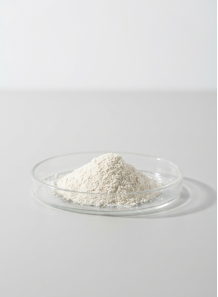
Product characteristics: White to off-white powder; molecular ion mass 774.02; HPLC purity NLT 98.0%; acetic acid NMT 20.0%; water NMT 8.0%.
Solubility: Soluble in water and glycols; dispersible in cream or gel bases. Do not treat as a normal oil-soluble active despite the myristoyl chain.
Storage: Store tightly closed, protected from moisture. Room-temperature transport at 25°C is acceptable; keep at 2-8°C for long-term storage.
| Test Name | Specification |
|---|---|
| Appearance | White or off-white powder |
| Molecular Ion Mass | 774.02 |
| Purity (HPLC) | NLT 98.0% |
| Acetic acid Content (HPLC) | NMT 20.0% |
| Water Content (K.F) | NMT 8.0% |
| Storage | Store at 25°C for transportation; Store at 2°C to 8°C for long term storage. |
No products
Myristoyl Pentapeptide-4 is a high-purity cosmetic signal peptide powder for premium anti-aging and fine-line care. It is a myristoylated KTTKS-type lipopeptide designed for leave-on formulas that target smoother-looking skin, visible firmness, and a better-conditioned skin appearance.
Physical form: This product is supplied as a freeze-dried powder.
The myristoyl chain gives this peptide a lipopeptide profile while the KTTKS sequence supports familiar ECM-focused cosmetic positioning. It is a strong choice for peptide serums, eye gels, facial creams, hydrogel masks, light lotions, and lash/brow conditioning products where long contact time is available.
Product Description: Myristoyl Pentapeptide-4 is supplied as a concentrated high-purity powder for professional cosmetic formulation. It is positioned for anti-aging, fine-line appearance care, smoother-looking skin, visible firmness, and peptide-based skin conditioning. The ingredient is not a drug-like growth or tissue-repair active.
This raw material has HPLC purity NLT 98.0%, molecular ion mass 774.02, acetic acid content NMT 20.0%, and water content NMT 8.0%. Because the powder is highly concentrated, dose by ppm or prepare a pre-diluted water/glycol stock for accurate batching.
Usage: Suitable for leave-on anti-aging serum, eye serum, peptide gel, cream/lotion, hydrogel mask, skin-firming product, and lash/brow conditioning serum. Rinse-off formats are possible but less efficient because contact time is short.
Mixing method:
- Pre-dissolve in purified water, water/propanediol, water/butylene glycol, or water/glycerin to make a low-concentration stock solution before final batching.
- Add during cool-down or at the final step when the formula is below 40°C. Avoid hot emulsification, hot-fill processing, and prolonged heating.
- Recommended finished-product pH: 5.0-7.0. Development range may extend to pH 4.5-7.5 if peptide recovery and stability are confirmed.
- For clear serums, eye products, lash products, or brow products, verify clarity, preservative compatibility, and irritation profile in the finished formula.
Usage rate: 0.005-0.02% of this high-purity powder (50-200 ppm). For very low-dose facial products, 0.001-0.005% may be evaluated when accurate ppm dosing and assay verification are available.
Product characteristics: White to off-white powder; molecular ion mass 774.02; HPLC purity NLT 98.0%; acetic acid NMT 20.0%; water NMT 8.0%.
Solubility: Soluble in water and glycols; dispersible in cream or gel bases. Do not treat as a normal oil-soluble active despite the myristoyl chain.
Storage: Store tightly closed, protected from moisture. Room-temperature transport at 25°C is acceptable; keep at 2-8°C for long-term storage.
| Mechanism | - |
| Appearance | - |
| Longevity | - |
| Strength | - |
| Storage | - |
| Shelf Life | - |
| Allergen(s) | - |
| Dosage (Range) | - |
| Recommended Dosage | - |
| Dosage (Per Day) | - |
| Recommended Dosage (Per Day) | - |
| Mix Method | - |
| Heat Resistance | - |
| Stable in pH range | - |
| Solubility | - |
| Product Types | - |
| INCI | - |