


“Closest silicone-excipient evidence: W/(O+Si) creams containing common silicones moisturized skin while remaining water-vapor permeable, supporting lightweight barrier-feel claims rather than heavy occlusion.”
Lauryl Polyglyceryl-3 Polydimethysiloxyethyl Dimethicone is a PEG-free silicone emulsifier designed for water-in-silicone (W/Si) and water-in-oil (W/O) systems.
The polyglyceryl portion gives controlled hydrophilicity while the lauryl-modified siloxane portion anchors well into silicone fluids, organic oils, and many cosmetic esters. This balance makes it useful when a formula needs stable internal water droplets together with the slip, spreadability, and low-tack feel expected from silicone-rich systems.
It is especially useful for PEG-free make-up, sunscreen, skin care, and hair care emulsions where compatibility with cyclopentasiloxane, dimethicone, mineral oil, and ester oils matters. All-liquid systems can often be processed at room temperature, while electrolyte support and silicone rheology modifiers can be used to reinforce storage stability.
Product Description: This material functions as a primary emulsifier/interfacial modifier for W/Si and W/O emulsions. It supports elegant sensory profiles by helping silicone and oil continuous phases carry water without the heavy feel that can come from more conventional emulsifier systems. In practice it is suited to fluid serums, primer-style textures, foundations, sunscreen emulsions, and hair treatment systems where silicone compatibility is important. It is not directly water-soluble, so stability depends on correct phase order, shear profile, internal-phase ratio, and the polarity balance of the oil/silicone phase. For many formulas, the internal water phase can be developed across a broad practical pH window around pH 3-9, but full-formula stability should still be verified by heat-aging and freeze-thaw testing.
Usage: PEG-free W/Si and W/O emulsions, silicone-rich primers and foundations, sunscreen systems, skin care emulsions, hair serums, and other make-up or treatment formats that need compatibility with silicones and cosmetic oils.
Mixing method:
- Pre-blend the emulsifier thoroughly into the silicone/oil phase before adding any water. If pigments, elastomers, or oil-soluble structuring agents are used, wet them into this continuous phase first.
- Add the water phase slowly into the oil/silicone phase while stirring, then increase shear until the emulsion becomes uniform. In fully liquid systems, emulsification can often be carried out at room temperature without a homogenizer.
- When extra storage stability is needed, electrolytes such as NaCl at about 0.5-2% in the water phase can help strengthen the emulsion. Glycerin or propanediol can improve freeze-thaw robustness, while organosilicon elastomers and oil-phase thickeners can build viscosity more effectively than only increasing emulsifier level.
Usage rate: 0.5-5%
A practical starting range for many W/Si or W/O systems is around 1-3%, then adjust upward when water loading, pigment content, or long-term stability requirements are more demanding.
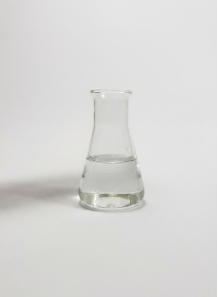
Product characteristics: Clear to pale yellow viscous liquid.
Solubility: Miscible in cyclopentasiloxane, dimethicone, mineral oil, isotridecyl isononanoate, and triethylhexanoin; soluble in isopropyl alcohol; partially soluble in ethanol, butylene glycol, and glycerin; insoluble in water and propylene glycol.
Storage: Store tightly closed at room temperature, protected from excessive heat and moisture.
| Test Name | Specification |
|---|---|
| Appearance | - |
| Viscosity (mPa·s, 25°C) | - |
| Refractive Index (25°C) | - |
No products
Lauryl Polyglyceryl-3 Polydimethysiloxyethyl Dimethicone is a PEG-free silicone emulsifier designed for water-in-silicone (W/Si) and water-in-oil (W/O) systems.
The polyglyceryl portion gives controlled hydrophilicity while the lauryl-modified siloxane portion anchors well into silicone fluids, organic oils, and many cosmetic esters. This balance makes it useful when a formula needs stable internal water droplets together with the slip, spreadability, and low-tack feel expected from silicone-rich systems.
It is especially useful for PEG-free make-up, sunscreen, skin care, and hair care emulsions where compatibility with cyclopentasiloxane, dimethicone, mineral oil, and ester oils matters. All-liquid systems can often be processed at room temperature, while electrolyte support and silicone rheology modifiers can be used to reinforce storage stability.
Product Description: This material functions as a primary emulsifier/interfacial modifier for W/Si and W/O emulsions. It supports elegant sensory profiles by helping silicone and oil continuous phases carry water without the heavy feel that can come from more conventional emulsifier systems. In practice it is suited to fluid serums, primer-style textures, foundations, sunscreen emulsions, and hair treatment systems where silicone compatibility is important. It is not directly water-soluble, so stability depends on correct phase order, shear profile, internal-phase ratio, and the polarity balance of the oil/silicone phase. For many formulas, the internal water phase can be developed across a broad practical pH window around pH 3-9, but full-formula stability should still be verified by heat-aging and freeze-thaw testing.
Usage: PEG-free W/Si and W/O emulsions, silicone-rich primers and foundations, sunscreen systems, skin care emulsions, hair serums, and other make-up or treatment formats that need compatibility with silicones and cosmetic oils.
Mixing method:
- Pre-blend the emulsifier thoroughly into the silicone/oil phase before adding any water. If pigments, elastomers, or oil-soluble structuring agents are used, wet them into this continuous phase first.
- Add the water phase slowly into the oil/silicone phase while stirring, then increase shear until the emulsion becomes uniform. In fully liquid systems, emulsification can often be carried out at room temperature without a homogenizer.
- When extra storage stability is needed, electrolytes such as NaCl at about 0.5-2% in the water phase can help strengthen the emulsion. Glycerin or propanediol can improve freeze-thaw robustness, while organosilicon elastomers and oil-phase thickeners can build viscosity more effectively than only increasing emulsifier level.
Usage rate: 0.5-5%
A practical starting range for many W/Si or W/O systems is around 1-3%, then adjust upward when water loading, pigment content, or long-term stability requirements are more demanding.
Product characteristics: Clear to pale yellow viscous liquid.
Solubility: Miscible in cyclopentasiloxane, dimethicone, mineral oil, isotridecyl isononanoate, and triethylhexanoin; soluble in isopropyl alcohol; partially soluble in ethanol, butylene glycol, and glycerin; insoluble in water and propylene glycol.
Storage: Store tightly closed at room temperature, protected from excessive heat and moisture.
| Mechanism | - |
| Appearance | - |
| Longevity | - |
| Strength | - |
| Long-term storage | - |
| Shelf Life | - |
| Allergen(s) | - |
| Dosage (Range) | - |
| Recommended Dosage | - |
| Dosage (Per Day) | - |
| Recommended Dosage (Per Day) | - |
| Mix Method | - |
| Heat Resistance | - |
| Stable in pH range | - |
| Solubility | - |
| Product Types | - |
| INCI | - |