


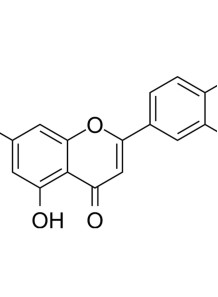
“Human/ex vivo/in vitro evidence: luteolin reduced UVB-induced erythema, DNA damage, ROS, COX-2 and PGE2 in skin/keratinocyte models; not tested as Pure-Luteolin™ commercial material.”
Pure-Luteolin™ (98%) is a high-purity luteolin powder (a plant flavonoid) for professional topical formulations.
Luteolin is studied in skin mainly because it strongly absorbs UV and can reduce oxidative stress and inflammatory signaling in keratinocytes and fibroblasts—mechanisms that are relevant to UV redness, photoaging pathways (MMPs), and irritation-related erythema.
Evidence includes controlled human topical studies using luteolin-rich plant extracts for UVB erythema reduction, plus extensive mechanistic and animal data supporting anti-inflammatory, anti-photoaging, anti-itch, and “anti-pollution” endpoints. Formulation performance is highly delivery-dependent because luteolin is poorly water-soluble.
Product description: Luteolin is a polyphenolic flavone with strong UV absorbance and redox activity. In topical contexts, it is investigated as a photoprotective and calming active by (1) absorbing part of incident UV, and (2) suppressing downstream oxidative and inflammatory cascades in skin cells (ROS, NF-κB/MAPK signaling and COX-2/PGE2-related pathways). Controlled human volunteer work with luteolin-rich Reseda luteola (Dyer’s weed) extract applied before UVB exposure reported a dose-dependent reduction of UVB erythema and good tolerability, with outcomes reported comparable to 1% hydrocortisone for erythema reduction (study-level result; not an SPF claim).
- UV/Redness context: UVB-related erythema and inflammatory markers are commonly linked to COX-2/PGE2 signaling and oxidative stress; luteolin is repeatedly reported to attenuate these pathways in combined in vitro/skin/human measurement sets.
- Irritation model: In a placebo-controlled repetitive washing test (irritant contact dermatitis model), an antioxidant cream approach (including luteolin-rich plant extract plus antioxidants such as tocopherol and ubiquinone) improved irritation-linked readouts such as erythema, TEWL and hydration—supporting use in barrier-stress and rinse-off irritation contexts.
- Photoaging pathways: Preclinical studies report suppression of UV-driven MMP signaling (e.g., MMP-1/MMP-13) and inflammatory cytokines (e.g., IL-6), with pathway involvement including p38 MAPK/JNK/AP-1; animal UV models report reduced wrinkle formation and photoaging-associated markers.
- Itch/allergic signaling: Topical luteolin reduces scratching behavior and vascular permeability in multiple mouse itch/allergy trigger models, consistent with mast-cell mediator suppression and local anti-inflammatory action.
- Modern stressors: Keratinocyte studies report reduced particulate matter–induced ROS and inflammatory markers (e.g., MMP-1, COX-2, IL-6) via modulation of MAPK/AP-1/NF-κB signaling.
| Model/System | Key Endpoints | Implication |
|---|---|---|
| Human UVB challenge (luteolin-rich topical) | ↓ UVB erythema (redness) | Support for anti-redness / photostress moderation |
| Repetitive washing test (human) | ↓ erythema; ↓ TEWL; ↑ hydration | Barrier-stress / irritation protection concept |
| Keratinocytes/fibroblasts + UV models | ↓ ROS; ↓ IL-6; ↓ MMP-1; MAPK/AP-1/NF-κB modulation | Anti-photoaging pathway support |
| Mouse itch/allergy trigger models | ↓ scratching; ↓ vascular permeability | Calming / anti-itch positioning (preclinical) |
Usage: Suitable for anti-redness serums, photostress-support products, calming sensitive-skin formulas, and antioxidant boosters in day-care emulsions. This ingredient does not replace sunscreen; any UV protection claims must be validated on the finished formula.
Mixing method:
- Pre-dissolve in an appropriate solvent system (commonly ethoxydiglycol, dimethyl isosorbide, glycols, or hydroalcoholic systems) or use a suitable solubilization/encapsulation approach; do not expect direct water solubility.
- Add during cool-down and keep processing temperature below 40°C when possible; avoid strong alkaline conditions.
- In emulsions or gels, add as a pre-dissolved concentrate to minimize crystallization; use light/oxygen protection strategies (opaque packaging, antioxidants/chelators if compatible) for best stability.
Usage rate: 0.05-1% (typical 0.1-0.5%).
Delivered-active guide: at 98% assay, 0.05-1% of this product delivers ~0.049-0.98% luteolin (adjust for solubility and color impact).
Product characteristics: Yellow powder; may tint formulas. Odorless to faint. Poor water solubility—performance depends on delivery system.
Solubility: Practically insoluble in water. Solubility improves in ethoxydiglycol/dimethyl isosorbide and some hydroalcoholic systems; can be incorporated into emulsions when pre-dissolved. (DMSO solubility is often used for lab testing, not for cosmetic products.)
Storage: Store tightly closed in a cool, dry place away from light and moisture.
| Test Name | Specification |
|---|---|
| Characteristics | Yellow crystalline powder |
| Odor | odorless |
| Identification | IR sctrum |
| Assay(HPLC) | 98.0% min |
| Loss on drying(%) | ≤5.0% |
| Heavy Metal | 10ppm maximum |
| Arsenic | 1ppm maximum |
| Total Plate Count | NMT1000cfu/g |
| Yeast & Mold | NMT100cfu/g |
| E.coli | Negative |
| Salmonella | Negative |
| Staphylococcus Aureus | Negative |
No products
Pure-Luteolin™ (98%) is a high-purity luteolin powder (a plant flavonoid) for professional topical formulations.
Luteolin is studied in skin mainly because it strongly absorbs UV and can reduce oxidative stress and inflammatory signaling in keratinocytes and fibroblasts—mechanisms that are relevant to UV redness, photoaging pathways (MMPs), and irritation-related erythema.
Evidence includes controlled human topical studies using luteolin-rich plant extracts for UVB erythema reduction, plus extensive mechanistic and animal data supporting anti-inflammatory, anti-photoaging, anti-itch, and “anti-pollution” endpoints. Formulation performance is highly delivery-dependent because luteolin is poorly water-soluble.
Product description: Luteolin is a polyphenolic flavone with strong UV absorbance and redox activity. In topical contexts, it is investigated as a photoprotective and calming active by (1) absorbing part of incident UV, and (2) suppressing downstream oxidative and inflammatory cascades in skin cells (ROS, NF-κB/MAPK signaling and COX-2/PGE2-related pathways). Controlled human volunteer work with luteolin-rich Reseda luteola (Dyer’s weed) extract applied before UVB exposure reported a dose-dependent reduction of UVB erythema and good tolerability, with outcomes reported comparable to 1% hydrocortisone for erythema reduction (study-level result; not an SPF claim).
- UV/Redness context: UVB-related erythema and inflammatory markers are commonly linked to COX-2/PGE2 signaling and oxidative stress; luteolin is repeatedly reported to attenuate these pathways in combined in vitro/skin/human measurement sets.
- Irritation model: In a placebo-controlled repetitive washing test (irritant contact dermatitis model), an antioxidant cream approach (including luteolin-rich plant extract plus antioxidants such as tocopherol and ubiquinone) improved irritation-linked readouts such as erythema, TEWL and hydration—supporting use in barrier-stress and rinse-off irritation contexts.
- Photoaging pathways: Preclinical studies report suppression of UV-driven MMP signaling (e.g., MMP-1/MMP-13) and inflammatory cytokines (e.g., IL-6), with pathway involvement including p38 MAPK/JNK/AP-1; animal UV models report reduced wrinkle formation and photoaging-associated markers.
- Itch/allergic signaling: Topical luteolin reduces scratching behavior and vascular permeability in multiple mouse itch/allergy trigger models, consistent with mast-cell mediator suppression and local anti-inflammatory action.
- Modern stressors: Keratinocyte studies report reduced particulate matter–induced ROS and inflammatory markers (e.g., MMP-1, COX-2, IL-6) via modulation of MAPK/AP-1/NF-κB signaling.
| Model/System | Key Endpoints | Implication |
|---|---|---|
| Human UVB challenge (luteolin-rich topical) | ↓ UVB erythema (redness) | Support for anti-redness / photostress moderation |
| Repetitive washing test (human) | ↓ erythema; ↓ TEWL; ↑ hydration | Barrier-stress / irritation protection concept |
| Keratinocytes/fibroblasts + UV models | ↓ ROS; ↓ IL-6; ↓ MMP-1; MAPK/AP-1/NF-κB modulation | Anti-photoaging pathway support |
| Mouse itch/allergy trigger models | ↓ scratching; ↓ vascular permeability | Calming / anti-itch positioning (preclinical) |
Usage: Suitable for anti-redness serums, photostress-support products, calming sensitive-skin formulas, and antioxidant boosters in day-care emulsions. This ingredient does not replace sunscreen; any UV protection claims must be validated on the finished formula.
Mixing method:
- Pre-dissolve in an appropriate solvent system (commonly ethoxydiglycol, dimethyl isosorbide, glycols, or hydroalcoholic systems) or use a suitable solubilization/encapsulation approach; do not expect direct water solubility.
- Add during cool-down and keep processing temperature below 40°C when possible; avoid strong alkaline conditions.
- In emulsions or gels, add as a pre-dissolved concentrate to minimize crystallization; use light/oxygen protection strategies (opaque packaging, antioxidants/chelators if compatible) for best stability.
Usage rate: 0.05-1% (typical 0.1-0.5%).
Delivered-active guide: at 98% assay, 0.05-1% of this product delivers ~0.049-0.98% luteolin (adjust for solubility and color impact).
Product characteristics: Yellow powder; may tint formulas. Odorless to faint. Poor water solubility—performance depends on delivery system.
Solubility: Practically insoluble in water. Solubility improves in ethoxydiglycol/dimethyl isosorbide and some hydroalcoholic systems; can be incorporated into emulsions when pre-dissolved. (DMSO solubility is often used for lab testing, not for cosmetic products.)
Storage: Store tightly closed in a cool, dry place away from light and moisture.
| Mechanism | - |
| Appearance | - |
| Longevity | - |
| Strength | - |
| Long-term storage | - |
| Shelf Life | - |
| Allergen(s) | - |
| Dosage (Range) | - |
| Recommended Dosage | - |
| Dosage (Per Day) | - |
| Recommended Dosage (Per Day) | - |
| Mix Method | - |
| Heat Resistance | - |
| Stable in pH range | - |
| Solubility | - |
| Product Types | - |
| INCI | - |