


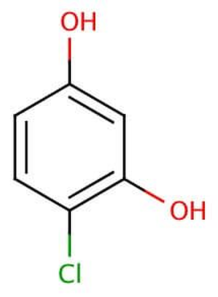
“Exact 4-chlororesorcinol: in-vitro tyrosinase/melanin-pathway evidence only; inhibited melanin formation from tyrosine, DOPA, or epinephrine, supporting a theoretical depigmenting mechanism but not a proven cosmetic skin benefit.”
Phenolic coupler for oxidative (permanent/demi) hair dyes; used in the colorant base to build cool/ash nuances (keep out of the peroxide developer).
4-Chlororesorcinol (Coupler/Secondary) is a phenolic hair-dye coupler (resorcinol-type) used in oxidative (permanent/demi) hair color systems.
In the presence of an oxidant (typically H2O2 in the developer), primary intermediates generate reactive species that couple with 4-chlororesorcinol to form the final chromophores. Coupling can be accelerated by peroxide and may also proceed via air oxidation.
In practice it is a tone-shaping coupler used to build cool/ash nuances and help manage warmth. Shade outcome depends strongly on the primary intermediate(s), the full coupler set, pH, oxidant strength, processing time, and hair-fiber variables (porosity, melanin level, and color history).
Product Description: 4-Chlororesorcinol is designed for use in the colorant base of oxidative hair dye systems (Part A) and is mixed for use with a peroxide developer (Part B). It should not be formulated into the developer itself for shelf-stability and shade-control reasons.
Key formulator-relevant points from EU-aligned safety/specification dossiers and typical SDS data include: (i) solid/powder; (ii) UV/Vis λmax ~280 nm (useful for HPLC-UV assay development); (iii) log Pow reported ~0.965 (moderate hydrophilicity vs many dye intermediates); and (iv) reported very high solubility (>100 g/L at room temperature) in water, ethanol, and DMSO (confirm in your exact vehicle and pH window).
Typical COA / raw-material checkpoints
- Appearance/Description: White powder crystal
- Purity: ≥99%
- Melting point: 108–109°C
- Moisture: ≤0.5%
- Ash: ≤0.5%
- Resorcinol: ≤0.5%
Impurity identity matters because resorcinol itself is a regulated hair dye substance in many markets and can affect both compliance documentation and shade behavior (coupler balance shifts). Metals (especially transition metals) can contribute to color drift and (in peroxide systems) catalytic decomposition problems.
| Checkpoint | What to control |
|---|---|
| Placement | Colorant base only; keep out of peroxide developer. Mix for use to initiate oxidation and coupling. |
| Impurities & metals | Monitor resorcinol and heavy metals; metals can drive color drift and peroxide instability. |
| Base stability | Minimize oxygen ingress; use chelators (e.g., EDTA/DTPA/etidronate class) as compatible; consider reducing-agent systems (e.g., sulfite/bisulfite) per your regulatory and formula constraints. |
| Compliance trigger | EU/ASEAN-aligned markets commonly express limits as "maximum concentration applied to hair after mixing under oxidative conditions" (max 2.5% on-hair). Not permitted for eyelash/eyebrow dyeing. |
Usage: Oxidative hair dye colorant bases (permanent/demi); multi-coupler shade systems where a cool/yellow-green leaning coupler helps refine ash/cool nuances and manage warmth when paired with appropriate primary intermediates.
Mixing method:
- Use in the colorant base (Part A) and mix with peroxide developer only at time of use; do not pre-mix into the developer.
- Practical handling: pre-dissolve in a small portion of water and/or glycols (and ethanol if your system allows), then add to the main batch with good agitation. Avoid localized high-pH hotspots that can accelerate side oxidation.
- Compatibility: keep away from strong oxidizing agents during storage; manage trace metals (raw materials/equipment) to reduce shade drift and oxidative discoloration.
Usage rate: 0.01–2.0% (typical, after mixing). Regulatory ceiling in EU/ASEAN-aligned markets is commonly 2.5% maximum concentration applied to hair after mixing under oxidative conditions.
Converting an on-hair limit to a base formula: Con-hair = Cbase × (parts of base)/(parts base + parts developer). Example (1:1 mix): base max = 2.5% × 2 = 5.0% in the colorant base.
Product characteristics: White powder crystal.
Solubility: Reported very high solubility in water, ethanol, and DMSO (>100 g/L at room temperature). In practice it is commonly handled via the water phase (water + glycols) in mildly alkaline systems; confirm solubility/clarity across your pH and solvent window.
Storage: Keep tightly closed, dry, and protected from heat/light. Store away from strong oxidizers; use clean, low-metal-contact processing and oxygen-aware packaging to reduce base discoloration drift.
| Test Name | Specification |
|---|---|
| Appearance | White Powdery Crystal |
| Purity | 99% Min |
| Melting Point (C) | 108-109 |
| Moisture | 0.5% Max |
| Ash | 0.5% Max |
| Resorcinol | 0.5% Max |
No products
Phenolic coupler for oxidative (permanent/demi) hair dyes; used in the colorant base to build cool/ash nuances (keep out of the peroxide developer).
4-Chlororesorcinol (Coupler/Secondary) is a phenolic hair-dye coupler (resorcinol-type) used in oxidative (permanent/demi) hair color systems.
In the presence of an oxidant (typically H2O2 in the developer), primary intermediates generate reactive species that couple with 4-chlororesorcinol to form the final chromophores. Coupling can be accelerated by peroxide and may also proceed via air oxidation.
In practice it is a tone-shaping coupler used to build cool/ash nuances and help manage warmth. Shade outcome depends strongly on the primary intermediate(s), the full coupler set, pH, oxidant strength, processing time, and hair-fiber variables (porosity, melanin level, and color history).
Product Description: 4-Chlororesorcinol is designed for use in the colorant base of oxidative hair dye systems (Part A) and is mixed for use with a peroxide developer (Part B). It should not be formulated into the developer itself for shelf-stability and shade-control reasons.
Key formulator-relevant points from EU-aligned safety/specification dossiers and typical SDS data include: (i) solid/powder; (ii) UV/Vis λmax ~280 nm (useful for HPLC-UV assay development); (iii) log Pow reported ~0.965 (moderate hydrophilicity vs many dye intermediates); and (iv) reported very high solubility (>100 g/L at room temperature) in water, ethanol, and DMSO (confirm in your exact vehicle and pH window).
Typical COA / raw-material checkpoints
- Appearance/Description: White powder crystal
- Purity: ≥99%
- Melting point: 108–109°C
- Moisture: ≤0.5%
- Ash: ≤0.5%
- Resorcinol: ≤0.5%
Impurity identity matters because resorcinol itself is a regulated hair dye substance in many markets and can affect both compliance documentation and shade behavior (coupler balance shifts). Metals (especially transition metals) can contribute to color drift and (in peroxide systems) catalytic decomposition problems.
| Checkpoint | What to control |
|---|---|
| Placement | Colorant base only; keep out of peroxide developer. Mix for use to initiate oxidation and coupling. |
| Impurities & metals | Monitor resorcinol and heavy metals; metals can drive color drift and peroxide instability. |
| Base stability | Minimize oxygen ingress; use chelators (e.g., EDTA/DTPA/etidronate class) as compatible; consider reducing-agent systems (e.g., sulfite/bisulfite) per your regulatory and formula constraints. |
| Compliance trigger | EU/ASEAN-aligned markets commonly express limits as "maximum concentration applied to hair after mixing under oxidative conditions" (max 2.5% on-hair). Not permitted for eyelash/eyebrow dyeing. |
Usage: Oxidative hair dye colorant bases (permanent/demi); multi-coupler shade systems where a cool/yellow-green leaning coupler helps refine ash/cool nuances and manage warmth when paired with appropriate primary intermediates.
Mixing method:
- Use in the colorant base (Part A) and mix with peroxide developer only at time of use; do not pre-mix into the developer.
- Practical handling: pre-dissolve in a small portion of water and/or glycols (and ethanol if your system allows), then add to the main batch with good agitation. Avoid localized high-pH hotspots that can accelerate side oxidation.
- Compatibility: keep away from strong oxidizing agents during storage; manage trace metals (raw materials/equipment) to reduce shade drift and oxidative discoloration.
Usage rate: 0.01–2.0% (typical, after mixing). Regulatory ceiling in EU/ASEAN-aligned markets is commonly 2.5% maximum concentration applied to hair after mixing under oxidative conditions.
Converting an on-hair limit to a base formula: Con-hair = Cbase × (parts of base)/(parts base + parts developer). Example (1:1 mix): base max = 2.5% × 2 = 5.0% in the colorant base.
Product characteristics: White powder crystal.
Solubility: Reported very high solubility in water, ethanol, and DMSO (>100 g/L at room temperature). In practice it is commonly handled via the water phase (water + glycols) in mildly alkaline systems; confirm solubility/clarity across your pH and solvent window.
Storage: Keep tightly closed, dry, and protected from heat/light. Store away from strong oxidizers; use clean, low-metal-contact processing and oxygen-aware packaging to reduce base discoloration drift.
| Mechanism | - |
| Appearance | - |
| Longevity | - |
| Strength | - |
| Storage | - |
| Shelf Life | - |
| Allergen(s) | - |
| Dosage (Range) | - |
| Recommended Dosage | - |
| Dosage (Per Day) | - |
| Recommended Dosage (Per Day) | - |
| Mix Method | - |
| Heat Resistance | - |
| Stable in pH range | - |
| Solubility | - |
| Product Types | - |
| INCI | - |