


a versatile polymer widely used across various industries, including cosmetics, food, and pharmaceuticals
The product is EP/USP Conforms (Pharmaceutical Grade). Can be used in cosmetics/food/drug
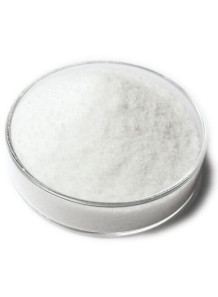
Appearance: Powder
Polyethylene Glycol 4000 (PEG 4000), also known as Macrogol 4000, is a versatile polymer widely used across various industries, including cosmetics, food, and pharmaceuticals.
PEG 4000 is commonly used in cosmetics and personal care products for the following purposes:
In the food industry, PEG 4000 is used as an additive for various functions:
PEG 4000 is widely utilized in pharmaceuticals due to its inert and non-toxic nature:
The product is EP/USP (Pharmaceutical Grade). It's being repacked in GMP-Cosmetics certified facility. If you require EP/USP, please order 25kg package. The original package of 25kg is packed in EP/USP certified facility.
Usage: Can be used as a solvent or as a carrier in all types of cosmetics/food/drug.
Mixing method: Mix with the substance to be dissolved.
Usage rate: Depends on usage
Product characteristics: white powder
Solubility: Soluble in water, ethanol, glycols (such as propylene glycol, butylene glycol).
Storage: Can be stored at room temperature. But close the bottle cap tightly. Then completely protected from sunlight or heat. The product has a minimum shelf life of 2 years.
INCI Name : PEG-75
| Test Name | Specification |
|---|---|
| Appearance (25 °C) | White or almost white solid with a waxy or paraffin-like appearance |
| Identification A | Complies with Current EP test A |
| Identification B | Complies with Current EP test B |
| Identification C | Complies with Current EP test C |
| Appearance of solution, completeness and color | Very soluble in water and in methylene chloride, practically insoluble in alcohol, in fatty oils and in mineral oils. |
| Acidity or alkalinity (EP) | Meets requirements |
| Acidity and alkalinity (USP) | 4.5 - 7.5 |
| Average molecular weight | 3600 - 4400 |
| Viscosity (98 °C, cSt) | 110 - 158 |
| Viscosity (20 °C, mPa·s) | 1 - 3 |
| Freezing point (°C) | 53 - 59 |
| Hydroxyl value | 25 - 32 |
| Reducing substances | Meets requirements |
| Formaldehyde (ppm) | ≤ 30 |
| Ethylene oxide (ppm) | ≤ 1 |
| Dioxan (ppm) | ≤ 10 |
| Ethylene glycol (%) | ≤ 0.25 |
| Diethylene glycol (%) | ≤ 0.25 |
| Free ethylene oxide (µg/g) | ≤ 10 |
| 1,4-Dioxan (µg/g) | ≤ 10 |
| Water (%) | ≤ 1.0 |
| Sulfated ash (%) | ≤ 0.1 |
| Residue on ignition (%) | ≤ 0.1 |
| Heavy metals (ppm) | ≤ 5 |
| TAMC & TYMC | ≤ 10² KOE/g |
| Enterobacteriaceae | Absence in 1 g |
| Pseudomonas aeruginosa | Absence in 1 g |
| Staphylococcus aureus | Absence in 1 g |
No products
a versatile polymer widely used across various industries, including cosmetics, food, and pharmaceuticals
The product is EP/USP Conforms (Pharmaceutical Grade). Can be used in cosmetics/food/drug
Appearance: Powder
Polyethylene Glycol 4000 (PEG 4000), also known as Macrogol 4000, is a versatile polymer widely used across various industries, including cosmetics, food, and pharmaceuticals.
PEG 4000 is commonly used in cosmetics and personal care products for the following purposes:
In the food industry, PEG 4000 is used as an additive for various functions:
PEG 4000 is widely utilized in pharmaceuticals due to its inert and non-toxic nature:
The product is EP/USP (Pharmaceutical Grade). It's being repacked in GMP-Cosmetics certified facility. If you require EP/USP, please order 25kg package. The original package of 25kg is packed in EP/USP certified facility.
Usage: Can be used as a solvent or as a carrier in all types of cosmetics/food/drug.
Mixing method: Mix with the substance to be dissolved.
Usage rate: Depends on usage
Product characteristics: white powder
Solubility: Soluble in water, ethanol, glycols (such as propylene glycol, butylene glycol).
Storage: Can be stored at room temperature. But close the bottle cap tightly. Then completely protected from sunlight or heat. The product has a minimum shelf life of 2 years.
INCI Name : PEG-75
| Mechanism | - |
| Appearance | - |
| Longevity | - |
| Strength | - |
| Long-term storage | - |
| Shelf Life | - |
| Allergen(s) | - |
| Dosage (Range) | - |
| Recommended Dosage | - |
| Dosage (Per Day) | - |
| Recommended Dosage (Per Day) | - |
| Mix Method | - |
| Heat Resistance | - |
| Stable in pH range | - |
| Solubility | - |
| Product Types | - |
| INCI | - |