


“Exact SCS evidence: SCS showed ~15% lower zein/protein-denaturation irritation marker than SLS, but greater epidermal lipid elution; supports cleansing mildness only with careful rinse-off formulation.”
Anionic alkyl sulfate surfactant (coconut‑derived) for cleansing/foaming in shampoos, washes, and bars. Blend with amphoterics/nonionics for mildness.
Sodium Coco‑Sulfate (SCS) is an anionic alkyl sulfate surfactant derived from coconut fatty alcohols (mixed C12–C14+). It provides strong cleansing, abundant foam, and can assist oil‑in‑water emulsification in rinse‑off products.
Regulatory and safety snapshot: the Cosmetic Ingredient Review (CIR) considers alkyl sulfates safe as used across typical product categories, with reported use levels up to ~29% in finished products. SCS can be more tolerable than SLS in some tests (lower zein/protein denaturation), but it can still strip lipids—blend and dose for target mildness.
Typical applications include shampoos and solid shampoo bars, body washes, hand soaps, facial cleansers, and even toothpastes/scrubs for cleansing foam.
Usage: Shampoos and shampoo bars; body/hand/facial cleansers; toothpastes/scrubs. Use SCS as part of a surfactant blend (combine with amphoterics and/or mild nonionics) to improve mildness, viscosity response, and creamy foam.
Mixing method:
- For liquid systems: add slowly into water with gentle stirring (warm ~40–60°C if needed). Control dust; allow full hydration before adding thickeners or fragrance.
- Pair with Cocamidopropyl Betaine and/or APGs; then adjust pH (target ~4.5–6.5). Build viscosity with a light salt addition or polymer/gum as needed. Avoid vigorous mixing to limit air/foam.
- For solid bars: melt/soften the fatty/binder phase first, then incorporate SCS carefully; add liquids/additives below ~70°C. Press/mold and allow to set 24–48 h; test hardness, mush rate, and foam.
Usage rate: Liquids ~1–10% as part of the blend (total AM typically 8–15% for face, 10–18% for body/hair). Solid bars ~20–60% depending on co‑surfactants and bar hardness.
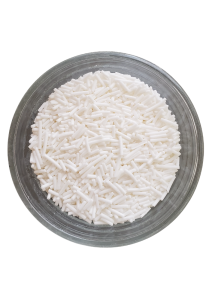
Product characteristics: White to off‑white needles/granules; anionic surfactant.
Solubility: Soluble in water; limited in glycols; insoluble in oils.
| Test Name | Specification |
|---|---|
| Appearance/Nature | Needles |
| Colour | White to Off white |
| Odour | Complies |
| pH (1% aqueous solution) | 7.500-10.500 |
| Active matter % by mass (Mol wt. 310) | ≥95.000% |
| Sulphate % by mass as Na2SO4 | ≤2.000% |
| Moisture content % by mass | ≤3.000% |
| Free alkalinity (mL of 0.1N HCl) / g | ≤0.600 mL/g |
| NDOM % by mass | ≤1.500% |
| Iron content as Fe, ppm | ≤20.000 ppm |
| Bulk density, g/mL | 400.000-600.000 g/mL |
| Lead as Pb, ppm | ≤5.000 ppm |
| Heavy metals (as Pb), ppm | ≤10.000 ppm |
| Arsenic (as As), ppm | ≤2.000 ppm |
No products
Anionic alkyl sulfate surfactant (coconut‑derived) for cleansing/foaming in shampoos, washes, and bars. Blend with amphoterics/nonionics for mildness.
Sodium Coco‑Sulfate (SCS) is an anionic alkyl sulfate surfactant derived from coconut fatty alcohols (mixed C12–C14+). It provides strong cleansing, abundant foam, and can assist oil‑in‑water emulsification in rinse‑off products.
Regulatory and safety snapshot: the Cosmetic Ingredient Review (CIR) considers alkyl sulfates safe as used across typical product categories, with reported use levels up to ~29% in finished products. SCS can be more tolerable than SLS in some tests (lower zein/protein denaturation), but it can still strip lipids—blend and dose for target mildness.
Typical applications include shampoos and solid shampoo bars, body washes, hand soaps, facial cleansers, and even toothpastes/scrubs for cleansing foam.
Usage: Shampoos and shampoo bars; body/hand/facial cleansers; toothpastes/scrubs. Use SCS as part of a surfactant blend (combine with amphoterics and/or mild nonionics) to improve mildness, viscosity response, and creamy foam.
Mixing method:
- For liquid systems: add slowly into water with gentle stirring (warm ~40–60°C if needed). Control dust; allow full hydration before adding thickeners or fragrance.
- Pair with Cocamidopropyl Betaine and/or APGs; then adjust pH (target ~4.5–6.5). Build viscosity with a light salt addition or polymer/gum as needed. Avoid vigorous mixing to limit air/foam.
- For solid bars: melt/soften the fatty/binder phase first, then incorporate SCS carefully; add liquids/additives below ~70°C. Press/mold and allow to set 24–48 h; test hardness, mush rate, and foam.
Usage rate: Liquids ~1–10% as part of the blend (total AM typically 8–15% for face, 10–18% for body/hair). Solid bars ~20–60% depending on co‑surfactants and bar hardness.
Product characteristics: White to off‑white needles/granules; anionic surfactant.
Solubility: Soluble in water; limited in glycols; insoluble in oils.
| Mechanism | - |
| Appearance | - |
| Longevity | - |
| Strength | - |
| Long-term storage | - |
| Shelf Life | - |
| Allergen(s) | - |
| Dosage (Range) | - |
| Recommended Dosage | - |
| Dosage (Per Day) | - |
| Recommended Dosage (Per Day) | - |
| Mix Method | - |
| Heat Resistance | - |
| Stable in pH range | - |
| Solubility | - |
| Product Types | - |
| INCI | - |