


“Topical 2% N-acetyl glucosamine reduced the appearance of facial hyperpigmentation in an 8-week double-blind, placebo-controlled split-face clinical study.”
High-purity N-Acetyl-D-Glucosamine powder for moisturizing, brightening, skin-smoothing and anti-aging cosmetic formulas.
Hyafactor - NAG (Acetyl Glucosamine) is a high-purity N-Acetyl-D-Glucosamine cosmetic active supplied as a white to off-white powder for water-phase skin-care formulation.
N-Acetyl-D-Glucosamine is a small, water-soluble amino sugar related to the natural carbohydrate building blocks used in skin glycosaminoglycans. In cosmetic systems it supports moisturization, a smoother skin feel, a more even-looking complexion, and brightening concepts, especially when paired with niacinamide.
The material is suitable for serums, essences, toners, gels, emulsions, masks and other aqueous products. It dissolves in water, glycols and ethanol, works well in pH 3.0-7.0 formulas, and should be processed below 60°C.
Product Description: Hyafactor - NAG is 100% N-ACETYL-D-GLUCOSAMINEwith assay specification 98.00-102.00% on dry basis. It is designed for formulators who need a low-color, low-odor, water-compatible active for hydration, tone-evening and gentle renewal formulas.
NAG supports hydration-focused concepts through its relationship with skin glycosaminoglycan and hyaluronic-acid-related pathways. In finished cosmetics this is best positioned as improved skin moisture, a softer skin feel, and a plumper-looking appearance rather than medical repair language.
For brightening, NAG is useful in formulas targeting dullness, dark spot appearance and uneven UV-induced tone. It is commonly formulated with niacinamide because both are water-soluble and work in a skin-friendly pH range; this combination is suitable for tone-evening serums, moisturizers and daily radiance products.
NAG also fits gentle smoothing concepts. It is not an aggressive acid exfoliant, but it can support natural surface renewal and glycoprotein-related processes, helping formulas address roughness, dullness and uneven texture with a milder profile.
| Function Area | Technical Rationale | Formulation Use |
|---|---|---|
| Moisturizing / NMF support | Water-soluble amino sugar related to skin glycosaminoglycan pathways | Hydrating serum, toner, gel cream, mask serum |
| Brightening / tone-evening | Supports pigmentation-related cosmetic pathways; pairs well with niacinamide | Dark spot appearance care, daily radiance products, uneven-tone formulas |
| Gentle smoothing | Supports natural skin turnover and surface glycoprotein balance without relying on strong acidity | Low-acid renewal serum, sensitive-skin smoothing essence |
| Anti-aging appearance | Hydration, antioxidant-support positioning and compatibility with HA, peptides and barrier actives | Plumping serum, anti-wrinkle moisturizer, eye-area formulas after safety testing |
Usage: Suitable for facial serums, brightening serums, hydrating toners, essences, clear gels, gel creams, lotions, creams, masks, cleansers, lip care, primers, sunscreens, foundations and body-care products where a water-soluble active is compatible with the formula design.
Mixing method:
- Add into the water phase or pre-dissolve in water, glycerin-water, propanediol, butylene glycol, pentylene glycol or ethanol-water blend before adding to the main batch.
- For emulsions made with a heated oil/water process, add after the batch cools below 60°C; for best color and active stability, cool-down addition around 45-50°C is preferred when the formula allows it.
- Target finished product pH 3.0-7.0. For niacinamide + NAG brightening formulas, pH 5.0-6.0 is usually practical; for daily facial serums and creams, pH 4.5-6.5 is a good starting window.
- Confirm clarity, color, odor, pH drift, viscosity and precipitation during stability testing, especially in clear gels, high-electrolyte systems, acid formulas, peptide formulas and high-humectant systems.
Usage rate: 0.1-8.0%. Typical facial serum and moisturizer range: 2.0-4.0%. Recommended high-performance starting point: 4.0%. At 4.0-8.0%, confirm solubility, sensory feel, preservation and long-term stability in the final formula.
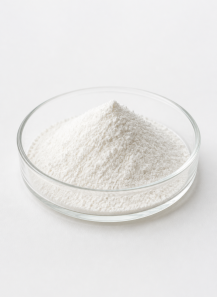
Product characteristics: White to off-white powder; characteristic mild odor; assay 98.00-102.00% on dry basis; melting point 196-205°C.
Solubility: Soluble in water, glycols and ethanol. Best suited to aqueous systems, water/glycol systems, hydroalcoholic systems and O/W emulsions. Not recommended for anhydrous oil systems unless enough suitable polar solvent is present.
Storage: Store tightly closed in a dry place at room temperature. Protect from moisture, prolonged heat and direct light. Re-seal immediately after use because powder actives can absorb moisture during repeated handling.
| Test Name | Specification |
|---|---|
| Appearance | White Powder |
| Taste | Characteristics |
| Odor | Characteristics |
| Assay (on dry basis) | 98.00-102.00% |
| Specific Rotation | +39.00 to +43.00 |
| Chloride | NMT 0.1% |
| pH | 6.0-8.0 |
| Loss on Drying | NMT 0.5% |
| Residue on Ignition | NMT 0.1% |
| Heavy Metals | NMT 10ppm |
| Arsenic (AS2O3) | NMT 1ppm |
| Melting Point | 196-205C |
| Total Bacteria Count | 100CFU/g Max |
| Yeast & Mold | 10CFU/g Max |
| Salmonella | Negative |
| E.Coli | Negative |
| Staphylococcus Aureus | Negative |
No products
High-purity N-Acetyl-D-Glucosamine powder for moisturizing, brightening, skin-smoothing and anti-aging cosmetic formulas.
Hyafactor - NAG (Acetyl Glucosamine) is a high-purity N-Acetyl-D-Glucosamine cosmetic active supplied as a white to off-white powder for water-phase skin-care formulation.
N-Acetyl-D-Glucosamine is a small, water-soluble amino sugar related to the natural carbohydrate building blocks used in skin glycosaminoglycans. In cosmetic systems it supports moisturization, a smoother skin feel, a more even-looking complexion, and brightening concepts, especially when paired with niacinamide.
The material is suitable for serums, essences, toners, gels, emulsions, masks and other aqueous products. It dissolves in water, glycols and ethanol, works well in pH 3.0-7.0 formulas, and should be processed below 60°C.
Product Description: Hyafactor - NAG is 100% N-ACETYL-D-GLUCOSAMINEwith assay specification 98.00-102.00% on dry basis. It is designed for formulators who need a low-color, low-odor, water-compatible active for hydration, tone-evening and gentle renewal formulas.
NAG supports hydration-focused concepts through its relationship with skin glycosaminoglycan and hyaluronic-acid-related pathways. In finished cosmetics this is best positioned as improved skin moisture, a softer skin feel, and a plumper-looking appearance rather than medical repair language.
For brightening, NAG is useful in formulas targeting dullness, dark spot appearance and uneven UV-induced tone. It is commonly formulated with niacinamide because both are water-soluble and work in a skin-friendly pH range; this combination is suitable for tone-evening serums, moisturizers and daily radiance products.
NAG also fits gentle smoothing concepts. It is not an aggressive acid exfoliant, but it can support natural surface renewal and glycoprotein-related processes, helping formulas address roughness, dullness and uneven texture with a milder profile.
| Function Area | Technical Rationale | Formulation Use |
|---|---|---|
| Moisturizing / NMF support | Water-soluble amino sugar related to skin glycosaminoglycan pathways | Hydrating serum, toner, gel cream, mask serum |
| Brightening / tone-evening | Supports pigmentation-related cosmetic pathways; pairs well with niacinamide | Dark spot appearance care, daily radiance products, uneven-tone formulas |
| Gentle smoothing | Supports natural skin turnover and surface glycoprotein balance without relying on strong acidity | Low-acid renewal serum, sensitive-skin smoothing essence |
| Anti-aging appearance | Hydration, antioxidant-support positioning and compatibility with HA, peptides and barrier actives | Plumping serum, anti-wrinkle moisturizer, eye-area formulas after safety testing |
Usage: Suitable for facial serums, brightening serums, hydrating toners, essences, clear gels, gel creams, lotions, creams, masks, cleansers, lip care, primers, sunscreens, foundations and body-care products where a water-soluble active is compatible with the formula design.
Mixing method:
- Add into the water phase or pre-dissolve in water, glycerin-water, propanediol, butylene glycol, pentylene glycol or ethanol-water blend before adding to the main batch.
- For emulsions made with a heated oil/water process, add after the batch cools below 60°C; for best color and active stability, cool-down addition around 45-50°C is preferred when the formula allows it.
- Target finished product pH 3.0-7.0. For niacinamide + NAG brightening formulas, pH 5.0-6.0 is usually practical; for daily facial serums and creams, pH 4.5-6.5 is a good starting window.
- Confirm clarity, color, odor, pH drift, viscosity and precipitation during stability testing, especially in clear gels, high-electrolyte systems, acid formulas, peptide formulas and high-humectant systems.
Usage rate: 0.1-8.0%. Typical facial serum and moisturizer range: 2.0-4.0%. Recommended high-performance starting point: 4.0%. At 4.0-8.0%, confirm solubility, sensory feel, preservation and long-term stability in the final formula.
Product characteristics: White to off-white powder; characteristic mild odor; assay 98.00-102.00% on dry basis; melting point 196-205°C.
Solubility: Soluble in water, glycols and ethanol. Best suited to aqueous systems, water/glycol systems, hydroalcoholic systems and O/W emulsions. Not recommended for anhydrous oil systems unless enough suitable polar solvent is present.
Storage: Store tightly closed in a dry place at room temperature. Protect from moisture, prolonged heat and direct light. Re-seal immediately after use because powder actives can absorb moisture during repeated handling.
| Mechanism | - |
| Appearance | - |
| Longevity | - |
| Strength | - |
| Long-term storage | - |
| Shelf Life | - |
| Allergen(s) | - |
| Dosage (Range) | - |
| Recommended Dosage | - |
| Dosage (Per Day) | - |
| Recommended Dosage (Per Day) | - |
| Mix Method | - |
| Heat Resistance | - |
| Stable in pH range | - |
| Solubility | - |
| Product Types | - |
| INCI | - |