


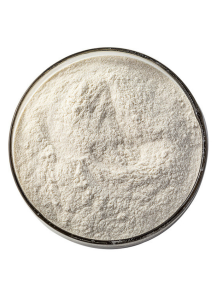
Daidzein (≥98% HPLC) soy isoflavone for supplements; evidence-based support for antioxidant, cardiovascular, bone, and menopausal health.
Daidzein ≥98% (HPLC) soy-derived isoflavone (phytoestrogen) used in dietary supplements; researched for antioxidant, cardiovascular, bone, and menopausal support.
| Benefit | Typical study dose* | Key human findings | High-quality sources |
|---|---|---|---|
| Antioxidant / oxidative stress | Varies; often 20–80 mg/day total isoflavones; some trials used 40–63 mg/day daidzein | Mixed evidence; modulation of antioxidant enzymes and markers reported in small studies | PubMed 11880557 |
| Cardiovascular / vascular function | Similar ranges; protocol-dependent | Limited human data; some improvements in endothelial function/lipids | MDPI review |
| Bone health (postmenopausal) | Often 40–63 mg/day daidzein or mixed isoflavones | Mixed/ modest effects on bone markers; heterogeneous trials | Wiley review |
| Menopausal symptoms | Varies by formulation and study | Small, inconsistent reductions in vasomotor symptoms | Overview |
*Dosage notes: many trials report total isoflavones; pure daidzein dosing varies by protocol and equol-producer status.
| Test Name | Specification |
|---|---|
| Appearance | White powder |
| Odor & Taste | Characteristic |
| Particle Size | NLT 90% through 80 mesh |
| Identification | Corresponding with RS |
| Assay (in dry basis) | ≥98% |
| Loss on Drying | ≤1.0% |
| Ash | ≤0.1% |
| Lead (Pb) | ≤2.0ppm |
| Arsenic (As) | ≤2.0ppm |
| Cadmium (Cd) | ≤0.5ppm |
| Mercury (Hg) | ≤0.1ppm |
| Standard Plate Count | ≤10,000cfu/g |
| Total Yeast & Mold | ≤1,000cfu/g |
| E. coli (in 10mL) | Negative |
| Salmonella (in 10mL) | Negative |
| S. aureus (in 10mL) | Negative |
No products
Daidzein (≥98% HPLC) soy isoflavone for supplements; evidence-based support for antioxidant, cardiovascular, bone, and menopausal health.
Daidzein ≥98% (HPLC) soy-derived isoflavone (phytoestrogen) used in dietary supplements; researched for antioxidant, cardiovascular, bone, and menopausal support.
| Benefit | Typical study dose* | Key human findings | High-quality sources |
|---|---|---|---|
| Antioxidant / oxidative stress | Varies; often 20–80 mg/day total isoflavones; some trials used 40–63 mg/day daidzein | Mixed evidence; modulation of antioxidant enzymes and markers reported in small studies | PubMed 11880557 |
| Cardiovascular / vascular function | Similar ranges; protocol-dependent | Limited human data; some improvements in endothelial function/lipids | MDPI review |
| Bone health (postmenopausal) | Often 40–63 mg/day daidzein or mixed isoflavones | Mixed/ modest effects on bone markers; heterogeneous trials | Wiley review |
| Menopausal symptoms | Varies by formulation and study | Small, inconsistent reductions in vasomotor symptoms | Overview |
*Dosage notes: many trials report total isoflavones; pure daidzein dosing varies by protocol and equol-producer status.
| Mechanism | - |
| Appearance | - |
| Longevity | - |
| Strength | - |
| Storage | - |
| Shelf Life | - |
| Allergen(s) | - |
| Dosage (Range) | - |
| Recommended Dosage | - |
| Dosage (Per Day) | - |
| Recommended Dosage (Per Day) | - |
| Mix Method | - |
| Heat Resistance | - |
| Stable in pH range | - |
| Solubility | - |
| Product Types | - |
| INCI | - |