


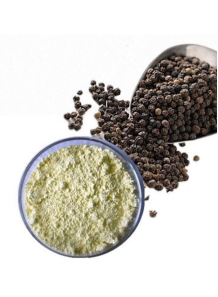
Piperine 95% (black pepper alkaloid) used as a bioavailability enhancer; typical supplemental use is ~5–20 mg/day depending on application.
Piperine (95% Purity) black pepper alkaloid (95% assay) is a standardized piperine ingredient used in supplements and functional foods primarily as a bioavailability enhancer for selected co‑administered compounds (e.g., curcumin).
| Benefit | Typical study dose* | Key human findings | High-quality sources |
|---|---|---|---|
| 1 Bioavailability enhancement (adjunct use) | ~5–20 mg/day; commonly paired with other actives | Used as an adjunct to increase exposure (AUC/absorption) of select compounds; most cited for curcumin co‑administration. | PubMed |
| 2 Metabolic/thermogenic signals (preliminary) | ~5–20 mg/day; multi‑week interventions vary | Some trials and reviews suggest potential effects on lipid/glucose-related markers, but outcomes vary and depend on population and co‑ingredients. | PubMed search |
| 3 Antioxidant/anti‑inflammatory activity (supportive) | Dose depends on application; evidence is mixed | Strong preclinical evidence gives a useful technical basis for antioxidant and anti-inflammatory support claims; final claims should match the dose, formulation and study design. | PubMed search |
*Typical supplemental products use piperine in the single‑digit to low‑tens of mg/day range. Start low and adjust cautiously; dosing should reflect regulatory status and product concept.
No products
Piperine 95% (black pepper alkaloid) used as a bioavailability enhancer; typical supplemental use is ~5–20 mg/day depending on application.
Piperine (95% Purity) black pepper alkaloid (95% assay) is a standardized piperine ingredient used in supplements and functional foods primarily as a bioavailability enhancer for selected co‑administered compounds (e.g., curcumin).
| Benefit | Typical study dose* | Key human findings | High-quality sources |
|---|---|---|---|
| 1 Bioavailability enhancement (adjunct use) | ~5–20 mg/day; commonly paired with other actives | Used as an adjunct to increase exposure (AUC/absorption) of select compounds; most cited for curcumin co‑administration. | PubMed |
| 2 Metabolic/thermogenic signals (preliminary) | ~5–20 mg/day; multi‑week interventions vary | Some trials and reviews suggest potential effects on lipid/glucose-related markers, but outcomes vary and depend on population and co‑ingredients. | PubMed search |
| 3 Antioxidant/anti‑inflammatory activity (supportive) | Dose depends on application; evidence is mixed | Strong preclinical evidence gives a useful technical basis for antioxidant and anti-inflammatory support claims; final claims should match the dose, formulation and study design. | PubMed search |
*Typical supplemental products use piperine in the single‑digit to low‑tens of mg/day range. Start low and adjust cautiously; dosing should reflect regulatory status and product concept.
| Mechanism | - |
| Appearance | - |
| Longevity | - |
| Strength | - |
| Long-term storage | - |
| Shelf Life | - |
| Allergen(s) | - |
| Dosage (Range) | - |
| Recommended Dosage | - |
| Dosage (Per Day) | - |
| Recommended Dosage (Per Day) | - |
| Mix Method | - |
| Heat Resistance | - |
| Stable in pH range | - |
| Solubility | - |
| Product Types | - |
| INCI | - |