


“Skin-cell scope: OCTN1 uptake of L-ergothioneine reduced UV-related ROS and oxidative damage in keratinocytes.”
Pure-Ergothioneine™ is high-purity L-Ergothioneine powder for cosmetic antioxidant, anti-aging and anti-dullness formulations.
Ergothioneine is a naturally occurring sulfur-containing histidine derivative that is transported into cells by OCTN1. Skin-cell studies report uptake into keratinocytes and fibroblasts, protection against UV-associated oxidative stress, and support for stress-response pathways such as Nrf2/HO-1, HSP70 and PI3K/Akt/Nrf2.
This format is intended for leave-on water-phase systems where a pure active is preferred over a carrier-diluted concentrate. It is suitable for serums, essences, gels, emulsions and after-sun or pollution-stress concepts when the formula can protect the active from high heat, strong oxidants and prolonged alkaline pH.
Product Description: Pure-Ergothioneine™ is the isolated cosmetic active ERGOTHIONEINE (CAS 497-30-3). It is positioned as a cellular antioxidant and photo-stress support ingredient rather than a simple preservative antioxidant. The most useful formulation rationale is direct skin-cell protection: ergothioneine is compatible with the biology of skin cells through OCTN1 transport, helps moderate reactive oxygen species generated by UV and environmental stress, and supports downstream anti-aging endpoints connected with lipid peroxidation, fibroblast senescence and matrix stress.
For brightening and anti-dullness formulas, ergothioneine should be framed as antioxidant tone support. Published cosmetic and skin-biology work discusses tyrosinase/melanogenesis modulation, but the public claim should stay formulation-level: supports more even-looking tone by reducing oxidative stress pressure around UV- and pollution-exposed skin.
| Model/System | Key Endpoints | Formulation Implication |
|---|---|---|
| Human skin cells and tissue | OCTN1 transporter uptake; lower UV-associated oxidative damage; support for DNA-repair response | Antioxidant and photo-stress support in leave-on care |
| Keratinocyte-fibroblast UVB model | Nrf2/HO-1 and HSP70 activation; reduced senescence signaling after UVB stress | Anti-aging rationale for daily antioxidant formulas |
| UVA/ROS and tyrosinase-related work | ROS scavenging, lipid-peroxidation control, and tyrosinase pathway support reported in cosmetic literature | Anti-dullness, tone-evening and pollution/UV-stress positioning |
Usage: Leave-on antioxidant serums, brightening/anti-dullness products, anti-aging creams, after-sun recovery care, pollution-defense products, barrier-support gels and sensitive-skin formulas where low-irritation antioxidant support is needed.
Mixing method:
- Dissolve in the water phase or a small water/glycerin or water/glycol premix, then add during cool-down or final adjustment below 40°C.
- Recommended finished-formula pH: 4-7. Avoid prolonged exposure to strong alkaline pH, strong oxidants, high heat and heavy-metal contamination.
- Use chelator support where appropriate. Protect bulk and finished products from repeated air/light exposure; fill into air-restrictive packaging for high-active antioxidant formulas.
- Works well with niacinamide, panthenol, ectoin, beta-glucan, peptides, hyaluronic acid, ceramides, mild acids at compatible pH, and broad-spectrum antioxidant systems.
Usage rate: 0.1-2.0% of the finished formula. Typical antioxidant/anti-aging use is 0.3-0.5%; higher levels should be confirmed for clarity, pH, color stability and sensory impact in the final base.
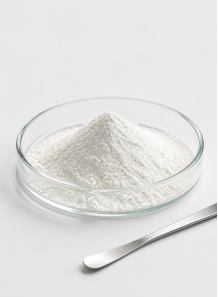
Product characteristics: White to off-white powder.
Solubility: Soluble in water; can be premixed with water/glycerin or water/glycol systems. Not oil-soluble.
| Test Name | Specification |
|---|---|
| Appearance | White to off-white crystals |
| Identification | Retention time of the principal peak of the test solution is consistent with that of the reference solution |
| Specific rotation | ≥ (+)122° |
| Assay (area%) | ≥ 99.99% |
| Water content | ≤ 0.5% |
| Residue on ignition | ≤ 0.1% |
| Heavy metals | ≤ 10 ppm |
| Arsenic (As) | ≤ 2 ppm |
| Lead (Pb) | ≤ 10 ppm |
| Cadmium (Cd) | ≤ 5 ppm |
| Mercury (Hg) | ≤ 1 ppm |
| Total aerobic microbial count | ≤ 500 CFU/g |
| Mold & yeast | ≤ 100 CFU/g |
| Thermotolerant coliforms / Staphylococcus aureus / Pseudomonas aeruginosa | Not detected/g |
No products
Pure-Ergothioneine™ is high-purity L-Ergothioneine powder for cosmetic antioxidant, anti-aging and anti-dullness formulations.
Ergothioneine is a naturally occurring sulfur-containing histidine derivative that is transported into cells by OCTN1. Skin-cell studies report uptake into keratinocytes and fibroblasts, protection against UV-associated oxidative stress, and support for stress-response pathways such as Nrf2/HO-1, HSP70 and PI3K/Akt/Nrf2.
This format is intended for leave-on water-phase systems where a pure active is preferred over a carrier-diluted concentrate. It is suitable for serums, essences, gels, emulsions and after-sun or pollution-stress concepts when the formula can protect the active from high heat, strong oxidants and prolonged alkaline pH.
Product Description: Pure-Ergothioneine™ is the isolated cosmetic active ERGOTHIONEINE (CAS 497-30-3). It is positioned as a cellular antioxidant and photo-stress support ingredient rather than a simple preservative antioxidant. The most useful formulation rationale is direct skin-cell protection: ergothioneine is compatible with the biology of skin cells through OCTN1 transport, helps moderate reactive oxygen species generated by UV and environmental stress, and supports downstream anti-aging endpoints connected with lipid peroxidation, fibroblast senescence and matrix stress.
For brightening and anti-dullness formulas, ergothioneine should be framed as antioxidant tone support. Published cosmetic and skin-biology work discusses tyrosinase/melanogenesis modulation, but the public claim should stay formulation-level: supports more even-looking tone by reducing oxidative stress pressure around UV- and pollution-exposed skin.
| Model/System | Key Endpoints | Formulation Implication |
|---|---|---|
| Human skin cells and tissue | OCTN1 transporter uptake; lower UV-associated oxidative damage; support for DNA-repair response | Antioxidant and photo-stress support in leave-on care |
| Keratinocyte-fibroblast UVB model | Nrf2/HO-1 and HSP70 activation; reduced senescence signaling after UVB stress | Anti-aging rationale for daily antioxidant formulas |
| UVA/ROS and tyrosinase-related work | ROS scavenging, lipid-peroxidation control, and tyrosinase pathway support reported in cosmetic literature | Anti-dullness, tone-evening and pollution/UV-stress positioning |
Usage: Leave-on antioxidant serums, brightening/anti-dullness products, anti-aging creams, after-sun recovery care, pollution-defense products, barrier-support gels and sensitive-skin formulas where low-irritation antioxidant support is needed.
Mixing method:
- Dissolve in the water phase or a small water/glycerin or water/glycol premix, then add during cool-down or final adjustment below 40°C.
- Recommended finished-formula pH: 4-7. Avoid prolonged exposure to strong alkaline pH, strong oxidants, high heat and heavy-metal contamination.
- Use chelator support where appropriate. Protect bulk and finished products from repeated air/light exposure; fill into air-restrictive packaging for high-active antioxidant formulas.
- Works well with niacinamide, panthenol, ectoin, beta-glucan, peptides, hyaluronic acid, ceramides, mild acids at compatible pH, and broad-spectrum antioxidant systems.
Usage rate: 0.1-2.0% of the finished formula. Typical antioxidant/anti-aging use is 0.3-0.5%; higher levels should be confirmed for clarity, pH, color stability and sensory impact in the final base.
Product characteristics: White to off-white powder.
Solubility: Soluble in water; can be premixed with water/glycerin or water/glycol systems. Not oil-soluble.
| Mechanism | - |
| Appearance | - |
| Longevity | - |
| Strength | - |
| Long-term storage | - |
| Shelf Life | - |
| Allergen(s) | - |
| Dosage (Range) | - |
| Recommended Dosage | - |
| Dosage (Per Day) | - |
| Recommended Dosage (Per Day) | - |
| Mix Method | - |
| Heat Resistance | - |
| Stable in pH range | - |
| Solubility | - |
| Product Types | - |
| INCI | - |