


“PDRN scope: supports keratinocyte/fibroblast proliferation, migration, collagen regulation and inflammatory-cytokine modulation in skin cells.”
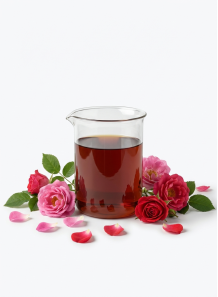
Rose-derived PDRN (Sodium DNA) solution with 5000 ppm maximum active concentration and a naturally dark-red color for hydration support, barrier recovery, and antioxidant protection.
DNA-MAX™ Rose (Rose PDRN, 5000ppm Maximum Concentration) is a rose-derived polydeoxyribonucleotide (PDRN) / DNA fragment active supplied at ≥5000 ppm (0.5% w/w) active concentration in the ingredient as provided.
DNA-MAX™ Rose contains the highest concentration of PDRN/DNA at a minimum of 5000 ppm (highest in the industry); therefore the color is dark-red. The rose source is Rosa rugosa (petal part).
It offers several times of efficacy above lower concentration of Rose PDRN available in the market by enabling higher delivered-active levels in finished formulas while keeping application sensorials water-light.
Product Description: In cosmetic skin biology literature, PDRN refers to mixtures of DNA fragments (deoxyribonucleotide polymers) whose fragment size depends on source and processing. PDRN materials are studied for skin-relevant endpoints including keratinocyte/fibroblast migration and proliferation, barrier recovery markers, extracellular-matrix preservation (collagen/MMP balance), and modulation of oxidative-stress/inflammation signals (Squadrito et al., 2017; Shin et al., 2023).
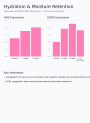
Hydration & antioxidant protection support: DNA-MAX™ Rose evaluation data show upregulation of hyaluronic acid synthase (HAS) expression and increased SOD2 expression, supporting hydration/moisture-retention and antioxidant-protection claims.

Evaluation focus: hydration/moisture retention (HAS) and antioxidant marker (SOD2) expression.
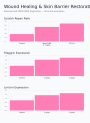
Skin barrier recovery support: DNA-MAX™ Rose supports barrier generation markers (e.g., filaggrin and loricrin) in evaluation data, making it useful for skin-barrier restoration concepts.

Evaluation focus: scratch repair rate and skin-barrier markers (filaggrin, loricrin) expression.
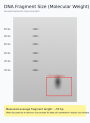
Molecular size (penetration-relevant): DNA-MAX™ Rose is characterized by a DNA fragment molecular weight centered at about ~50 bp, described as an optimum size range for deep skin penetration in topical use concepts.

Evaluation focus: DNA fragment size distribution centered around ~50 bp.
Technical evaluation visuals: The following figures are included as technical/illustrative evaluation materials (interpret in the context of the tested finished formula and conditions).

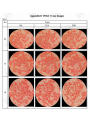
VISIA 7 case images (Spot): red overlay indicates the spot region; examples shown at baseline (D0) and after 14/28 days (D14/D28).

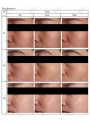
Skin glossiness photo comparison: example subjects shown at D0 vs D14 vs D28 (black bars anonymize identity).

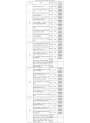
Subject self-assessment (Table): high approval rates were reported at D14 and D28 for spreadability/absorption, moisturizing & dryness improvement, radiance/whitening tone, and perceived spot improvement, with non-irritation/no adverse reactions noted.
| Model/System | Key Endpoints (examples from open literature) | Cosmetic Implication |
|---|---|---|
| Keratinocytes + fibroblasts (in vitro) | Migration/proliferation; ERK modulation; collagen/MMP balance; inflammatory cytokine modulation (Shin et al., 2023) | Recovery care; smoother-looking skin; anti-aging support |
| Environmental stress models (pollution proxy + UVA) | Oxidative-stress and matrix preservation endpoints in keratinocytes/skin explants (Cavagnino et al., 2025) | Antioxidant-protection use; stress-defense narrative |
| Barrier-disruption models (3D skin / topical study) | Barrier recovery markers and TEWL-related recovery improvements reported for low-MW PDRN systems (Lee et al., 2023; Bak et al., 2025) | Barrier support and hydration-support claim areas |
Usage: Suitable for serums, ampoules, essences, gels, creams/lotions, masks, and “recovery care” formulas (stress-exposed or post-procedure-looking skin).
Mixing method:
- Add to the water phase during cool-down (recommended <40°C) to help preserve DNA fragment integrity.
- Target a mildly acidic, skin-compatible pH window (typical formulation target: pH 3.5–6.5) unless you have internal stability data supporting broader ranges.
- Ensure robust preservation and good manufacturing hygiene; nucleic-acid fragments can be microbe-nutrient sources if preservation is weak.
Usage rate: 0.1–20%
Delivered-active guide for a 5000 ppm (0.5%) active solution: Final Rose PDRN (ppm) ≈ 5000 × (dose% / 100). Example: 10% dose → ~500 ppm active; 20% dose → ~1000 ppm active.
Product characteristics: Dark red liquid (high DNA/PDRN concentration). Color can vary slightly batch-to-batch due to natural-source variation and concentration.
Solubility: Water soluble; compatible with typical aqueous/glycol systems.
For R&D support, cite open literature (no external links in public text): Cavagnino et al., 2025; Lee et al., 2023; Bak et al., 2025; Shin et al., 2023; Squadrito et al., 2017.
| Test Name | Specification |
|---|---|
| Characters | Brown or brownish red liquid |
| Odor | Characteristic smell |
| pH value | 6.0~8.0 |
| Content | NLT 5000ppm |
| Aerobic bacterial count | NMT 1000cfu/ml |
| Total molds and yeast count | NMT 100cfu/ml |
No products
Rose-derived PDRN (Sodium DNA) solution with 5000 ppm maximum active concentration and a naturally dark-red color for hydration support, barrier recovery, and antioxidant protection.
DNA-MAX™ Rose (Rose PDRN, 5000ppm Maximum Concentration) is a rose-derived polydeoxyribonucleotide (PDRN) / DNA fragment active supplied at ≥5000 ppm (0.5% w/w) active concentration in the ingredient as provided.
DNA-MAX™ Rose contains the highest concentration of PDRN/DNA at a minimum of 5000 ppm (highest in the industry); therefore the color is dark-red. The rose source is Rosa rugosa (petal part).
It offers several times of efficacy above lower concentration of Rose PDRN available in the market by enabling higher delivered-active levels in finished formulas while keeping application sensorials water-light.
Product Description: In cosmetic skin biology literature, PDRN refers to mixtures of DNA fragments (deoxyribonucleotide polymers) whose fragment size depends on source and processing. PDRN materials are studied for skin-relevant endpoints including keratinocyte/fibroblast migration and proliferation, barrier recovery markers, extracellular-matrix preservation (collagen/MMP balance), and modulation of oxidative-stress/inflammation signals (Squadrito et al., 2017; Shin et al., 2023).
Hydration & antioxidant protection support: DNA-MAX™ Rose evaluation data show upregulation of hyaluronic acid synthase (HAS) expression and increased SOD2 expression, supporting hydration/moisture-retention and antioxidant-protection claims.
Evaluation focus: hydration/moisture retention (HAS) and antioxidant marker (SOD2) expression.
Skin barrier recovery support: DNA-MAX™ Rose supports barrier generation markers (e.g., filaggrin and loricrin) in evaluation data, making it useful for skin-barrier restoration concepts.
Evaluation focus: scratch repair rate and skin-barrier markers (filaggrin, loricrin) expression.
Molecular size (penetration-relevant): DNA-MAX™ Rose is characterized by a DNA fragment molecular weight centered at about ~50 bp, described as an optimum size range for deep skin penetration in topical use concepts.
Evaluation focus: DNA fragment size distribution centered around ~50 bp.
Technical evaluation visuals: The following figures are included as technical/illustrative evaluation materials (interpret in the context of the tested finished formula and conditions).
VISIA 7 case images (Spot): red overlay indicates the spot region; examples shown at baseline (D0) and after 14/28 days (D14/D28).
Skin glossiness photo comparison: example subjects shown at D0 vs D14 vs D28 (black bars anonymize identity).
Subject self-assessment (Table): high approval rates were reported at D14 and D28 for spreadability/absorption, moisturizing & dryness improvement, radiance/whitening tone, and perceived spot improvement, with non-irritation/no adverse reactions noted.
| Model/System | Key Endpoints (examples from open literature) | Cosmetic Implication |
|---|---|---|
| Keratinocytes + fibroblasts (in vitro) | Migration/proliferation; ERK modulation; collagen/MMP balance; inflammatory cytokine modulation (Shin et al., 2023) | Recovery care; smoother-looking skin; anti-aging support |
| Environmental stress models (pollution proxy + UVA) | Oxidative-stress and matrix preservation endpoints in keratinocytes/skin explants (Cavagnino et al., 2025) | Antioxidant-protection use; stress-defense narrative |
| Barrier-disruption models (3D skin / topical study) | Barrier recovery markers and TEWL-related recovery improvements reported for low-MW PDRN systems (Lee et al., 2023; Bak et al., 2025) | Barrier support and hydration-support claim areas |
Usage: Suitable for serums, ampoules, essences, gels, creams/lotions, masks, and “recovery care” formulas (stress-exposed or post-procedure-looking skin).
Mixing method:
- Add to the water phase during cool-down (recommended <40°C) to help preserve DNA fragment integrity.
- Target a mildly acidic, skin-compatible pH window (typical formulation target: pH 3.5–6.5) unless you have internal stability data supporting broader ranges.
- Ensure robust preservation and good manufacturing hygiene; nucleic-acid fragments can be microbe-nutrient sources if preservation is weak.
Usage rate: 0.1–20%
Delivered-active guide for a 5000 ppm (0.5%) active solution: Final Rose PDRN (ppm) ≈ 5000 × (dose% / 100). Example: 10% dose → ~500 ppm active; 20% dose → ~1000 ppm active.
Product characteristics: Dark red liquid (high DNA/PDRN concentration). Color can vary slightly batch-to-batch due to natural-source variation and concentration.
Solubility: Water soluble; compatible with typical aqueous/glycol systems.
For R&D support, cite open literature (no external links in public text): Cavagnino et al., 2025; Lee et al., 2023; Bak et al., 2025; Shin et al., 2023; Squadrito et al., 2017.
| Mechanism | - |
| Appearance | - |
| Longevity | - |
| Strength | - |
| Long-term storage | - |
| Shelf Life | - |
| Allergen(s) | - |
| Dosage (Range) | - |
| Recommended Dosage | - |
| Dosage (Per Day) | - |
| Recommended Dosage (Per Day) | - |
| Mix Method | - |
| Heat Resistance | - |
| Stable in pH range | - |
| Solubility | - |
| Product Types | - |
| INCI | - |