


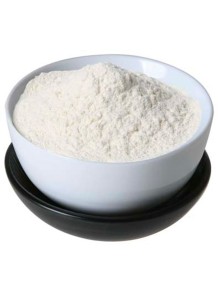
Hydroxypropyl Methylcellulose (HPMC) forms a non‑ionic gel.
Commonly used across many foods; low‑viscosity grade ~15cP for light thickening, stability and film‑forming.
E461
Hydroxypropyl Methylcellulose (HPMC) forms a non‑ionic gel.
E461
It is commonly used in a variety of foods to improve texture, stability and processing performance. The 15cP grade provides a higher solution viscosity than 5cP while still remaining low‑viscosity for easy dispersion and pumping.
1. Food emulsifier & stabilizer:
HPMC can help stabilize oil‑water mixtures and fine dispersions. Useful in salad dressings, sauces, and ready‑to‑eat foods to reduce phase separation and support consistent texture.
2. Bakery & gluten‑free systems:
Used in breads, cakes and pastries to improve water retention, softness and shelf life. In gluten‑free doughs, 15cP HPMC helps build structure and improves handling and volume without excessive viscosity.
3. Dairy and frozen desserts:
Improves creaminess and mouthfeel in ice cream, yogurt and whipped toppings. Helps reduce ice crystal growth and improves freeze–thaw stability.
4. Beverages & suspensions:
Provides light thickening and suspension stabilization in drinks (e.g., fiber/protein/mineral suspensions) with less impact on pourability compared with higher‑viscosity grades.
5. Confectionery & desserts:
Supports gelling/texture in gummies and jellies and can help reduce sugar crystallization in fondant and icing.
6. Processed meats & analogs:
Acts as a binder to improve water retention, texture and fat/oil binding in sausages, deli meats, and plant‑based analogs.
7. Low‑fat / fat‑replacement texture:
Helps restore creamy mouthfeel and body in reduced‑fat products where fat reduction would otherwise thin the system.
8. Edible coating & film‑forming:
Low‑viscosity 15cP solutions are suitable for dipping/spraying edible coatings to improve moisture retention and reduce oil uptake during frying.
Specifications
- Provides a viscosity of ~15 mPa·s (cP) at 2% in water (typical, 20°C)
- Can be used in formulations that are acidic as low as pH 3 and alkaline up to pH 11.
- Odorless
- Recommended use level: 0.5-3.0%
- MySkinRecipes product-use pH guidance: pH 3-9; material tolerance may extend to alkaline systems up to pH 11 depending on the formula
How to use:
Hot-water dispersion method, then dissolve in cold water
1. Disperse HPMC powder in hot water at 80–90°C. When completely dispersed, a turbid liquid forms.
2. Add the turbid dispersion into cold water with continuous stirring to obtain a clear gel solution.
(Tip: split the water; keep the remaining water chilled, then combine with the hot dispersion for faster clarification.)
Pre-dispersion in glycerin / propylene glycol / oil
1. Disperse HPMC powder into glycerin/propylene glycol/oil until uniformly wetted and dispersed.
2. Blend into cold water (≤20°C) until a clear gel solution forms.
| Test Name | Specification |
|---|---|
| Appearance | white, off-yellow white powder |
| Identification (A to E) | Complies |
| Hydroxypropyl content (%) | 7.0-12.0 |
| Methoxyl content (%) | 28.0-30.0 |
| Residue on ignition (%) | Max 1.5 |
| Viscosity (mPa·s / cP) | 12-18 mPa·s |
| Moisture content (%) | Max. 5.0% |
| pH (@25°C) | 5.0-8.0 |
| Arsenic (ppm) | Max 2 |
| Heavy metal (ppm) | Max 20 |
| Appearance of solution | Solution A NMT OS3&YS6 |
| Sulphated ash (%) | Max 3 |
| Chlorides (ppm) | Max 0.5 |
| Total bacterium | Max 1000/gram |
| Mould | Max 100/gram |
| Solubility test | It is nearly insoluble in anhydrous ethanol, ethyl ether and acetone. It swells in cold water to form a transparent or a slightly cloudy solution. Can be dissolved in some organic solvents and also in water-organic solvent mixed solvents. Practically insoluble in hot water and acetone; in ethanol, ether and toluene it swells in water forming an opalescent viscous colloidal solution. |
No products
Hydroxypropyl Methylcellulose (HPMC) forms a non‑ionic gel.
Commonly used across many foods; low‑viscosity grade ~15cP for light thickening, stability and film‑forming.
E461
Hydroxypropyl Methylcellulose (HPMC) forms a non‑ionic gel.
E461
It is commonly used in a variety of foods to improve texture, stability and processing performance. The 15cP grade provides a higher solution viscosity than 5cP while still remaining low‑viscosity for easy dispersion and pumping.
1. Food emulsifier & stabilizer:
HPMC can help stabilize oil‑water mixtures and fine dispersions. Useful in salad dressings, sauces, and ready‑to‑eat foods to reduce phase separation and support consistent texture.
2. Bakery & gluten‑free systems:
Used in breads, cakes and pastries to improve water retention, softness and shelf life. In gluten‑free doughs, 15cP HPMC helps build structure and improves handling and volume without excessive viscosity.
3. Dairy and frozen desserts:
Improves creaminess and mouthfeel in ice cream, yogurt and whipped toppings. Helps reduce ice crystal growth and improves freeze–thaw stability.
4. Beverages & suspensions:
Provides light thickening and suspension stabilization in drinks (e.g., fiber/protein/mineral suspensions) with less impact on pourability compared with higher‑viscosity grades.
5. Confectionery & desserts:
Supports gelling/texture in gummies and jellies and can help reduce sugar crystallization in fondant and icing.
6. Processed meats & analogs:
Acts as a binder to improve water retention, texture and fat/oil binding in sausages, deli meats, and plant‑based analogs.
7. Low‑fat / fat‑replacement texture:
Helps restore creamy mouthfeel and body in reduced‑fat products where fat reduction would otherwise thin the system.
8. Edible coating & film‑forming:
Low‑viscosity 15cP solutions are suitable for dipping/spraying edible coatings to improve moisture retention and reduce oil uptake during frying.
Specifications
- Provides a viscosity of ~15 mPa·s (cP) at 2% in water (typical, 20°C)
- Can be used in formulations that are acidic as low as pH 3 and alkaline up to pH 11.
- Odorless
- Recommended use level: 0.5-3.0%
- MySkinRecipes product-use pH guidance: pH 3-9; material tolerance may extend to alkaline systems up to pH 11 depending on the formula
How to use:
Hot-water dispersion method, then dissolve in cold water
1. Disperse HPMC powder in hot water at 80–90°C. When completely dispersed, a turbid liquid forms.
2. Add the turbid dispersion into cold water with continuous stirring to obtain a clear gel solution.
(Tip: split the water; keep the remaining water chilled, then combine with the hot dispersion for faster clarification.)
Pre-dispersion in glycerin / propylene glycol / oil
1. Disperse HPMC powder into glycerin/propylene glycol/oil until uniformly wetted and dispersed.
2. Blend into cold water (≤20°C) until a clear gel solution forms.
| Mechanism | - |
| Appearance | - |
| Longevity | - |
| Strength | - |
| Storage | - |
| Shelf Life | - |
| Allergen(s) | - |
| Dosage (Range) | - |
| Recommended Dosage | - |
| Dosage (Per Day) | - |
| Recommended Dosage (Per Day) | - |
| Mix Method | - |
| Heat Resistance | - |
| Stable in pH range | - |
| Solubility | - |
| Product Types | - |
| INCI | - |