


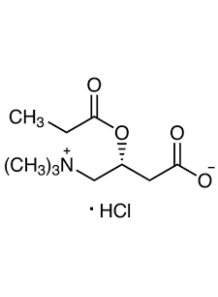
a form of carnitine, an amino acid derivative, and it has some distinct characteristics and potential benefits. Carnitine plays a crucial role in the production of energy by transporting fatty acids into your cells' mitochondria
(Hygroscopic powder)
Propionyl-L-carnitine HCl (PLC) is a form of carnitine, an amino acid derivative, and it has some distinct characteristics and potential benefits. Carnitine plays a crucial role in the production of energy by transporting fatty acids into your cells' mitochondria, where they can be used as a source of energy.
Here are some key points about Propionyl-L-carnitine HCl:
Structure and Form: Propionyl-L-carnitine is a modified form of L-carnitine, where a propionyl group is attached to the carnitine molecule. The hydrochloride (HCl) form is a salt of propionyl-L-carnitine.
Function and Benefits:
Energy Production: Like other forms of carnitine, PLC is involved in the transportation of fatty acids into the mitochondria, where they can be oxidized for energy.
Blood Flow: Some studies suggest that propionyl-L-carnitine may have vasodilatory effects, improving blood flow. This has led to research exploring its potential benefits for cardiovascular health.
Exercise Performance: Some athletes and fitness enthusiasts use carnitine supplements, including propionyl-L-carnitine, believing it might enhance exercise performance.
Cardiovascular Health: Research has explored the potential benefits of propionyl-L-carnitine for individuals with cardiovascular conditions, such as peripheral arterial disease (PAD). It is thought to improve blood flow and exercise tolerance in such cases.
| Test Name | Specification |
|---|---|
| Appearance | White crystalline or crystalline powder |
| Identification | Infrared Absorption |
| Specific rotation [?]D20 | -25 to -28 degree |
| pH | 2-3 |
| Loss on drying | Not more than 1.0% |
| Residue on ignition | Not more than 0.50% |
| Heavy metals | Not more than 15ppm |
| Lead | Not morte than 3ppm |
| Arsenic(as As2o3) | Not more than 3ppm |
| Total Plate Count | Not more than 1000cfu/g |
| Yeast and Molds | Not more than 100cfu/g |
| Salmonella | Negative |
| E.coli | Negative |
| Assay | Not less than 98.0% |
No products
a form of carnitine, an amino acid derivative, and it has some distinct characteristics and potential benefits. Carnitine plays a crucial role in the production of energy by transporting fatty acids into your cells' mitochondria
(Hygroscopic powder)
Propionyl-L-carnitine HCl (PLC) is a form of carnitine, an amino acid derivative, and it has some distinct characteristics and potential benefits. Carnitine plays a crucial role in the production of energy by transporting fatty acids into your cells' mitochondria, where they can be used as a source of energy.
Here are some key points about Propionyl-L-carnitine HCl:
Structure and Form: Propionyl-L-carnitine is a modified form of L-carnitine, where a propionyl group is attached to the carnitine molecule. The hydrochloride (HCl) form is a salt of propionyl-L-carnitine.
Function and Benefits:
Energy Production: Like other forms of carnitine, PLC is involved in the transportation of fatty acids into the mitochondria, where they can be oxidized for energy.
Blood Flow: Some studies suggest that propionyl-L-carnitine may have vasodilatory effects, improving blood flow. This has led to research exploring its potential benefits for cardiovascular health.
Exercise Performance: Some athletes and fitness enthusiasts use carnitine supplements, including propionyl-L-carnitine, believing it might enhance exercise performance.
Cardiovascular Health: Research has explored the potential benefits of propionyl-L-carnitine for individuals with cardiovascular conditions, such as peripheral arterial disease (PAD). It is thought to improve blood flow and exercise tolerance in such cases.
| Mechanism | - |
| Appearance | - |
| Longevity | - |
| Strength | - |
| Long-term storage | - |
| Shelf Life | - |
| Allergen(s) | - |
| Dosage (Range) | - |
| Recommended Dosage | - |
| Dosage (Per Day) | - |
| Recommended Dosage (Per Day) | - |
| Mix Method | - |
| Heat Resistance | - |
| Stable in pH range | - |
| Solubility | - |
| Product Types | - |
| INCI | - |