


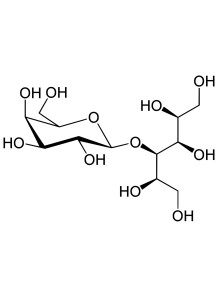
Lactitol monohydrate ≥98% purity is a sugar alcohol derived from lactose that serves as a low-calorie sweetener and proven laxative for constipation relief.
Lactitol monohydrate ≥98% purity is a sugar alcohol (polyol) derived from lactose through catalytic hydrogenation. This white crystalline powder serves as a low-calorie sweetener (2.0-2.4 kcal/g vs 4 kcal/g for sugar) with proven therapeutic benefits for digestive health.
| Benefit | Typical study dose* | Key human findings | High-quality sources |
|---|---|---|---|
| 1 Bowel function improvement | 10-40 g/day for 2-4 weeks | Meta-analysis (n=663) showed increased weekly stool frequency and softened stools; EU authorized claim at 10 g/day | PubMed/EFSA |
| 2 Glycemic control | 25 g single dose | Minimal glucose/insulin rise (glycemic index ≈0 vs glucose=100); recognized for reducing post-prandial glycemic responses | EFSA Journal |
| 3 Dental health | As sugar replacement | Does not promote dental caries; helps maintain tooth mineralization when replacing sugars | FDA/EFSA |
| 4 Prebiotic effects | 10-20 g/day for 2 weeks | Increases Bifidobacterium levels and improves symptoms in constipated adults | PubMed |
*EU supplement claim requires 10 g lactitol once daily for bowel function benefit. Medical use (Pizensy®) typically 20 g daily.
| Test Name | Specification |
|---|---|
| Color | White |
| Appearance | Crystalline powder |
| Assay (on dry basis), w/% | 95.0–102.0 |
| Other polyols (on dry basis), w/% | ≤2.5 |
| Moisture, w/% | ≤1.5 |
| Reducing sugars, w/% | ≤0.1 |
| Chlorides (on dry basis), mg/kg | ≤100.0 |
| Sulfates (on dry basis), mg/kg | ≤200.0 |
| Residue on ignition (on dry basis), w/% | ≤0.1 |
| Nickel (Ni), mg/kg | ≤2.0 |
| Lead (Pb), mg/kg | ≤1.0 |
No products
Lactitol monohydrate ≥98% purity is a sugar alcohol derived from lactose that serves as a low-calorie sweetener and proven laxative for constipation relief.
Lactitol monohydrate ≥98% purity is a sugar alcohol (polyol) derived from lactose through catalytic hydrogenation. This white crystalline powder serves as a low-calorie sweetener (2.0-2.4 kcal/g vs 4 kcal/g for sugar) with proven therapeutic benefits for digestive health.
| Benefit | Typical study dose* | Key human findings | High-quality sources |
|---|---|---|---|
| 1 Bowel function improvement | 10-40 g/day for 2-4 weeks | Meta-analysis (n=663) showed increased weekly stool frequency and softened stools; EU authorized claim at 10 g/day | PubMed/EFSA |
| 2 Glycemic control | 25 g single dose | Minimal glucose/insulin rise (glycemic index ≈0 vs glucose=100); recognized for reducing post-prandial glycemic responses | EFSA Journal |
| 3 Dental health | As sugar replacement | Does not promote dental caries; helps maintain tooth mineralization when replacing sugars | FDA/EFSA |
| 4 Prebiotic effects | 10-20 g/day for 2 weeks | Increases Bifidobacterium levels and improves symptoms in constipated adults | PubMed |
*EU supplement claim requires 10 g lactitol once daily for bowel function benefit. Medical use (Pizensy®) typically 20 g daily.
| Mechanism | - |
| Appearance | - |
| Longevity | - |
| Strength | - |
| Storage | - |
| Shelf Life | - |
| Allergen(s) | - |
| Dosage (Range) | - |
| Recommended Dosage | - |
| Dosage (Per Day) | - |
| Recommended Dosage (Per Day) | - |
| Mix Method | - |
| Heat Resistance | - |
| Stable in pH range | - |
| Solubility | - |
| Product Types | - |
| INCI | - |