


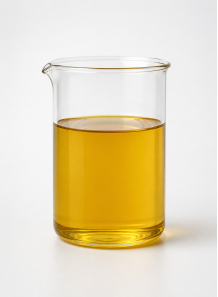
Sorbitan Oleate (Span 80) CAS 1338-43-8 / INS 494 / E494 is a lipophilic nonionic emulsifier for food and supplement formulation work. It is the sorbitan ester of oleic acid, supplied as a yellow oily viscous liquid with an HLB value around 4.3. In food systems it is used for water-in-oil emulsification, oil dispersion, and emulsion stabilization where a low-HLB emulsifier is needed.
| Function | Typical formulation level* | Technical role in food systems | Regulatory notes |
|---|---|---|---|
| Water-in-oil emulsification | 0.05-1.0% in trial formulas; optimize by oil load and required stability | Low HLB (~4.3) favors W/O systems and helps reduce interfacial tension between water droplets and lipid phase. | Use only in food categories and maximum levels permitted by local regulation. |
| Oil and flavor dispersion | 0.05-0.5% as a starting range | Useful for dispersing lipid-soluble flavors, colors, vitamins, and actives into fat-rich premixes or emulsified systems. | Not a nutrient or dietary active; declare and dose as a food additive/emulsifier. |
| Co-emulsifier balance | Blend with a higher-HLB emulsifier when targeting O/W emulsions | Can be paired with higher-HLB emulsifiers to tune required HLB, reduce droplet coalescence, and improve processing robustness. | JECFA lists a group ADI of 0-25 mg/kg bw/day for sorbitan esters including INS 494. |
*These are formulation screening ranges, not a recommended daily intake. The actual permitted level depends on food category, jurisdiction, total sorbitan ester exposure, and finished-product label/regulatory requirements.
| Test Name | Specification |
|---|---|
| Appearance | Amber to brown viscous oily liquid |
| Colour Lovibond | <=3R 20Y |
| Fatty acid (w/%) | 73-77 |
| Polyols (w/%) | 28-32 |
| Acid Value (mg KOH/g) | <=8.0 |
| Saponification Value (mg KOH/g) | 145-160 |
| Hydroxyl Value (mg KOH/g) | 193-210 |
| Lead (mg/kg) | <=2 |
| Arsenic (mg/kg) | <=3 |
| Moisture | <=2.0 |
No products
Sorbitan Oleate (Span 80) CAS 1338-43-8 / INS 494 / E494 is a lipophilic nonionic emulsifier for food and supplement formulation work. It is the sorbitan ester of oleic acid, supplied as a yellow oily viscous liquid with an HLB value around 4.3. In food systems it is used for water-in-oil emulsification, oil dispersion, and emulsion stabilization where a low-HLB emulsifier is needed.
| Function | Typical formulation level* | Technical role in food systems | Regulatory notes |
|---|---|---|---|
| Water-in-oil emulsification | 0.05-1.0% in trial formulas; optimize by oil load and required stability | Low HLB (~4.3) favors W/O systems and helps reduce interfacial tension between water droplets and lipid phase. | Use only in food categories and maximum levels permitted by local regulation. |
| Oil and flavor dispersion | 0.05-0.5% as a starting range | Useful for dispersing lipid-soluble flavors, colors, vitamins, and actives into fat-rich premixes or emulsified systems. | Not a nutrient or dietary active; declare and dose as a food additive/emulsifier. |
| Co-emulsifier balance | Blend with a higher-HLB emulsifier when targeting O/W emulsions | Can be paired with higher-HLB emulsifiers to tune required HLB, reduce droplet coalescence, and improve processing robustness. | JECFA lists a group ADI of 0-25 mg/kg bw/day for sorbitan esters including INS 494. |
*These are formulation screening ranges, not a recommended daily intake. The actual permitted level depends on food category, jurisdiction, total sorbitan ester exposure, and finished-product label/regulatory requirements.
| Mechanism | - |
| Appearance | - |
| Longevity | - |
| Strength | - |
| Long-term storage | - |
| Shelf Life | - |
| Allergen(s) | - |
| Dosage (Range) | - |
| Recommended Dosage | - |
| Dosage (Per Day) | - |
| Recommended Dosage (Per Day) | - |
| Mix Method | - |
| Heat Resistance | - |
| Stable in pH range | - |
| Solubility | - |
| Product Types | - |
| INCI | - |