


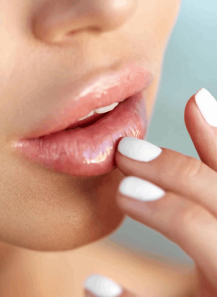
“Direct human evidence: topical methyl nicotinate reproducibly increases cutaneous perfusion and erythema, supporting its use for controlled warming/rubefacient cosmetic effects, not structural skin repair.”
Vasodilating warming active for lip plumpers and warming cosmetics; extremely potent, use only at very low levels and add in final cool-down stage.
Methyl Nicotinate is a cosmetic active used at very low levels as a topical vasodilator to create a controlled warming, tingling, and flushing sensation on skin and lips.
Chemically it is the methyl ester of nicotinic acid (niacin, vitamin B3). On skin it rapidly increases superficial microcirculation (rubefacient effect), leading to transient redness and heat in the area of application. This makes it useful in specialty lip plumpers and warming cosmetics where a strong sensory cue is desired.
Formulation work with Methyl Nicotinate is mainly about dose control and delivery: keeping the active very dilute, distributing it uniformly in the vehicle, and limiting penetration depth so the effect is local, brief, and tolerable for the user.
Product Description: Potent vasodilating cosmetic active used as a rubefacient to trigger rapid, localized microcirculation at the skin surface. Typical applications include lip plumping glosses/balms and warming creams or gels for short-contact use. The effect is sensory (heat, tingling, redness) rather than structural; performance is governed by concentration, contact time, and how evenly the active is dispersed in the formula.
Usage: Lip plumpers and glosses, specialty balms, warming masks or creams, and other rinse-off or short-contact cosmetics where a strong warming/tingling sensation is part of the concept. Not recommended for leave-on products for sensitive or compromised skin.
Mixing method:
- Always pre-dilute the active into a suitable solvent (for example propylene glycol, ethanol, or a light ester/oil) to make a stock solution before adding to the bulk formula.
- Add the pre-diluted solution in the final stage of processing, typically during cool-down (<40°C), with gentle mixing to ensure very uniform distribution.
- For lip products, combine into the oil phase or anhydrous base and mix thoroughly; avoid hot spots by ensuring complete dissolution and homogeneity.
- Start with lab patch testing at the lowest end of the usage range on healthy skin; evaluate warming intensity, onset, and recovery time before moving up in concentration.
Usage rate: 0.01–0.30% (typical 0.05–0.10% in finished product, depending on desired intensity and skin tolerance).
Product characteristics: Clear to pale yellow, low-viscosity liquid with a faint ester-like odor; highly potent in sensory effect even at very low concentration.
Solubility: Soluble in ethanol and cosmetic glycols (e.g. propylene glycol), miscible with many cosmetic esters and oils; practically insoluble in water and requires cosolvents or solubilizers for use in aqueous systems.
Note: Use only in very low concentrations, avoid application on irritated or broken skin, and clearly warn end users about the intense warming/tingling effect.
| Test Name | Specification |
|---|---|
| Appearance | White Powder, Crystals and/or Chunks |
| Infrared spectrum | Conforms to Structure |
| Melting point | 39 °C - 43 °C |
| Purity (Titration by HCL04) | 98.5 % - 101.5 % |
| Purity(GC) | 99 % - 100 % |
No products
Vasodilating warming active for lip plumpers and warming cosmetics; extremely potent, use only at very low levels and add in final cool-down stage.
Methyl Nicotinate is a cosmetic active used at very low levels as a topical vasodilator to create a controlled warming, tingling, and flushing sensation on skin and lips.
Chemically it is the methyl ester of nicotinic acid (niacin, vitamin B3). On skin it rapidly increases superficial microcirculation (rubefacient effect), leading to transient redness and heat in the area of application. This makes it useful in specialty lip plumpers and warming cosmetics where a strong sensory cue is desired.
Formulation work with Methyl Nicotinate is mainly about dose control and delivery: keeping the active very dilute, distributing it uniformly in the vehicle, and limiting penetration depth so the effect is local, brief, and tolerable for the user.
Product Description: Potent vasodilating cosmetic active used as a rubefacient to trigger rapid, localized microcirculation at the skin surface. Typical applications include lip plumping glosses/balms and warming creams or gels for short-contact use. The effect is sensory (heat, tingling, redness) rather than structural; performance is governed by concentration, contact time, and how evenly the active is dispersed in the formula.
Usage: Lip plumpers and glosses, specialty balms, warming masks or creams, and other rinse-off or short-contact cosmetics where a strong warming/tingling sensation is part of the concept. Not recommended for leave-on products for sensitive or compromised skin.
Mixing method:
- Always pre-dilute the active into a suitable solvent (for example propylene glycol, ethanol, or a light ester/oil) to make a stock solution before adding to the bulk formula.
- Add the pre-diluted solution in the final stage of processing, typically during cool-down (<40°C), with gentle mixing to ensure very uniform distribution.
- For lip products, combine into the oil phase or anhydrous base and mix thoroughly; avoid hot spots by ensuring complete dissolution and homogeneity.
- Start with lab patch testing at the lowest end of the usage range on healthy skin; evaluate warming intensity, onset, and recovery time before moving up in concentration.
Usage rate: 0.01–0.30% (typical 0.05–0.10% in finished product, depending on desired intensity and skin tolerance).
Product characteristics: Clear to pale yellow, low-viscosity liquid with a faint ester-like odor; highly potent in sensory effect even at very low concentration.
Solubility: Soluble in ethanol and cosmetic glycols (e.g. propylene glycol), miscible with many cosmetic esters and oils; practically insoluble in water and requires cosolvents or solubilizers for use in aqueous systems.
Note: Use only in very low concentrations, avoid application on irritated or broken skin, and clearly warn end users about the intense warming/tingling effect.
| Mechanism | - |
| Appearance | - |
| Longevity | - |
| Strength | - |
| Long-term storage | - |
| Shelf Life | - |
| Allergen(s) | - |
| Dosage (Range) | - |
| Recommended Dosage | - |
| Dosage (Per Day) | - |
| Recommended Dosage (Per Day) | - |
| Mix Method | - |
| Heat Resistance | - |
| Stable in pH range | - |
| Solubility | - |
| Product Types | - |
| INCI | - |