
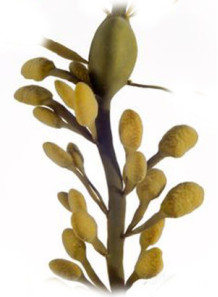
Ascophyllum Nodosum Extract (Fucoidan 4%, Fucose 1%)

Cosmetics Code: 32653

Low‑MW fucoidan (4%) + L‑fucose (1%) extract — soothing, barrier/TEWL, anti‑pollution, brightening support.

฿35.00
gram
Min: 0g
pieces
trending_down

Unit price will be cheaper for larger size

The price will be calculated based on the size you enter

Ascophyllum Nodosum Extract (Fucoidan Low Molecular Weight 4%, L‑Fucose 1%) is a brown‑seaweed extract rich in fucoidan and free L‑fucose. The low‑molecular‑weight fucoidan fraction supports cosmetic benefits while remaining easy to formulate.

What it does (evidence‑based)

  • Soothes visible redness and irritation (anti‑inflammatory pathways)
  • Supports the skin barrier and hydration (reduces TEWL)
  • Helps defend from UV/photoaging stress (MMP‑1/ROS in models)
  • Brightening support via tyrosinase/melanogenesis modulation (LMW fraction)
  • Anti‑pollution positioning (fine‑dust oxidative/inflammatory response)
  • Microbiome‑friendly: helps reduce adhesion of problem bacteria
  • Supports skin recovery (preclinical wound‑repair signals)
  • Enzyme inhibition linked to firmness/elasticity (elastase/collagenase)

Note: This ingredient contains fucoidan at 4% and free L‑fucose at 1% within the extract; adjust formula levels to match your claim focus.

Product Description:

Overview

Ascophyllum nodosum extract rich in sulfated polysaccharides contains a low‑molecular‑weight fucoidan fraction (4%) together with free L‑fucose (1%). This composition is designed for soothing, barrier and TEWL support, and urban‑stress/brightening concepts when formulated correctly.

Evidence‑based skin benefits

  1. Soothing / anti‑inflammatory: Fucoidan modulates NF‑κB/MAPK signaling and lowers NO, TNF‑α and IL‑1β in skin models; topical tests report reduced erythema and better tolerability after UV exposure [1, 2].
  2. Barrier support & hydration: Fucoidan‑rich treatments decreased transepidermal water loss (TEWL) in clinical settings and supported barrier repair in vivo [3, 4].
  3. Photoprotection / anti‑photoaging: Inhibits UVB‑induced MMP‑1 in human dermal fibroblasts and reduces ROS, helping preserve dermal matrix [5, 6].
  4. Brightening: Suppresses tyrosinase/melanogenesis; low‑molecular‑weight (≈5–10 kDa) fractions show the strongest effect [7, 12].
  5. Anti‑pollution: Low‑MW fucoidan attenuates fine‑dust–induced oxidative/inflammatory cascades in keratinocytes and linked skin cells [8].
  6. Microbiome‑friendly adhesion control: Inhibits adhesion of S. aureus and C. acnes on reconstructed skin while sparing commensal S. epidermidis [9].
  7. Skin recovery support: Preclinical data indicate improved wound closure/angiogenesis and faster repair [10].
  8. Firmness & elasticity mechanisms: Inhibits elastase/collagenase and hyaluronidase in vitro [11].

Technical notes

  • Molecular weight & sulfation: Bioactivity depends on MW and degree of sulfation; ≈20% sulfate is commonly associated with strong effects in literature. Low‑MW favors brightening/anti‑pollution, higher MW favors film‑forming/soothing [12].
  • Charge/compatibility: Fucoidan is anionic and can interact with cationic polymers/surfactants; verify with a jar test.

L‑Fucose (topical) — complementary role

  • Supports visible soothing and comfort (lectin/selectin‑related signaling).
  • Helps maintain barrier feel and immediate hydration; pairs well with niacinamide/panthenol/ectoine.
  • Acts as a competitive decoy for certain fucose‑binding lectins, reducing pathogen adhesion.

References

  1. Immunomodulatory and Anti‑Inflammatory Effects of Fucoidan
  2. Topical Benefits of Two Fucoidan‑Rich Extracts
  3. Fucoidan‑Rich Polysaccharides: Skin Barrier (TEWL)
  4. Fucoidan from Undaria pinnatifida — Barrier Repair
  5. Fucoidan Inhibits UVB‑Induced MMP‑1
  6. Protective Effects Against UV‑Induced ROS
  7. Fucoidan and Tyrosinase/Melanogenesis
  8. Low‑MW Fucoidan and Fine‑Dust Inflammation
  9. Anti‑Adhesion: S. aureus and C. acnes
  10. Low‑MW Fucoidan in Wound Healing
  11. Fucoidan: Elastase/Collagenase/Hyaluronidase
  12. Size‑Dependent Whitening of Enzyme‑Degraded Fucoidan
  13. Maritech Fucoidan Portfolio

Usage: Serums, lotions, gels, after‑sun soothing, brightening/anti‑pollution concepts.

Mixing method: Add to the water phase or cool‑down (≤50 °C) and allow full hydration; pH ~4.5–6.5. Fucoidan is anionic and may interact with cationic polymers/surfactants—run a jar test for clarity/viscosity.

Usage rate: 1-10%, recommended 3%

Product characteristics: light colored liquid

Solubility: soluble in water

Storage: Store in the refrigerator. Close the bottle cap tightly. Completely protected from sunlight and heat. The product has a minimum shelf life of 2 years.


INCI Name: : Water, Ascophyllum Nodosum Extract, Phenoxyethanol


Examples of products used Ascophyllum Nodosum Extract


Estee Lauder Re-Nutriv Ultimate Lift Regenerating Youth Eye Creme

LA MER The eye concentrate

Nars Light Reflecting Setting Powder Loose

DR.WU Intensive Hydrating Essence Toner Light

CeraVe Eye Repair Cream

LA MER body lotion

CLINIQUE Redness Solutions Daily Relief Cream With Microbiome Technology

AVEDA tulasāra brightening sleeping eye masque

MiSSHA Premium Cica Aloe Soothing Gel


  • -
Test Name Specification
Appearance Light brown liquid
Odor Slight characteristics
Fucoidan Content 4% Min
Fucose Content 1% Min
Heavy Metals (as Pb) 20ppm Max
Arsenic 5ppm Max
Microbiological: Total of bacteria 1000CFU/g Max
Microbiological: Yeast & Mold 100CFU/g Max
Microbiological: Salmonella Negative
Microbiological: E.Coli Negative
Microbiological: Staphylococcus aureus Negative


search
hourglass_emptyLoading product examples...

Ascophyllum Nodosum Extract (Fucoidan 4%, Fucose 1%)

Low‑MW fucoidan (4%) + L‑fucose (1%) extract — soothing, barrier/TEWL, anti‑pollution, brightening support.

Ascophyllum Nodosum Extract (Fucoidan Low Molecular Weight 4%, L‑Fucose 1%) is a brown‑seaweed extract rich in fucoidan and free L‑fucose. The low‑molecular‑weight fucoidan fraction supports cosmetic benefits while remaining easy to formulate.

What it does (evidence‑based)

Note: This ingredient contains fucoidan at 4% and free L‑fucose at 1% within the extract; adjust formula levels to match your claim focus.

Product Description:

Overview

Ascophyllum nodosum extract rich in sulfated polysaccharides contains a low‑molecular‑weight fucoidan fraction (4%) together with free L‑fucose (1%). This composition is designed for soothing, barrier and TEWL support, and urban‑stress/brightening concepts when formulated correctly.

Evidence‑based skin benefits

  1. Soothing / anti‑inflammatory: Fucoidan modulates NF‑κB/MAPK signaling and lowers NO, TNF‑α and IL‑1β in skin models; topical tests report reduced erythema and better tolerability after UV exposure [1, 2].
  2. Barrier support & hydration: Fucoidan‑rich treatments decreased transepidermal water loss (TEWL) in clinical settings and supported barrier repair in vivo [3, 4].
  3. Photoprotection / anti‑photoaging: Inhibits UVB‑induced MMP‑1 in human dermal fibroblasts and reduces ROS, helping preserve dermal matrix [5, 6].
  4. Brightening: Suppresses tyrosinase/melanogenesis; low‑molecular‑weight (≈5–10 kDa) fractions show the strongest effect [7, 12].
  5. Anti‑pollution: Low‑MW fucoidan attenuates fine‑dust–induced oxidative/inflammatory cascades in keratinocytes and linked skin cells [8].
  6. Microbiome‑friendly adhesion control: Inhibits adhesion of S. aureus and C. acnes on reconstructed skin while sparing commensal S. epidermidis [9].
  7. Skin recovery support: Preclinical data indicate improved wound closure/angiogenesis and faster repair [10].
  8. Firmness & elasticity mechanisms: Inhibits elastase/collagenase and hyaluronidase in vitro [11].

Technical notes

L‑Fucose (topical) — complementary role

References

  1. Immunomodulatory and Anti‑Inflammatory Effects of Fucoidan
  2. Topical Benefits of Two Fucoidan‑Rich Extracts
  3. Fucoidan‑Rich Polysaccharides: Skin Barrier (TEWL)
  4. Fucoidan from Undaria pinnatifida — Barrier Repair
  5. Fucoidan Inhibits UVB‑Induced MMP‑1
  6. Protective Effects Against UV‑Induced ROS
  7. Fucoidan and Tyrosinase/Melanogenesis
  8. Low‑MW Fucoidan and Fine‑Dust Inflammation
  9. Anti‑Adhesion: S. aureus and C. acnes
  10. Low‑MW Fucoidan in Wound Healing
  11. Fucoidan: Elastase/Collagenase/Hyaluronidase
  12. Size‑Dependent Whitening of Enzyme‑Degraded Fucoidan
  13. Maritech Fucoidan Portfolio

Usage: Serums, lotions, gels, after‑sun soothing, brightening/anti‑pollution concepts.

Mixing method: Add to the water phase or cool‑down (≤50 °C) and allow full hydration; pH ~4.5–6.5. Fucoidan is anionic and may interact with cationic polymers/surfactants—run a jar test for clarity/viscosity.

Usage rate: 1-10%, recommended 3%

Product characteristics: light colored liquid

Solubility: soluble in water

Storage: Store in the refrigerator. Close the bottle cap tightly. Completely protected from sunlight and heat. The product has a minimum shelf life of 2 years.


INCI Name: : Water, Ascophyllum Nodosum Extract, Phenoxyethanol


Examples of products used Ascophyllum Nodosum Extract


Estee Lauder Re-Nutriv Ultimate Lift Regenerating Youth Eye Creme

LA MER The eye concentrate

Nars Light Reflecting Setting Powder Loose

DR.WU Intensive Hydrating Essence Toner Light

CeraVe Eye Repair Cream

LA MER body lotion

CLINIQUE Redness Solutions Daily Relief Cream With Microbiome Technology

AVEDA tulasāra brightening sleeping eye masque

MiSSHA Premium Cica Aloe Soothing Gel

Mechanism -
Appearance -
Longevity -
Strength -
Storage -
Shelf Life -
Allergen(s) -
Dosage (Range) -
Dosage (Per Day) -
Mix Method -
Heat Resistance -
Stable in pH range -
Solubility -
Product Types -
INCI -

Purchase History for

Loading purchase history...