


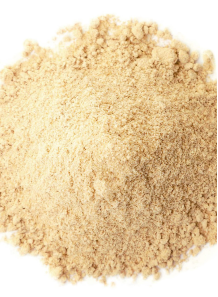
Yamabushitake, Lion's Mane Mushroom Powder standardized to Pure Beta Glucan >30% is a fruiting-body Hericium erinaceus ingredient for food supplements and functional foods that want a clear beta-glucan marker instead of a generic mushroom blend. Its strongest commercial fit is cognition, mood/stress, and general wellness support, backed by small human studies with positive signals while staying within wellness-language boundaries rather than disease-oriented claims. From an application standpoint, the format is most practical in capsules, tablets, sachets, powder beverage mixes, nutrition blends, bars, coffee/cocoa systems, and savory functional foods; clear beverages are usually a poor fit because fruitbody powders are harder to keep visually elegant in true solution. Quality limits are controlled for moisture <9.0%, total ash <9.0%, heavy metals, pesticide residue <LOQ, and the stated microbiological limits.
| Benefit | Typical study dose* | Key human findings | High-quality sources |
|---|---|---|---|
| 1 Cognitive function support | About 1.8-3 g/day; repeated daily use over several weeks to months | Small human studies report positive signals in selected cognitive endpoints, including work in older adults with mild cognitive impairment, but results remain limited and not uniformly positive. A newer acute fruiting-body study reported no significant overall effect on global cognition after a single dose. | Small human studies; mild cognitive impairment trials; newer acute fruiting-body study |
| 2 Mood, stress, and sleep-related wellness use | Commonly around 1.8 g/day in small repeated-use studies | Human data show encouraging but still modest signals in mood or sleep-related endpoints. The evidence supports wellness-focused positioning for mood, stress, and sleep-related balance, not psychiatric or therapeutic claims. | Small controlled human studies; supportive but limited clinical literature |
| 3 Finished-product application flexibility | Set from the target daily intake and serving size | The ingredient fits best in dose-dense solid or semi-solid systems such as capsules, tablets, sachets, powder drinks, coffee/cocoa blends, bars, and soft chews. Clear drinks are less suitable because suspension and visual elegance are harder to manage. | Formulation practice aligned with fruitbody powder behavior |
*The shop intake range is 500-3000 mg/day, but the better human precedent sits nearer the upper end. Repeated daily use is more evidence-aligned than one-time acute serving, so cognition-focused use should be framed as cumulative support rather than immediate onset.
| Test Name | Specification |
|---|---|
| Pure Beta Glucan (%) | >30 |
| Moisture (%) | <9.0 |
| Total Ash (%) | <9.0 |
| Arsenic (ppm) | <1.0 |
| Lead (ppm) | <1.0 |
| Cadmium (ppm) | <1.0 |
| Mercury (ppm) | <0.1 |
| Pesticide Residue | <LOQ |
| Total Plate Count (CFU/g) | <10000 |
| Mold and Yeast (CFU/g) | <1000 |
| Coliforms (CFU/g) | <10 |
| Pathogenic Bacteria | Not detected/25g |
No products
Yamabushitake, Lion's Mane Mushroom Powder standardized to Pure Beta Glucan >30% is a fruiting-body Hericium erinaceus ingredient for food supplements and functional foods that want a clear beta-glucan marker instead of a generic mushroom blend. Its strongest commercial fit is cognition, mood/stress, and general wellness support, backed by small human studies with positive signals while staying within wellness-language boundaries rather than disease-oriented claims. From an application standpoint, the format is most practical in capsules, tablets, sachets, powder beverage mixes, nutrition blends, bars, coffee/cocoa systems, and savory functional foods; clear beverages are usually a poor fit because fruitbody powders are harder to keep visually elegant in true solution. Quality limits are controlled for moisture <9.0%, total ash <9.0%, heavy metals, pesticide residue <LOQ, and the stated microbiological limits.
| Benefit | Typical study dose* | Key human findings | High-quality sources |
|---|---|---|---|
| 1 Cognitive function support | About 1.8-3 g/day; repeated daily use over several weeks to months | Small human studies report positive signals in selected cognitive endpoints, including work in older adults with mild cognitive impairment, but results remain limited and not uniformly positive. A newer acute fruiting-body study reported no significant overall effect on global cognition after a single dose. | Small human studies; mild cognitive impairment trials; newer acute fruiting-body study |
| 2 Mood, stress, and sleep-related wellness use | Commonly around 1.8 g/day in small repeated-use studies | Human data show encouraging but still modest signals in mood or sleep-related endpoints. The evidence supports wellness-focused positioning for mood, stress, and sleep-related balance, not psychiatric or therapeutic claims. | Small controlled human studies; supportive but limited clinical literature |
| 3 Finished-product application flexibility | Set from the target daily intake and serving size | The ingredient fits best in dose-dense solid or semi-solid systems such as capsules, tablets, sachets, powder drinks, coffee/cocoa blends, bars, and soft chews. Clear drinks are less suitable because suspension and visual elegance are harder to manage. | Formulation practice aligned with fruitbody powder behavior |
*The shop intake range is 500-3000 mg/day, but the better human precedent sits nearer the upper end. Repeated daily use is more evidence-aligned than one-time acute serving, so cognition-focused use should be framed as cumulative support rather than immediate onset.
| Mechanism | - |
| Appearance | - |
| Longevity | - |
| Strength | - |
| Storage | - |
| Shelf Life | - |
| Allergen(s) | - |
| Dosage (Range) | - |
| Recommended Dosage | - |
| Dosage (Per Day) | - |
| Recommended Dosage (Per Day) | - |
| Mix Method | - |
| Heat Resistance | - |
| Stable in pH range | - |
| Solubility | - |
| Product Types | - |
| INCI | - |