


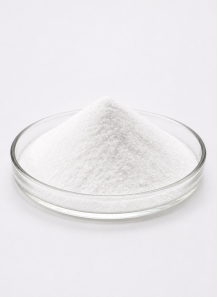
Sodium Hexametaphosphate (SHMP, E452i) is a food-grade sodium polyphosphate used as a sequestrant, chelating agent and texture stabilizer in food and beverage systems. It is supplied as a white, water-soluble powder for applications where metal-ion control, protein functionality, water binding or mineral stability is required.
| Food formulation function | Typical use direction* | Technical effect | Reference context |
|---|---|---|---|
| 1 Metal-ion sequestration | Often used at low processing levels such as 0.05-0.30% depending on formula and local additive limits. | Binds calcium, magnesium and trace metals to reduce precipitation, discoloration, off-flavor catalysis and mineral haze. | 21 CFR 182.6760 |
| 2 Protein and water binding | Commonly evaluated around 0.1-0.5% in meat, seafood or protein systems, adjusted by total phosphate rules. | Raises ionic strength and improves extraction/functionality of salt-soluble proteins, helping water retention, yield and texture. | Food-processing phosphate practice |
| 3 Dairy and emulsion stabilization | Use in processed cheese, dairy analogs, creamers and emulsion systems after pilot testing for calcium balance. | Controls calcium activity, supports emulsification and reduces graininess or phase separation in phosphate-compatible systems. | E452i polyphosphate function |
| 4 Beverage mineral control | Use at the lowest effective level after checking pH, hardness, heat process and final clarity. | Improves stability in mineral-containing beverages by reducing scale, sediment and haze caused by divalent ions. | EFSA phosphate safety context |
*Use levels are formulation starting points, not universal legal limits. Final dosage must comply with the food category, country regulation, total phosphate contribution and good manufacturing practice. For shop setup, the practical intake field is set at 50-1000 mg/day because this material is normally a processing additive rather than a dietary active.
| Test Name | Specification |
|---|---|
| Total Phosphate (as P2O5) | 68% Min |
| Inactive Phosphate (as P2O5) | 7.5% Max |
| pH value (10g/L solution) | 5.8-6.5 |
| Water-insoluble substances | 0.05% Max |
| Iron (Fe) | 90mg/kg Max |
| Heavy metals (as Pb) | 10ppm Max |
| Fluoride (As F) | 0.001% Max |
| Arsenic | 1ppm Max |
| Lead | 1ppm Max |
| Cadmium | 1ppm Max |
| Mercury | 1ppm Max |
| Appearance | White powder |
| 35 mesh sieve residue | 1% Max |
| 60 mesh sieve pass | 90% Min |
| Loss on ignition | 1% Max |
No products
Sodium Hexametaphosphate (SHMP, E452i) is a food-grade sodium polyphosphate used as a sequestrant, chelating agent and texture stabilizer in food and beverage systems. It is supplied as a white, water-soluble powder for applications where metal-ion control, protein functionality, water binding or mineral stability is required.
| Food formulation function | Typical use direction* | Technical effect | Reference context |
|---|---|---|---|
| 1 Metal-ion sequestration | Often used at low processing levels such as 0.05-0.30% depending on formula and local additive limits. | Binds calcium, magnesium and trace metals to reduce precipitation, discoloration, off-flavor catalysis and mineral haze. | 21 CFR 182.6760 |
| 2 Protein and water binding | Commonly evaluated around 0.1-0.5% in meat, seafood or protein systems, adjusted by total phosphate rules. | Raises ionic strength and improves extraction/functionality of salt-soluble proteins, helping water retention, yield and texture. | Food-processing phosphate practice |
| 3 Dairy and emulsion stabilization | Use in processed cheese, dairy analogs, creamers and emulsion systems after pilot testing for calcium balance. | Controls calcium activity, supports emulsification and reduces graininess or phase separation in phosphate-compatible systems. | E452i polyphosphate function |
| 4 Beverage mineral control | Use at the lowest effective level after checking pH, hardness, heat process and final clarity. | Improves stability in mineral-containing beverages by reducing scale, sediment and haze caused by divalent ions. | EFSA phosphate safety context |
*Use levels are formulation starting points, not universal legal limits. Final dosage must comply with the food category, country regulation, total phosphate contribution and good manufacturing practice. For shop setup, the practical intake field is set at 50-1000 mg/day because this material is normally a processing additive rather than a dietary active.
| Mechanism | - |
| Appearance | - |
| Longevity | - |
| Strength | - |
| Long-term storage | - |
| Shelf Life | - |
| Allergen(s) | - |
| Dosage (Range) | - |
| Recommended Dosage | - |
| Dosage (Per Day) | - |
| Recommended Dosage (Per Day) | - |
| Mix Method | - |
| Heat Resistance | - |
| Stable in pH range | - |
| Solubility | - |
| Product Types | - |
| INCI | - |