


“Topical Evodia biomimetic mixture containing evodin/limonin reduced UVB-induced PGE2 in keratinocytes and methyl-nicotinate erythema in human skin; mixture evidence, not isolated limonin.”
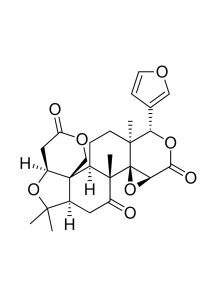
Pure-Limonin™ (Evodin) is high‑purity limonin (CAS 1180‑71‑8), a citrus limonoid (tetracyclic triterpenoid) used as a cosmetic active for calming and tone‑support concepts.
Limonin is sometimes listed under synonyms such as citrolimonin and evodin in SDS/MSDS naming systems. Note: limonin is not limonene (the citrus‑smelling fragrance terpene found in essential oils).
Evidence strength varies by endpoint. Human topical evidence is strongest for anti‑redness activity from an Evodia rutaecarpa biomimetic mixture that included “evodin/limonin”; evidence for isolated limonin is mainly from keratinocyte and mouse inflammation/oxidative‑stress models, plus cell‑based melanogenesis assays.
Product Description: Limonin is a limonoid with skin‑relevant anti‑inflammatory and antioxidative biology. In keratinocytes, a defined Evodia biomimetic mixture containing rutaecarpine, dehydroevodiamine and “evodin/limonin” reduced UVB‑induced PGE2 release (an inflammatory mediator). In a human micro‑inflammation model (methyl‑nicotinate erythema), twice‑daily topical application of 0.1–1% for 2 weeks reduced erythema responses after challenge; even a single 1% application showed measurable anti‑redness effect when applied shortly before/after the challenge. Because this was a mixture, it supports topical anti‑redness potential but does not prove that limonin alone accounts for the full effect.
For isolated limonin, skin‑relevant preclinical studies support anti‑inflammatory/anti‑oxidative mechanisms. In psoriasis‑like mouse models (systemic dosing) and IL‑17‑stimulated keratinocytes, limonin reduced inflammatory markers and mitochondrial ROS and was linked to AMPK activation with mTORC1 inhibition. In a cell‑based pigmentation model (α‑MSH‑stimulated B16 melanoma cells), limonin showed melanogenesis‑inhibitory activity with low cytotoxicity in that assay. These data can inform formulation concepts (soothing, oxidative‑stress moderation, tone support) but topical efficacy depends on delivery, solubility and skin penetration.
| Model/System | Key Endpoints | Implication |
|---|---|---|
| Keratinocytes (UVB model; Evodia biomimetic mixture including “evodin/limonin”) | ↓ PGE2 | Anti‑inflammatory signaling support |
| Human micro‑inflammation (methyl‑nicotinate erythema; same mixture) | ↓ erythema response (0.1–1% topical) | Anti‑redness concept (mixture; not limonin‑only proof) |
| Psoriasis‑like inflammation models (mouse; systemic dosing) + IL‑17‑stimulated keratinocytes | ↓ inflammatory markers; ↓ mitochondrial ROS; AMPK↑ / mTORC1↓ | Supports anti‑inflammatory/anti‑oxidative biology |
| B16 melanogenesis assay (cell‑based) | Melanogenesis inhibition (in vitro) | Tone‑support concept (delivery dependent) |
Usage: Serums, creams/lotions, masks and gel systems where a soothing/anti‑redness, antioxidative, and tone‑support concept is desired.
Mixing method:
- Pre‑dissolve in glycols (e.g., propylene glycol, butylene glycol, ethoxydiglycol) and/or ethanol before adding into the main batch.
- Add during cool‑down (below 40°C) to reduce thermal stress and minimize solvent loss.
- For clear water‑based systems, use an appropriate solubilizer/surfactant system or encapsulation; otherwise formulate as an emulsion or fine dispersion.
- Check for crystallization/precipitation during stability testing; adjust solvent ratio, order of addition and processing as needed.
Usage rate: 0.1–1.0%
Typical starting point: ~0.3–0.5% depending on the desired claim and the solubilization system.
Product characteristics: Off‑white to pale‑yellow crystalline powder; low odor.
Solubility: Practically insoluble in water. Soluble in ethanol, DMSO and many organic solvents; can be solubilized in glycols with suitable processing.
Storage: Store cool (15–25°C), dry and protected from light. Keep tightly closed; avoid prolonged humidity/heat exposure.
No products
Pure-Limonin™ (Evodin) is high‑purity limonin (CAS 1180‑71‑8), a citrus limonoid (tetracyclic triterpenoid) used as a cosmetic active for calming and tone‑support concepts.
Limonin is sometimes listed under synonyms such as citrolimonin and evodin in SDS/MSDS naming systems. Note: limonin is not limonene (the citrus‑smelling fragrance terpene found in essential oils).
Evidence strength varies by endpoint. Human topical evidence is strongest for anti‑redness activity from an Evodia rutaecarpa biomimetic mixture that included “evodin/limonin”; evidence for isolated limonin is mainly from keratinocyte and mouse inflammation/oxidative‑stress models, plus cell‑based melanogenesis assays.
Product Description: Limonin is a limonoid with skin‑relevant anti‑inflammatory and antioxidative biology. In keratinocytes, a defined Evodia biomimetic mixture containing rutaecarpine, dehydroevodiamine and “evodin/limonin” reduced UVB‑induced PGE2 release (an inflammatory mediator). In a human micro‑inflammation model (methyl‑nicotinate erythema), twice‑daily topical application of 0.1–1% for 2 weeks reduced erythema responses after challenge; even a single 1% application showed measurable anti‑redness effect when applied shortly before/after the challenge. Because this was a mixture, it supports topical anti‑redness potential but does not prove that limonin alone accounts for the full effect.
For isolated limonin, skin‑relevant preclinical studies support anti‑inflammatory/anti‑oxidative mechanisms. In psoriasis‑like mouse models (systemic dosing) and IL‑17‑stimulated keratinocytes, limonin reduced inflammatory markers and mitochondrial ROS and was linked to AMPK activation with mTORC1 inhibition. In a cell‑based pigmentation model (α‑MSH‑stimulated B16 melanoma cells), limonin showed melanogenesis‑inhibitory activity with low cytotoxicity in that assay. These data can inform formulation concepts (soothing, oxidative‑stress moderation, tone support) but topical efficacy depends on delivery, solubility and skin penetration.
| Model/System | Key Endpoints | Implication |
|---|---|---|
| Keratinocytes (UVB model; Evodia biomimetic mixture including “evodin/limonin”) | ↓ PGE2 | Anti‑inflammatory signaling support |
| Human micro‑inflammation (methyl‑nicotinate erythema; same mixture) | ↓ erythema response (0.1–1% topical) | Anti‑redness concept (mixture; not limonin‑only proof) |
| Psoriasis‑like inflammation models (mouse; systemic dosing) + IL‑17‑stimulated keratinocytes | ↓ inflammatory markers; ↓ mitochondrial ROS; AMPK↑ / mTORC1↓ | Supports anti‑inflammatory/anti‑oxidative biology |
| B16 melanogenesis assay (cell‑based) | Melanogenesis inhibition (in vitro) | Tone‑support concept (delivery dependent) |
Usage: Serums, creams/lotions, masks and gel systems where a soothing/anti‑redness, antioxidative, and tone‑support concept is desired.
Mixing method:
- Pre‑dissolve in glycols (e.g., propylene glycol, butylene glycol, ethoxydiglycol) and/or ethanol before adding into the main batch.
- Add during cool‑down (below 40°C) to reduce thermal stress and minimize solvent loss.
- For clear water‑based systems, use an appropriate solubilizer/surfactant system or encapsulation; otherwise formulate as an emulsion or fine dispersion.
- Check for crystallization/precipitation during stability testing; adjust solvent ratio, order of addition and processing as needed.
Usage rate: 0.1–1.0%
Typical starting point: ~0.3–0.5% depending on the desired claim and the solubilization system.
Product characteristics: Off‑white to pale‑yellow crystalline powder; low odor.
Solubility: Practically insoluble in water. Soluble in ethanol, DMSO and many organic solvents; can be solubilized in glycols with suitable processing.
Storage: Store cool (15–25°C), dry and protected from light. Keep tightly closed; avoid prolonged humidity/heat exposure.
| Mechanism | - |
| Appearance | - |
| Longevity | - |
| Strength | - |
| Long-term storage | - |
| Shelf Life | - |
| Allergen(s) | - |
| Dosage (Range) | - |
| Recommended Dosage | - |
| Dosage (Per Day) | - |
| Recommended Dosage (Per Day) | - |
| Mix Method | - |
| Heat Resistance | - |
| Stable in pH range | - |
| Solubility | - |
| Product Types | - |
| INCI | - |