


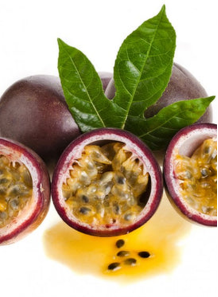
“Passiflora edulis seed extract, not the expressed oil, inhibited melanogenesis and promoted collagen synthesis in skin-cell models, supporting brightening and dermal-matrix rationale for seed-derived actives.”
Passion Flower Oil (Passiflora Edulis Seed Oil) is a lightweight, linoleic-acid–rich botanical oil designed for modern facial care, including teen and breakout‑prone skin. It provides emollient hydration while keeping the finish dry-touch and non‑greasy.
The oil is naturally high in essential fatty acids (especially linoleic acid), tocopherols, and minor phytonutrients that support barrier repair, calm visible redness, and help rebalance lipid profiles that are typically deficient in acne‑prone skin. Regular use helps reduce dry, flaky patches while avoiding the pore‑clogging behavior of heavier oleic‑dominant oils.
Because the texture is very light and fast‑absorbing, Passion Flower Oil is well suited for serums, emulsions, and anhydrous facial oils aimed at combination or oily skin, as well as for localized care of rough areas (cuticles, elbows, around the nose). It spreads easily, leaves a smooth, non‑shiny afterfeel, and can be positioned as a gentle, teen‑friendly emollient.
Related formats / combinations (examples only)
Can be combined with other non‑comedogenic emollients (e.g., squalane, jojoba oil) and barrier‑supporting actives (ceramides, cholesterol, niacinamide) in facial oils, fluid emulsions, and gel‑creams targeting sensitivity, dehydration, or post‑treatment dryness.
Product Description: Lightweight emollient oil expressed from passion fruit seeds (Passiflora edulis), characterized by a high linoleic acid content with a relatively low oleic fraction. This fatty‑acid profile supports stratum corneum barrier lipids, helps reduce transepidermal water loss (TEWL), and is typically better tolerated by combination and acne‑prone skin than heavy, oleic‑rich oils. Natural antioxidant content (tocopherols and plant phytonutrients) provides additional protection against lipid oxidation in the formula and contributes to a more even, brighter‑looking complexion over time.
Usage: Emollient for facial oils, serums, fluid moisturizers, gel‑creams, lotions, body oils, and targeted care for dry, rough zones. Particularly suitable for: teen skin, combination/oily skin, redness‑prone or easily irritated skin, and post‑treatment support where the barrier is fragile and conventional heavy oils are poorly tolerated.
Mixing method:
- For emulsions (creams/lotions/gel‑creams): add into the oil phase; for highest stability, include during the hot oil phase and cool down to <40°C before adding heat‑sensitive co‑actives. For very oxidation‑sensitive formulas, it can instead be added in cool‑down <40°C with proper antioxidant system.
- For anhydrous facial oils and oil serums: blend at room temperature with other oils and oil‑soluble actives under gentle stirring. Avoid prolonged exposure to heat, air, and light; include antioxidants (e.g., mixed tocopherols) for long‑term stability.
- For hybrid textures (oil gels, oil‑in‑water gel serums): slowly pre‑mix with compatible emollients and then disperse according to the specific gelling or emulsifying system, maintaining process temperatures below ~40°C where possible.
Usage rate: 1–20%
Can be used at low levels (1–5%) to boost comfort and reduce dryness in balanced or combination‑skin formulas, and at higher levels (10–20%) in richer creams, body products, or facial oils. For leave‑on products targeting teen or breakout‑prone skin, a typical range is ~3–15%, with the overall system designed to remain non‑occlusive and non‑comedogenic. Can also be used up to 100% as a simple, single‑oil facial or body treatment, applied sparingly.
Product characteristics: Light to medium‑viscosity liquid oil; pale yellow to golden color; mild, characteristic fruity‑vegetal aroma. Provides a smooth, non‑heavy film with quick absorption and a soft, velvety afterfeel on skin.
Solubility: Insoluble in water; miscible with most cosmetic oils, esters, and triglycerides; dispersible in emulsions via suitable emulsifier systems. Not soluble in simple aqueous systems without emulsification.
Naturally derived, oil‑phase emollient. Final product safety and regulatory compliance depend on full formula design and local cosmetic regulations.
No products
Passion Flower Oil (Passiflora Edulis Seed Oil) is a lightweight, linoleic-acid–rich botanical oil designed for modern facial care, including teen and breakout‑prone skin. It provides emollient hydration while keeping the finish dry-touch and non‑greasy.
The oil is naturally high in essential fatty acids (especially linoleic acid), tocopherols, and minor phytonutrients that support barrier repair, calm visible redness, and help rebalance lipid profiles that are typically deficient in acne‑prone skin. Regular use helps reduce dry, flaky patches while avoiding the pore‑clogging behavior of heavier oleic‑dominant oils.
Because the texture is very light and fast‑absorbing, Passion Flower Oil is well suited for serums, emulsions, and anhydrous facial oils aimed at combination or oily skin, as well as for localized care of rough areas (cuticles, elbows, around the nose). It spreads easily, leaves a smooth, non‑shiny afterfeel, and can be positioned as a gentle, teen‑friendly emollient.
Related formats / combinations (examples only)
Can be combined with other non‑comedogenic emollients (e.g., squalane, jojoba oil) and barrier‑supporting actives (ceramides, cholesterol, niacinamide) in facial oils, fluid emulsions, and gel‑creams targeting sensitivity, dehydration, or post‑treatment dryness.
Product Description: Lightweight emollient oil expressed from passion fruit seeds (Passiflora edulis), characterized by a high linoleic acid content with a relatively low oleic fraction. This fatty‑acid profile supports stratum corneum barrier lipids, helps reduce transepidermal water loss (TEWL), and is typically better tolerated by combination and acne‑prone skin than heavy, oleic‑rich oils. Natural antioxidant content (tocopherols and plant phytonutrients) provides additional protection against lipid oxidation in the formula and contributes to a more even, brighter‑looking complexion over time.
Usage: Emollient for facial oils, serums, fluid moisturizers, gel‑creams, lotions, body oils, and targeted care for dry, rough zones. Particularly suitable for: teen skin, combination/oily skin, redness‑prone or easily irritated skin, and post‑treatment support where the barrier is fragile and conventional heavy oils are poorly tolerated.
Mixing method:
- For emulsions (creams/lotions/gel‑creams): add into the oil phase; for highest stability, include during the hot oil phase and cool down to <40°C before adding heat‑sensitive co‑actives. For very oxidation‑sensitive formulas, it can instead be added in cool‑down <40°C with proper antioxidant system.
- For anhydrous facial oils and oil serums: blend at room temperature with other oils and oil‑soluble actives under gentle stirring. Avoid prolonged exposure to heat, air, and light; include antioxidants (e.g., mixed tocopherols) for long‑term stability.
- For hybrid textures (oil gels, oil‑in‑water gel serums): slowly pre‑mix with compatible emollients and then disperse according to the specific gelling or emulsifying system, maintaining process temperatures below ~40°C where possible.
Usage rate: 1–20%
Can be used at low levels (1–5%) to boost comfort and reduce dryness in balanced or combination‑skin formulas, and at higher levels (10–20%) in richer creams, body products, or facial oils. For leave‑on products targeting teen or breakout‑prone skin, a typical range is ~3–15%, with the overall system designed to remain non‑occlusive and non‑comedogenic. Can also be used up to 100% as a simple, single‑oil facial or body treatment, applied sparingly.
Product characteristics: Light to medium‑viscosity liquid oil; pale yellow to golden color; mild, characteristic fruity‑vegetal aroma. Provides a smooth, non‑heavy film with quick absorption and a soft, velvety afterfeel on skin.
Solubility: Insoluble in water; miscible with most cosmetic oils, esters, and triglycerides; dispersible in emulsions via suitable emulsifier systems. Not soluble in simple aqueous systems without emulsification.
Naturally derived, oil‑phase emollient. Final product safety and regulatory compliance depend on full formula design and local cosmetic regulations.
| Mechanism | - |
| Appearance | - |
| Longevity | - |
| Strength | - |
| Long-term storage | - |
| Shelf Life | - |
| Allergen(s) | - |
| Dosage (Range) | - |
| Recommended Dosage | - |
| Dosage (Per Day) | - |
| Recommended Dosage (Per Day) | - |
| Mix Method | - |
| Heat Resistance | - |
| Stable in pH range | - |
| Solubility | - |
| Product Types | - |
| INCI | - |