


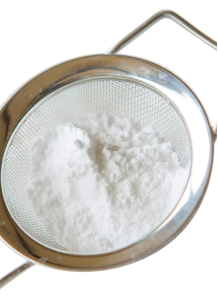
Erythritol (Fine Powder, 100 Mesh) is a food-grade polyol sweetener (E 968 / INS 968) for brands that want sugar reduction with real bulk and a clean sweetness profile. It is typically about 60-70% as sweet as sucrose, gives very low energy contribution, and has a much lower post-meal blood-glucose impact than sugar for most users.
The fine 100 mesh powder helps formulators build smoother texture and faster dispersion than coarser grades. Erythritol is especially useful in sugar-free, no-added-sugar, reduced-sugar, and low-glycemic concepts where sweetness, body, and mouthfeel all matter.
Best-fit applications
Formulation value
Use guidance: Start from the target sweetness, cooling effect, bulk, and texture, then adjust the blend and process for the specific product. Results vary by formula type and processing conditions.
Safety and regulatory context: Erythritol is permitted as a food additive in many markets, including EU E 968 and Thailand INS 968, and has U.S. GRAS notices for intended food uses. Like other polyols, high intake can cause bloating or laxation in sensitive consumers, so serving size and label warnings should be designed appropriately. As a practical product-development range, many teams keep typical daily exposure around 5-30 g/day depending on consumer group and product category, then validate taste and tolerance. EFSA has set an ADI of 0.5 g/kg body weight/day, primarily based on gastrointestinal tolerance.
Reference context retained: the product positioning above is consistent with polyol sweetener literature, FDA GRAS notice GRN 789, Foods (MDPI) 2023 formulation discussion, and EFSA safety review context.
Appearance: white fine powder.
No products
Erythritol (Fine Powder, 100 Mesh) is a food-grade polyol sweetener (E 968 / INS 968) for brands that want sugar reduction with real bulk and a clean sweetness profile. It is typically about 60-70% as sweet as sucrose, gives very low energy contribution, and has a much lower post-meal blood-glucose impact than sugar for most users.
The fine 100 mesh powder helps formulators build smoother texture and faster dispersion than coarser grades. Erythritol is especially useful in sugar-free, no-added-sugar, reduced-sugar, and low-glycemic concepts where sweetness, body, and mouthfeel all matter.
Best-fit applications
Formulation value
Use guidance: Start from the target sweetness, cooling effect, bulk, and texture, then adjust the blend and process for the specific product. Results vary by formula type and processing conditions.
Safety and regulatory context: Erythritol is permitted as a food additive in many markets, including EU E 968 and Thailand INS 968, and has U.S. GRAS notices for intended food uses. Like other polyols, high intake can cause bloating or laxation in sensitive consumers, so serving size and label warnings should be designed appropriately. As a practical product-development range, many teams keep typical daily exposure around 5-30 g/day depending on consumer group and product category, then validate taste and tolerance. EFSA has set an ADI of 0.5 g/kg body weight/day, primarily based on gastrointestinal tolerance.
Reference context retained: the product positioning above is consistent with polyol sweetener literature, FDA GRAS notice GRN 789, Foods (MDPI) 2023 formulation discussion, and EFSA safety review context.
Appearance: white fine powder.
| Mechanism | - |
| Appearance | - |
| Longevity | - |
| Strength | - |
| Storage | - |
| Shelf Life | - |
| Allergen(s) | - |
| Dosage (Range) | - |
| Recommended Dosage | - |
| Dosage (Per Day) | - |
| Recommended Dosage (Per Day) | - |
| Mix Method | - |
| Heat Resistance | - |
| Stable in pH range | - |
| Solubility | - |
| Product Types | - |
| INCI | - |