


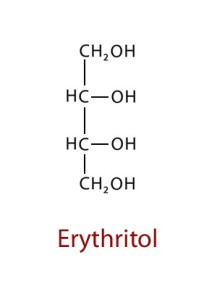
Erythritol (Crystal 20-30 Mesh) food‑grade erythritol (polyol sweetener; E 968 / INS 968) is a sugar alcohol used in foods to replace some or all sucrose while keeping sweetness and bulk with very low energy contribution and a minimal post‑meal blood glucose response compared with sugar. Erythritol is typically ~60–70% as sweet as sucrose and can provide a characteristic cooling sensation.
| Benefit | Typical use / dose* | Key practical findings | High-quality sources |
|---|---|---|---|
| 1 Sugar replacement with minimal glycemic impact | Food use levels vary; often blended with high‑intensity sweeteners because erythritol is less sweet than sucrose. | Compared with sucrose, erythritol provides sweetness and bulking with little effect on blood glucose in most users, which supports ‘reduced sugar’ product design. | PMC review |
| 2 Texture & sweetness building (bulking polyol) | Common in sugar‑free / no‑added‑sugar beverages, confectionery, chocolate, gum, bakery, and dairy/frozen desserts. | Adds solids and mouthfeel and can help balance sweetness profiles when paired with stevia/monk fruit/sucralose or small amounts of sugar/allulose. | FDA GRAS (GRN 789) |
| 3 Formulation control (cooling, browning, crystallization) | Confectionery/fillings/chocolate and bakery are most sensitive; particle size (mesh) affects dissolution rate and perceived ‘grit’. | Erythritol can deliver a cooling sensation, may brown less than sucrose systems, and can recrystallize in some matrices (risk of ‘sandiness’) if water activity, cooling curve, and solids balance are not controlled. | Foods (MDPI) 2023 |
*Start from a sensory target (sweetness + cooling) and a texture target (bulk + crystallization control), then tune blends and processing. Results vary by system.
| Test Name | Specification |
|---|---|
| Description | White Crystal, Odourless |
| Identification & solubility | Pass |
| Particle size (mesh) | 18 - 60 |
| Active Ingredients (m/m) | 99.5 - 100.5 |
| Melting range (C) | 119 - 123C |
| Reducing sugar (as glucose) (%) | <=0.3 |
| Loss on drying (%) | <=0.2 |
| Residue on ignition (%) | <=0.1 |
| PH Value | 5.0 - 7.0 |
| Heavy metals (ppm) | <=5.0 |
| Arsenic (As) | <=0.3 |
| Lead (Pb) (ppm) | <=0.5 |
| Ribitol and glycerol (dry basis) (%) | <=0.1 |
| Total Plate Count (cfu/g) | <=1000 |
| E.Coli | Negative |
| Salmonella | Negative |
| Description | White Crystal, Odourless |
| Identification & solubility | Pass |
| Particle size (mesh) | 18 - 60 |
| Active Ingredients (m/m) | 99.5 - 100.5 |
| Melting range (C) | 119 - 123C |
| Reducing sugar (as glucose) (%) | <=0.3 |
| Loss on drying (%) | <=0.2 |
| Residue on ignition (%) | <=0.1 |
| PH Value | 5.0 - 7.0 |
| Heavy metals (ppm) | <=5.0 |
| Arsenic (As) | <=0.3 |
| Lead (Pb) (ppm) | <=0.5 |
| Ribitol and glycerol (dry basis) (%) | <=0.1 |
| Total Plate Count (cfu/g) | <=1000 |
| E.Coli | Negative |
| Salmonella | Negative |
No products
Erythritol (Crystal 20-30 Mesh) food‑grade erythritol (polyol sweetener; E 968 / INS 968) is a sugar alcohol used in foods to replace some or all sucrose while keeping sweetness and bulk with very low energy contribution and a minimal post‑meal blood glucose response compared with sugar. Erythritol is typically ~60–70% as sweet as sucrose and can provide a characteristic cooling sensation.
| Benefit | Typical use / dose* | Key practical findings | High-quality sources |
|---|---|---|---|
| 1 Sugar replacement with minimal glycemic impact | Food use levels vary; often blended with high‑intensity sweeteners because erythritol is less sweet than sucrose. | Compared with sucrose, erythritol provides sweetness and bulking with little effect on blood glucose in most users, which supports ‘reduced sugar’ product design. | PMC review |
| 2 Texture & sweetness building (bulking polyol) | Common in sugar‑free / no‑added‑sugar beverages, confectionery, chocolate, gum, bakery, and dairy/frozen desserts. | Adds solids and mouthfeel and can help balance sweetness profiles when paired with stevia/monk fruit/sucralose or small amounts of sugar/allulose. | FDA GRAS (GRN 789) |
| 3 Formulation control (cooling, browning, crystallization) | Confectionery/fillings/chocolate and bakery are most sensitive; particle size (mesh) affects dissolution rate and perceived ‘grit’. | Erythritol can deliver a cooling sensation, may brown less than sucrose systems, and can recrystallize in some matrices (risk of ‘sandiness’) if water activity, cooling curve, and solids balance are not controlled. | Foods (MDPI) 2023 |
*Start from a sensory target (sweetness + cooling) and a texture target (bulk + crystallization control), then tune blends and processing. Results vary by system.
| Mechanism | - |
| Appearance | - |
| Longevity | - |
| Strength | - |
| Long-term storage | - |
| Shelf Life | - |
| Allergen(s) | - |
| Dosage (Range) | - |
| Recommended Dosage | - |
| Dosage (Per Day) | - |
| Recommended Dosage (Per Day) | - |
| Mix Method | - |
| Heat Resistance | - |
| Stable in pH range | - |
| Solubility | - |
| Product Types | - |
| INCI | - |