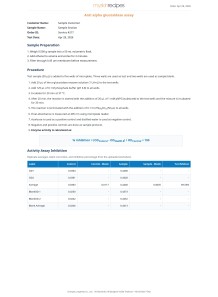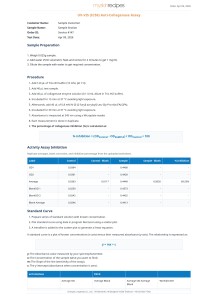
Anti alpha glucosidase assay
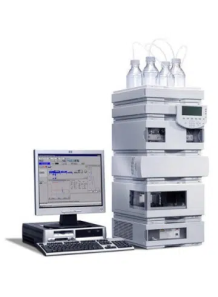
Under specified conditions (pH = 6.8; T = 37 °C), α -glucosidase will catalyze the conversion of the substrate 4-nitrophenyl-α-D-glucopyranoside to α-D-glucopyranoside and p-nitrophenol, as shown below (Equation (1)). The yellow colour of the latter product is measured spectrophotometrically at 405 nm.
[PNPG + α-glucosidase] → α-D-glucopyranoside + PNP (yellow)]
Alpha-glucosidase inhibitors inhibit the absorption of carbohydrates from the small intestine. They competitively inhibit enzymes that convert complex nonabsorbable carbohydrates into simple absorbable carbohydrates. These enzymes include glucoamylase, sucrase, maltase, and isomaltase. By delaying carbohydrate absorption, they reduce the rise in postprandial blood glucose concentrations by about 3mmol/L.
Sample Requirement:
1 g
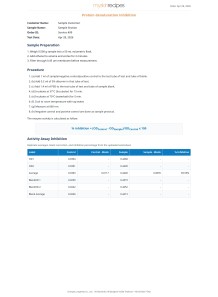
Protein denaturation inhibition
The protein denaturation inhibition assay is essential for evaluating the anti-inflammatory properties of plant extracts and compounds. By assessing the ability of a sample to prevent or reduce the denaturation of egg albumin, researchers can identify potential anti-inflammatory agents that stabilize protein structures, thereby mitigating inflammation and tissue damage. This assay is valuable in pharmaceutical development, natural product research, and the formulation of anti-inflammatory therapies. The assay employs egg albumin as a model protein whose denaturation is induced by heat. Anti-inflammatory agents are hypothesized to stabilize the protein structure, preventing denaturation. By measuring the extent of albumin denaturation through absorbance at 660 nm, the method provides a reli
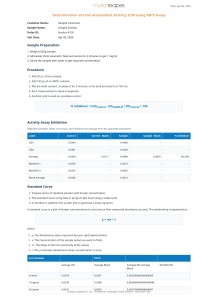
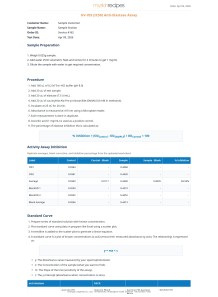
Determination of total Antioxidant Activity IC50 using ABTS Assay aa
The antioxidant activity of the test sample was measured with the ABTS (2,2'-azino-bis(3-ethylbenzothiazoline-6-sulfonic acid)) assay by Microplate Reader which is the most popular method to evaluate the ability of compounds to scavenge free radicals. The ABTS assay was adapted to measure the antioxidant activity of natural products, extracts, and compounds.
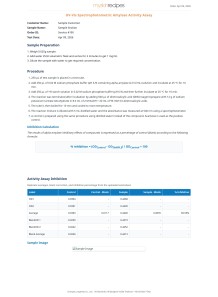
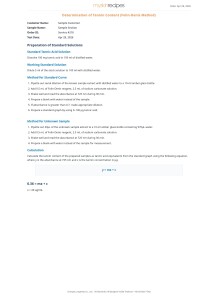
Determination of Tannin Content (Folin-Denis Method)
Tannins are water soluble polyphenols. Tea leaves are abundant natural sources of polyphenols. polyphenols are examples of the most commonly used natural antioxidants, anticancer, antimicrobial, reducing cardiovascular diseases and anti-inflammatory. Follin–Dennis method, which is the one of the oldest colorimetric procedures that's determines total soluble phenolics and especially to determine the tannin content and the absorbance of blue coloration was
measured using UV-VIS spectrophotometer the intensity of which is proportional to the number of tannins at 725 nm.
Sample Requirement:
30µL
ตะกร้า
ไม่มีสินค้า
Subtotal:
0.00
รวมทั้งสิ้น
0.00
THB
Loading Researcher Network details...