


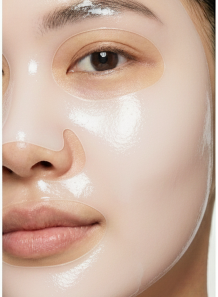
“Closest hydrogel-vehicle evidence: a water-based hydrogel improved corneometer-measured skin hydration without worsening TEWL in atopic dermatitis subjects.”
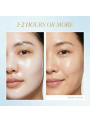
Film-forming support polymer for carrageenan-based sheet mask systems. Helps improve sheet integrity, flexibility, and handling in hot-process aqueous casting.
MaskFilm™ is a film-forming support polymer for molded sheet-mask systems used together with carrageenan to build coherent, flexible mask sheets.
In carrageenan-based aqueous systems, this ingredient is used to make the sheet itself perform better: stronger integrity, better flexibility, easier handling, and more skin-conforming contact during application.
A practical starting point is around 2.5% in a hot-process mask base together with carrageenan, potassium chloride, glycerin, and water. Final performance should be optimized together with the hydrocolloid level, electrolyte level, humectant balance, and casting temperature.
Product Description: MaskFilm is designed for castable water-based mask systems where the target is a smooth, flexible sheet that can be demolded, packaged, and unfolded without tearing easily. In this use pattern, carrageenan provides the primary gel network while MaskFilm helps strengthen film cohesion, improve flexibility, and support more even contact with the skin. The ingredient is therefore best evaluated as part of the complete hydrocolloid-electrolyte-humectant system rather than as a stand-alone gelling material.
| Formulation role | What to check | Practical implication |
|---|---|---|
| Film support | Sheet cohesion, tensile strength, wet handling | Helps reduce tearing and improves demolding |
| Flexibility balance | Elongation, foldability, brittleness after drying/aging | Supports softer, more compliant mask sheets when humectancy is balanced |
| Application performance | Surface smoothness, conformity, adhesion to skin | Helps the cast mask sit more evenly on the skin |
Because this is a high-water cast mask system, the strongest development wins usually come from physical stability and process control. Formulators should screen viscosity during hold, air entrapment, syneresis, sheet thickness uniformity, preservative compatibility, and storage stability after casting. Any active-delivery or consumer-benefit claim should be confirmed on the finished mask formula, where MaskFilm contributes the sheet structure and handling performance.
Example formulation: The reference system below gives a practical starting point for carrageenan-based sheet mask development with MaskFilm.
| No. | Item Name | Ratio |
|---|---|---|
| A phase | Carrageenan | 1.8 |
| Potassium Chloride | 1 | |
| Glycerin | 5 | |
| Deionized Water | ~100 | |
| B phase | MaskFilm | 2.5 |
| Preservative | Appropriate amount |
Example process:
- Mix Phase A, heat to 95-100°C, and stir at constant temperature until the mixture is uniform and completely dispersed.
- Cool to about 75°C, add Phase B, and stir evenly. While still hot, pour into the mold to form sheet pieces.

Example visual of a hydrogel-style mask sheet format prepared for sheet-mask applications.
Usage: Suitable for molded sheet masks, gel-film masks, contour mask patches, and other castable aqueous cosmetic films where flexibility and sheet integrity are required.
Mixing method:
- Use in water-based hot-process mask systems together with a primary hydrocolloid such as carrageenan.
- Add after the hydrocolloid phase is fully dispersed and hydrated, while the batch is still warm and flowable.
- Optimize together with carrageenan, potassium chloride, glycerin, preservative, and total water to achieve the target balance of castability, flexibility, and wet strength.
Usage rate: 1-4% (common starting point 2-3%, typical trial level 2.5%)
Product characteristics: Milky white liquid
Solubility: Designed for water-based film systems; distribute into the aqueous gel base under moderate mixing.
Storage: Store tightly closed at room temperature. Avoid freezing and prolonged exposure to excessive heat.
| Test Name | Specification |
|---|---|
| Appearance | Milky white emulsion |
| Solids | 38-41 wt% |
| pH | 7-9 |
| Viscosity (25C) | 300 mPa.s. Max |
No products
Film-forming support polymer for carrageenan-based sheet mask systems. Helps improve sheet integrity, flexibility, and handling in hot-process aqueous casting.
MaskFilm™ is a film-forming support polymer for molded sheet-mask systems used together with carrageenan to build coherent, flexible mask sheets.
In carrageenan-based aqueous systems, this ingredient is used to make the sheet itself perform better: stronger integrity, better flexibility, easier handling, and more skin-conforming contact during application.
A practical starting point is around 2.5% in a hot-process mask base together with carrageenan, potassium chloride, glycerin, and water. Final performance should be optimized together with the hydrocolloid level, electrolyte level, humectant balance, and casting temperature.
Product Description: MaskFilm is designed for castable water-based mask systems where the target is a smooth, flexible sheet that can be demolded, packaged, and unfolded without tearing easily. In this use pattern, carrageenan provides the primary gel network while MaskFilm helps strengthen film cohesion, improve flexibility, and support more even contact with the skin. The ingredient is therefore best evaluated as part of the complete hydrocolloid-electrolyte-humectant system rather than as a stand-alone gelling material.
| Formulation role | What to check | Practical implication |
|---|---|---|
| Film support | Sheet cohesion, tensile strength, wet handling | Helps reduce tearing and improves demolding |
| Flexibility balance | Elongation, foldability, brittleness after drying/aging | Supports softer, more compliant mask sheets when humectancy is balanced |
| Application performance | Surface smoothness, conformity, adhesion to skin | Helps the cast mask sit more evenly on the skin |
Because this is a high-water cast mask system, the strongest development wins usually come from physical stability and process control. Formulators should screen viscosity during hold, air entrapment, syneresis, sheet thickness uniformity, preservative compatibility, and storage stability after casting. Any active-delivery or consumer-benefit claim should be confirmed on the finished mask formula, where MaskFilm contributes the sheet structure and handling performance.
Example formulation: The reference system below gives a practical starting point for carrageenan-based sheet mask development with MaskFilm.
| No. | Item Name | Ratio |
|---|---|---|
| A phase | Carrageenan | 1.8 |
| Potassium Chloride | 1 | |
| Glycerin | 5 | |
| Deionized Water | ~100 | |
| B phase | MaskFilm | 2.5 |
| Preservative | Appropriate amount |
Example process:
- Mix Phase A, heat to 95-100°C, and stir at constant temperature until the mixture is uniform and completely dispersed.
- Cool to about 75°C, add Phase B, and stir evenly. While still hot, pour into the mold to form sheet pieces.
Example visual of a hydrogel-style mask sheet format prepared for sheet-mask applications.
Usage: Suitable for molded sheet masks, gel-film masks, contour mask patches, and other castable aqueous cosmetic films where flexibility and sheet integrity are required.
Mixing method:
- Use in water-based hot-process mask systems together with a primary hydrocolloid such as carrageenan.
- Add after the hydrocolloid phase is fully dispersed and hydrated, while the batch is still warm and flowable.
- Optimize together with carrageenan, potassium chloride, glycerin, preservative, and total water to achieve the target balance of castability, flexibility, and wet strength.
Usage rate: 1-4% (common starting point 2-3%, typical trial level 2.5%)
Product characteristics: Milky white liquid
Solubility: Designed for water-based film systems; distribute into the aqueous gel base under moderate mixing.
Storage: Store tightly closed at room temperature. Avoid freezing and prolonged exposure to excessive heat.
| Mechanism | - |
| Appearance | - |
| Longevity | - |
| Strength | - |
| Long-term storage | - |
| Shelf Life | - |
| Allergen(s) | - |
| Dosage (Range) | - |
| Recommended Dosage | - |
| Dosage (Per Day) | - |
| Recommended Dosage (Per Day) | - |
| Mix Method | - |
| Heat Resistance | - |
| Stable in pH range | - |
| Solubility | - |
| Product Types | - |
| INCI | - |