
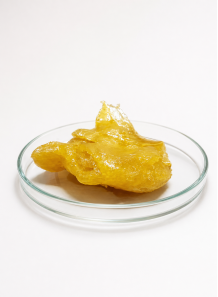
Phosphatidylcholine 70% (from Soy Lecithin, Light Brown)

Cosmetics Code: 254241
Soy-derived Phosphatidylcholine 70% for liposome, lamellar-emulsion and barrier-support cosmetic systems. Light-brown phospholipid concentrate for professional formulation.
฿109.61
gram
Min: 0g
pieces
trending_down

Unit price will be cheaper for larger size

The price will be calculated based on the size you enter

Phosphatidylcholine 70% (from Soy Lecithin, Light Brown)™ is a soy-derived phospholipid concentrate standardized to approximately 70% phosphatidylcholine for cosmetic formulation work.

Phosphatidylcholine is an amphiphilic membrane lipid: it contains a polar choline phosphate head group and lipophilic fatty chains. This structure allows it to organize into lamellar films, vesicles and liposome-type systems, making it useful for lipid-barrier support concepts and delivery-oriented skincare.

This 70% grade is a practical balance between higher PC content and easier cost control than very high-purity PC grades. It is most suitable when formulators need phospholipid structure, encapsulation support, lamellar emulsion behavior or a richer skin-conditioning lipid feel without requiring the highest assay grade.

Product Description: In formulation, phosphatidylcholine can act as a phospholipid structuring agent, co-emulsifier, liposome-forming material and skin-conditioning lipid. It is commonly used to build lamellar systems that resemble biological lipid organization, to improve dispersion of lipophilic actives, and to support formulas designed around barrier comfort, softness and improved lipid phase compatibility.

Use this material as a functional phospholipid ingredient rather than as a simple oil. It normally needs hydration, high-shear dispersion, pre-dissolution in a compatible lipid/ethanol phase, or a defined liposome/lamellar process to reach good uniformity. Formula clarity, vesicle size and stability depend strongly on processing energy, solvent system, electrolyte level, active load and final pH.

Formulation RoleBest Use CaseTechnical Note
Liposome / vesicle formerSerums, essences and delivery systemsRequires controlled hydration and shear; final performance depends on process design.
Lamellar lipid builderBarrier creams, lotions and emulsionsHelps build phospholipid-rich lamellar structure and a cushioned skin feel.
Co-emulsifier / dispersantOil-rich actives and lipid dispersionsOften used with a primary emulsifier or polymer stabilizer for robust finished products.

Usage: Suitable for liposome serums, lamellar creams, lotions, barrier-care products, post-treatment skincare concepts, phospholipid dispersions and encapsulation-oriented cosmetic systems.

Mixing method:

- Pre-disperse in a compatible lipid phase, ethanol-assisted phospholipid phase, or glycerin/glycol-water system depending on the target structure.

- For liposome or lamellar systems, hydrate slowly with mixing, then use suitable shear or homogenization to reduce particle size and improve uniformity.

- Avoid prolonged high heat, strong oxidants, strong acid/alkali conditions and unnecessary air exposure. Add sensitive actives after the phospholipid structure is formed when possible.

- Target final formula pH around 4–8 and confirm stability by centrifuge, heat-cool cycle and real-time observation because electrolyte and active load can change vesicle behavior.

Usage rate: 0.5–5%

Use 0.5–5% of this 70% concentrate (delivers approximately 0.35–3.5% phosphatidylcholine). Typical: 2% delivers approximately 1.4% phosphatidylcholine.

Product characteristics: Light brown semi-solid paste/lump with characteristic phospholipid odor.

Solubility: Insoluble in water as a true solution; dispersible with proper hydration/shear. Compatible with lipid phases and ethanol-assisted phospholipid processing. Forms lamellar or vesicle structures depending on process and formula composition.

Store tightly closed, protected from air, heat and light.


  • Light brown semi-solid paste/lump; characteristic phospholipid odor
  • Cool (15-25C)
  • 24 Months from manufacturing or testing date.
    • NOT contain Soy
  • 0.50% - 5.00%
  • Please follow instruction under product info carefully.
  • Heat Tolerant
  • 4.00 - 8.00
  • Dispersible in oil
  • Cream, Lotion, Serum

“Closest ingredient-family evidence: topical liposomes altered stratum corneum lipid organization and produced a measurable barrier effect, supporting phospholipid-liposome skin barrier benefit.”
Coderch L, de Pera M, Fonollosa J, de la Maza A, Parra JL The effect of liposomes on skin barrier structure

search
hourglass_emptyLoading product examples...

Phosphatidylcholine 70% (from Soy Lecithin, Light Brown)
Soy-derived Phosphatidylcholine 70% for liposome, lamellar-emulsion and barrier-support cosmetic systems. Light-brown phospholipid concentrate for professional formulation.

Phosphatidylcholine 70% (from Soy Lecithin, Light Brown)™ is a soy-derived phospholipid concentrate standardized to approximately 70% phosphatidylcholine for cosmetic formulation work.

Phosphatidylcholine is an amphiphilic membrane lipid: it contains a polar choline phosphate head group and lipophilic fatty chains. This structure allows it to organize into lamellar films, vesicles and liposome-type systems, making it useful for lipid-barrier support concepts and delivery-oriented skincare.

This 70% grade is a practical balance between higher PC content and easier cost control than very high-purity PC grades. It is most suitable when formulators need phospholipid structure, encapsulation support, lamellar emulsion behavior or a richer skin-conditioning lipid feel without requiring the highest assay grade.

Product Description: In formulation, phosphatidylcholine can act as a phospholipid structuring agent, co-emulsifier, liposome-forming material and skin-conditioning lipid. It is commonly used to build lamellar systems that resemble biological lipid organization, to improve dispersion of lipophilic actives, and to support formulas designed around barrier comfort, softness and improved lipid phase compatibility.

Use this material as a functional phospholipid ingredient rather than as a simple oil. It normally needs hydration, high-shear dispersion, pre-dissolution in a compatible lipid/ethanol phase, or a defined liposome/lamellar process to reach good uniformity. Formula clarity, vesicle size and stability depend strongly on processing energy, solvent system, electrolyte level, active load and final pH.

Formulation RoleBest Use CaseTechnical Note
Liposome / vesicle formerSerums, essences and delivery systemsRequires controlled hydration and shear; final performance depends on process design.
Lamellar lipid builderBarrier creams, lotions and emulsionsHelps build phospholipid-rich lamellar structure and a cushioned skin feel.
Co-emulsifier / dispersantOil-rich actives and lipid dispersionsOften used with a primary emulsifier or polymer stabilizer for robust finished products.

Usage: Suitable for liposome serums, lamellar creams, lotions, barrier-care products, post-treatment skincare concepts, phospholipid dispersions and encapsulation-oriented cosmetic systems.

Mixing method:

- Pre-disperse in a compatible lipid phase, ethanol-assisted phospholipid phase, or glycerin/glycol-water system depending on the target structure.

- For liposome or lamellar systems, hydrate slowly with mixing, then use suitable shear or homogenization to reduce particle size and improve uniformity.

- Avoid prolonged high heat, strong oxidants, strong acid/alkali conditions and unnecessary air exposure. Add sensitive actives after the phospholipid structure is formed when possible.

- Target final formula pH around 4–8 and confirm stability by centrifuge, heat-cool cycle and real-time observation because electrolyte and active load can change vesicle behavior.

Usage rate: 0.5–5%

Use 0.5–5% of this 70% concentrate (delivers approximately 0.35–3.5% phosphatidylcholine). Typical: 2% delivers approximately 1.4% phosphatidylcholine.

Product characteristics: Light brown semi-solid paste/lump with characteristic phospholipid odor.

Solubility: Insoluble in water as a true solution; dispersible with proper hydration/shear. Compatible with lipid phases and ethanol-assisted phospholipid processing. Forms lamellar or vesicle structures depending on process and formula composition.

Store tightly closed, protected from air, heat and light.

Mechanism -
Appearance -
Longevity -
Strength -
Storage -
Shelf Life -
Allergen(s) -
Dosage (Range) -
Dosage (Per Day) -
Mix Method -
Heat Resistance -
Stable in pH range -
Solubility -
Product Types -
INCI -

Purchase History for

Loading purchase history...