


“Closest ingredient evidence: topical α-tocopheryl acetate reduced post-UVB erythema, edema and skin sensitivity in hairless mice.”
Natural Vitamin E Acetate (d-alpha tocopheryl acetate, 1360IU/g) is a stabilized ester form of vitamin E designed for cosmetic use where long shelf life and processing robustness are more important than maximal immediate antioxidant activity.
The acetate group protects d-alpha tocopherol from oxidation in bulk oil, emulsions and dosage forms. In the body and in skin, enzymes can cleave the acetate to release free tocopherol; in practice conversion in skin is partial and formulation-dependent, so this grade is often positioned as a stable vitamin E source and skin-conditioning agent rather than a strong primary antioxidant in the formula matrix.
Compared with free tocopherol, tocopheryl acetate is less prone to color change and rancid odor during storage, making it attractive for creams, lotions and color cosmetics that must withstand heat, oxygen and repeated opening while still supporting vitamin E and barrier-care claims.
Usage: Stable vitamin E source and skin-conditioning agent for face and body creams/lotions, serums, masks, color cosmetics and sun-care products.
Mixing method:
- Pre-dissolve in the oil phase or in an anhydrous concentrate; compatible with most cosmetic oils, esters and butters.
- Process in the oil phase or add during cool-down; typical process temperatures up to about 75°C are acceptable, but prolonged high heat and strong oxidants should still be avoided.
- Combine with chelators and co-antioxidants if the base oil system is highly unsaturated; use low-permeability packaging and minimal headspace to slow oxidative discoloration.
- For clear systems verify solubility in the chosen solvent blend and control crystallization at low temperature.
Usage rate: 0.1–2% in finished products (typical 0.2–1% in leave-on skincare; up to ~2% in targeted treatments or high-vitamin-E concepts).
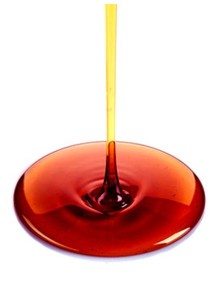
Product characteristics: Pale yellow to brownish-red viscous oily liquid; practically insoluble in water; low odor.
Solubility: Practically insoluble in water; freely soluble in acetone, anhydrous ethanol, methylene chloride and fatty oils; miscible with most cosmetic oil phases.
Storage: Store tightly closed at cool room temperature, protected from light and air; minimize headspace and contact with metals to maximize shelf life.
| Test Name | Specification |
|---|---|
| Characters | Pale yellow to brownish-red viscous oily liquid, practically insoluble in water, freely soluble in acetone, in anhydrous ethanol and in fatty oils. |
| Identification A | Color reaction is bright red or orange. |
| Identification B | Specific optical rotation ≥ +24°. |
| Identification C | The retention time of the major peak in the chromatogram of the Assay preparation is the same as that of the Standard preparation, both relative to the internal standard, as obtained in the Assay. |
| Acidity (0.10N NaOH) | ≤ 1.0 mL. |
| Heavy metals | ≤ 10 ppm. |
| Free tocopherol | ≤ 1.0%. |
| Assay | ≥ 96.0%. |
No products
Natural Vitamin E Acetate (d-alpha tocopheryl acetate, 1360IU/g) is a stabilized ester form of vitamin E designed for cosmetic use where long shelf life and processing robustness are more important than maximal immediate antioxidant activity.
The acetate group protects d-alpha tocopherol from oxidation in bulk oil, emulsions and dosage forms. In the body and in skin, enzymes can cleave the acetate to release free tocopherol; in practice conversion in skin is partial and formulation-dependent, so this grade is often positioned as a stable vitamin E source and skin-conditioning agent rather than a strong primary antioxidant in the formula matrix.
Compared with free tocopherol, tocopheryl acetate is less prone to color change and rancid odor during storage, making it attractive for creams, lotions and color cosmetics that must withstand heat, oxygen and repeated opening while still supporting vitamin E and barrier-care claims.
Usage: Stable vitamin E source and skin-conditioning agent for face and body creams/lotions, serums, masks, color cosmetics and sun-care products.
Mixing method:
- Pre-dissolve in the oil phase or in an anhydrous concentrate; compatible with most cosmetic oils, esters and butters.
- Process in the oil phase or add during cool-down; typical process temperatures up to about 75°C are acceptable, but prolonged high heat and strong oxidants should still be avoided.
- Combine with chelators and co-antioxidants if the base oil system is highly unsaturated; use low-permeability packaging and minimal headspace to slow oxidative discoloration.
- For clear systems verify solubility in the chosen solvent blend and control crystallization at low temperature.
Usage rate: 0.1–2% in finished products (typical 0.2–1% in leave-on skincare; up to ~2% in targeted treatments or high-vitamin-E concepts).
Product characteristics: Pale yellow to brownish-red viscous oily liquid; practically insoluble in water; low odor.
Solubility: Practically insoluble in water; freely soluble in acetone, anhydrous ethanol, methylene chloride and fatty oils; miscible with most cosmetic oil phases.
Storage: Store tightly closed at cool room temperature, protected from light and air; minimize headspace and contact with metals to maximize shelf life.
| Mechanism | - |
| Appearance | - |
| Longevity | - |
| Strength | - |
| Long-term storage | - |
| Shelf Life | - |
| Allergen(s) | - |
| Dosage (Range) | - |
| Recommended Dosage | - |
| Dosage (Per Day) | - |
| Recommended Dosage (Per Day) | - |
| Mix Method | - |
| Heat Resistance | - |
| Stable in pH range | - |
| Solubility | - |
| Product Types | - |
| INCI | - |