


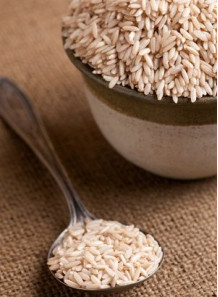
“Closest osmolyte-family evidence: myo-inositol, as an organic osmolyte, helped protect keratinocyte tight-junction barrier function under UVB/H2O2 stress in vitro.”
Vitamin B8 (Inositol) continuously moisturizes the skin. Can balance skin moisture. Suitable for both combination and combination skin. To adjust the oiliness to be more balanced. and suitable for dry skin To moisturize the skin
Vitamin B8 (Inositol) continuously moisturizes the skin. Can balance skin moisture. Suitable for both combination and combination skin. To adjust the oiliness to be more balanced. and suitable for dry skin To moisturize the skin
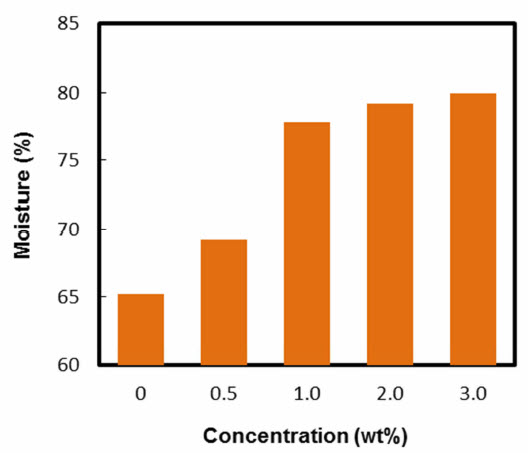
From the experiment, it was found that using Rice Vitamin for 6 weeks in a row, 2 times a day, in various concentrations. Can help add moisture to the skin.
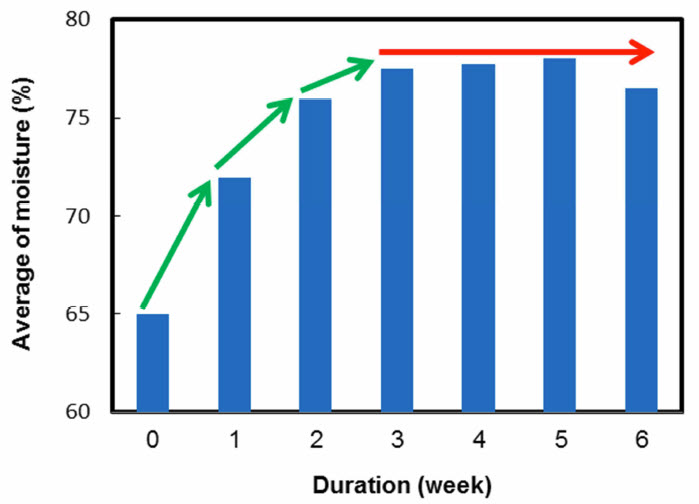
From the experiment it was found that Consecutive use from 0-6 weeks will help maintain moisture in the skin for a long and continuous period.
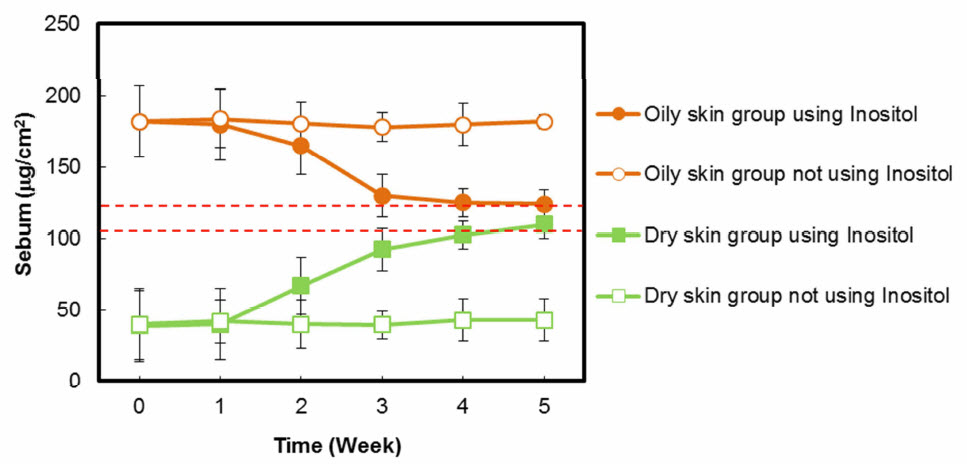
Experiments have shown that Rice Vitamin can help balance the oiliness and dryness of the skin. From oily skin to more balanced skin. And from dry skin to more moisturized skin
Please see the brochure for more research details.
Usage: For skin care products
Mixing method: Mix in water with pH in the range of 4-7.
Usage rate: 1-3% (recommended 2%)
Product characteristics: : White powder
Solubility: Can dissolve in water
INCI Name : Inositol
| Test Name | Specification |
|---|---|
| Odor | Odorless, tasteless |
| Color | White or slightly white, colorless |
| Character | Crystalline powder |
| Identification - Acidity | Stone test paper color should not change |
| Identification - Alkalinity | -0.10° to +0.10° |
| Identification - Solubility | Soluble in water, soluble in ethyl acetate |
| Identification - Rotation | Pass test |
| Identification - Chromogenicity | Test sample and standard reference should be the same |
| Melting Point | 224-227°C |
| Conductivity | <20 μs/cm |
| Dissolution Rate | Dissolution rate should be consistent with time |
| Dissolution Color | Dissolution color should be colorless and transparent without turbidity |
| Chloride | ≤0.005% |
| Sulfate | ≤0.006% |
| Phosphate | No turbidity |
| Iron | ≤0.0005% |
| Dry Weight Loss | ≤0.5% |
| Ignition Residue | ≤0.1% |
| Content | 97.0-101.0% |
| Related Substances | Total impurities ≤1.0, single impurity ≤0.3% |
| Total Bacterial Count | n=5, c=2, m=500, M=1000 CFU/g |
| Coliform Group | n=5, c=2, m=<3, M=3 MPN/g |
| Mold and Yeast | ≤100 CFU/g |
| Heavy Metals (as Pb) | ≤0.5 mg/kg |
| Arsenic (as As) | ≤1.0 mg/kg |
No products
Vitamin B8 (Inositol) continuously moisturizes the skin. Can balance skin moisture. Suitable for both combination and combination skin. To adjust the oiliness to be more balanced. and suitable for dry skin To moisturize the skin
Vitamin B8 (Inositol) continuously moisturizes the skin. Can balance skin moisture. Suitable for both combination and combination skin. To adjust the oiliness to be more balanced. and suitable for dry skin To moisturize the skin
From the experiment, it was found that using Rice Vitamin for 6 weeks in a row, 2 times a day, in various concentrations. Can help add moisture to the skin.
From the experiment it was found that Consecutive use from 0-6 weeks will help maintain moisture in the skin for a long and continuous period.
Experiments have shown that Rice Vitamin can help balance the oiliness and dryness of the skin. From oily skin to more balanced skin. And from dry skin to more moisturized skin
Please see the brochure for more research details.
Usage: For skin care products
Mixing method: Mix in water with pH in the range of 4-7.
Usage rate: 1-3% (recommended 2%)
Product characteristics: : White powder
Solubility: Can dissolve in water
INCI Name : Inositol
| Mechanism | - |
| Appearance | - |
| Longevity | - |
| Strength | - |
| Long-term storage | - |
| Shelf Life | - |
| Allergen(s) | - |
| Dosage (Range) | - |
| Recommended Dosage | - |
| Dosage (Per Day) | - |
| Recommended Dosage (Per Day) | - |
| Mix Method | - |
| Heat Resistance | - |
| Stable in pH range | - |
| Solubility | - |
| Product Types | - |
| INCI | - |