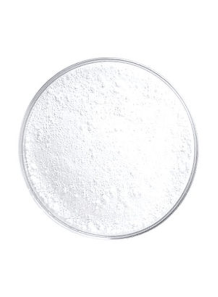
Hyaluronic Acid 400 Daltons (Nano Molecule, Aurora)

Cosmetics Code: 253872

Ultra-low-molecular-weight Hydrolyzed Sodium Hyaluronate (~400 Da) for premium anti-aging, eye-care, and intensive-repair formulas with deeper-penetration positioning. Water-soluble powder; use in the water phase and avoid prolonged heat.

฿224.95
gram
Min: 0g
pieces
trending_down

Unit price will be cheaper for larger size

The price will be calculated based on the size you enter

Hyaluronic Acid Aurora (Nano Molecule, 400daltons) is an ultra-low-molecular-weight Hydrolyzed Sodium Hyaluronate designed for premium anti-aging, eye-care, and intensive repair formulas. According to the supplier dossier, it is produced by a patented Dual Enzymatic Hydrolysis process using both HA Lyase and HA Hydrolase, giving an average molecular weight around 400 daltons and a reported HA-disaccharide purity of 91.62%.

From a formulation perspective, this grade sits closer to the HA oligosaccharide / fragment end of the spectrum than to conventional high-molecular-weight hyaluronic acid film formers. The practical interest is therefore not only surface water binding, but also the supplier's reported low-MW signaling profile linked to CD44, AQP3, HAS1, ECM-support concepts, and a lighter sensory profile suitable for serums, eye gels, ampoules, and repair emulsions.

Published HA literature supports the broad rationale that smaller HA fractions can behave differently from high-MW HA in terms of penetration, hydration biology, and skin-response signaling. However, the stronger claims for this specific 400 Da material such as telomerase-related activity, deep dermal penetration within 2-24 hours, and quantified wrinkle / eye-bag improvement should be treated as supplier-specific evidence for this ingredient rather than universal consensus for all low-molecular-weight HA materials.

Related low-molecular-weight HA options

Within the same family, the shop also carries 800 dalton and 2,000 dalton nano-molecule variants. The 400 dalton grade is positioned as the deepest-penetration option in the family, while the larger variants are easier to position around low-MW hydration and repair with less emphasis on fragment-level signaling.

Product Description: This ingredient is intended for formulas that want the handling simplicity of a water-soluble HA powder but a stronger bioactive story than conventional surface-film HA. In the supplier dossier, this grade is associated with increased TEL/telomerase-related expression, CD44, AQP3, HAS1, antioxidant performance, and transcriptomic shifts related to collagen, laminin, GDF15, FABP3, and ceramide pathways. For formulators, the most defensible interpretation is that this material can support three premium positioning routes: 1) advanced hydration via HA-pathway and water-channel biology, 2) matrix-focused anti-aging via ECM-supportive signaling, and 3) eye-care / intensive-repair concepts where light texture and low-dose efficacy claims are important.

Public literature also helps explain why this format behaves differently from higher-MW HA. Smaller HA species have stronger relevance to keratinocyte signaling, barrier recovery, and wound-response biology, while high-MW HA is more associated with surface hydration, viscosity, and film-forming protection. This is why the 400 dalton grade is best used as a dissolved active fraction rather than as a rheology-building HA.

Model / Study Key Endpoints Formulation Relevance
Supplier transcriptomic / cell tests TEL +278.87% at 0.125%; CD44 +27.84%; AQP3 +26.14%; HAS1 +111.76%; increased collagen, laminin, GDF15, FABP3, and ceramide-related pathways Supports premium hydration, repair, matrix-maintenance, and barrier-support positioning
Supplier antioxidant test Reported ROS scavenging up to 30.06% Useful for oxidative-stress and anti-fatigue positioning
Supplier human study, 30 volunteers, 28 days, 0.1% Crow's feet -17.77%; eye bags -22.30%; dark circles -11.40%; fine lines / texture -18.15% Strong support for eye-care and anti-wrinkle storytelling at low dose
Published low-MW / fragment HA literature Supports MW-dependent differences in penetration, CD44-related skin biology, and barrier / hydration behavior Supports the format rationale, but not every supplier-specific endpoint directly

The supplier also frames this ingredient around telomere protection and anti-aging from within. That can be retained as a supplier-dossier claim, but public copy should avoid presenting it as settled dermatologic consensus unless independently replicated. A safer technical phrasing is that supplier testing reported telomerase-related, ECM-related, and hydration-related marker changes together with visible anti-aging and eye-area improvements after 28 days at 0.1%.

Published background references relevant to this format include:

- Papakonstantinou et al., Dermato-Endocrinology, 2012: review of hyaluronic acid in skin aging, hydration, ECM structure, and age-related decline.

- Pavicic et al., Journal of Drugs in Dermatology, 2011: human anti-wrinkle study showing better wrinkle-depth outcomes from lower-MW HA creams than higher-MW comparators.

- Kaya et al., PLoS Medicine, 2006: mechanistic study linking HA fragments to CD44-dependent skin-thickness and keratinocyte effects.

- Gruber et al., Journal of Cosmetic Dermatology, 2022: in vitro evidence that HA can stimulate CD44 expression in a molecular-weight-dependent manner.

- Juhascik et al., Polymers, 2022: review of hyaluronan skin delivery, molecular-weight-dependent behavior, and formulation strategies.

- Litwiniuk et al., Wounds, 2016: review of size-dependent hyaluronic acid behavior in inflammation and tissue regeneration.

- Hashimoto et al., Cosmetics, 2021: low-molecular-weight HA work supporting barrier-related and moisturizing biology in epidermal models.

- Bollag, American Journal of Physiology - Cell Physiology, 2020: background review explaining why AQP3 is a meaningful hydration and barrier marker in epidermal biology.

Usage: Premium anti-aging serums, eye serums and eye gels, essences, ampoules, repair creams, masks, post-procedure moisturizing systems, and high-value emulsions that want a deeper-penetration HA story than standard surface-film grades.

Mixing method:

- Add into the water phase or pre-dissolve in water before combining with the rest of the formula.

- Family handling guidance is pH 3-9 and avoidance of prolonged heating above 60°C; for premium serum and eye products, late addition below 40-45°C is preferred.

- Use gentle to moderate stirring to avoid foaming; in carbomer gels or electrolyte-rich systems, add after the main hydration step and re-check viscosity and clarity.

- This grade is best treated as a dissolved active fraction, not as a viscosity-building HA. For more immediate cushion and film feel, it pairs well with a second higher-MW HA grade.

Usage rate: 0.1-0.5%

0.1% is the supplier's clinical benchmark. A practical working range for premium leave-on facial and eye products is 0.1-0.3%, while up to 0.5% can be used for stronger repair or active-serum positioning. Based on the reported 91.62% HA-disaccharide purity, 0.1% use delivers about 0.0916% disaccharide-rich fraction.

Product characteristics: White to off-white powder with little to no odor.

Solubility: Soluble in water; suitable for water-based serums and can also be incorporated into gel and cream bases after aqueous dissolution.

Storage: Store at room temperature in a tightly closed container, protected from moisture.



search
hourglass_emptyLoading product examples...

Hyaluronic Acid 400 Daltons (Nano Molecule, Aurora)

Ultra-low-molecular-weight Hydrolyzed Sodium Hyaluronate (~400 Da) for premium anti-aging, eye-care, and intensive-repair formulas with deeper-penetration positioning. Water-soluble powder; use in the water phase and avoid prolonged heat.

Hyaluronic Acid Aurora (Nano Molecule, 400daltons) is an ultra-low-molecular-weight Hydrolyzed Sodium Hyaluronate designed for premium anti-aging, eye-care, and intensive repair formulas. According to the supplier dossier, it is produced by a patented Dual Enzymatic Hydrolysis process using both HA Lyase and HA Hydrolase, giving an average molecular weight around 400 daltons and a reported HA-disaccharide purity of 91.62%.

From a formulation perspective, this grade sits closer to the HA oligosaccharide / fragment end of the spectrum than to conventional high-molecular-weight hyaluronic acid film formers. The practical interest is therefore not only surface water binding, but also the supplier's reported low-MW signaling profile linked to CD44, AQP3, HAS1, ECM-support concepts, and a lighter sensory profile suitable for serums, eye gels, ampoules, and repair emulsions.

Published HA literature supports the broad rationale that smaller HA fractions can behave differently from high-MW HA in terms of penetration, hydration biology, and skin-response signaling. However, the stronger claims for this specific 400 Da material such as telomerase-related activity, deep dermal penetration within 2-24 hours, and quantified wrinkle / eye-bag improvement should be treated as supplier-specific evidence for this ingredient rather than universal consensus for all low-molecular-weight HA materials.

Related low-molecular-weight HA options

Within the same family, the shop also carries 800 dalton and 2,000 dalton nano-molecule variants. The 400 dalton grade is positioned as the deepest-penetration option in the family, while the larger variants are easier to position around low-MW hydration and repair with less emphasis on fragment-level signaling.

Product Description: This ingredient is intended for formulas that want the handling simplicity of a water-soluble HA powder but a stronger bioactive story than conventional surface-film HA. In the supplier dossier, this grade is associated with increased TEL/telomerase-related expression, CD44, AQP3, HAS1, antioxidant performance, and transcriptomic shifts related to collagen, laminin, GDF15, FABP3, and ceramide pathways. For formulators, the most defensible interpretation is that this material can support three premium positioning routes: 1) advanced hydration via HA-pathway and water-channel biology, 2) matrix-focused anti-aging via ECM-supportive signaling, and 3) eye-care / intensive-repair concepts where light texture and low-dose efficacy claims are important.

Public literature also helps explain why this format behaves differently from higher-MW HA. Smaller HA species have stronger relevance to keratinocyte signaling, barrier recovery, and wound-response biology, while high-MW HA is more associated with surface hydration, viscosity, and film-forming protection. This is why the 400 dalton grade is best used as a dissolved active fraction rather than as a rheology-building HA.

Model / Study Key Endpoints Formulation Relevance
Supplier transcriptomic / cell tests TEL +278.87% at 0.125%; CD44 +27.84%; AQP3 +26.14%; HAS1 +111.76%; increased collagen, laminin, GDF15, FABP3, and ceramide-related pathways Supports premium hydration, repair, matrix-maintenance, and barrier-support positioning
Supplier antioxidant test Reported ROS scavenging up to 30.06% Useful for oxidative-stress and anti-fatigue positioning
Supplier human study, 30 volunteers, 28 days, 0.1% Crow's feet -17.77%; eye bags -22.30%; dark circles -11.40%; fine lines / texture -18.15% Strong support for eye-care and anti-wrinkle storytelling at low dose
Published low-MW / fragment HA literature Supports MW-dependent differences in penetration, CD44-related skin biology, and barrier / hydration behavior Supports the format rationale, but not every supplier-specific endpoint directly

The supplier also frames this ingredient around telomere protection and anti-aging from within. That can be retained as a supplier-dossier claim, but public copy should avoid presenting it as settled dermatologic consensus unless independently replicated. A safer technical phrasing is that supplier testing reported telomerase-related, ECM-related, and hydration-related marker changes together with visible anti-aging and eye-area improvements after 28 days at 0.1%.

Published background references relevant to this format include:

- Papakonstantinou et al., Dermato-Endocrinology, 2012: review of hyaluronic acid in skin aging, hydration, ECM structure, and age-related decline.

- Pavicic et al., Journal of Drugs in Dermatology, 2011: human anti-wrinkle study showing better wrinkle-depth outcomes from lower-MW HA creams than higher-MW comparators.

- Kaya et al., PLoS Medicine, 2006: mechanistic study linking HA fragments to CD44-dependent skin-thickness and keratinocyte effects.

- Gruber et al., Journal of Cosmetic Dermatology, 2022: in vitro evidence that HA can stimulate CD44 expression in a molecular-weight-dependent manner.

- Juhascik et al., Polymers, 2022: review of hyaluronan skin delivery, molecular-weight-dependent behavior, and formulation strategies.

- Litwiniuk et al., Wounds, 2016: review of size-dependent hyaluronic acid behavior in inflammation and tissue regeneration.

- Hashimoto et al., Cosmetics, 2021: low-molecular-weight HA work supporting barrier-related and moisturizing biology in epidermal models.

- Bollag, American Journal of Physiology - Cell Physiology, 2020: background review explaining why AQP3 is a meaningful hydration and barrier marker in epidermal biology.

Usage: Premium anti-aging serums, eye serums and eye gels, essences, ampoules, repair creams, masks, post-procedure moisturizing systems, and high-value emulsions that want a deeper-penetration HA story than standard surface-film grades.

Mixing method:

- Add into the water phase or pre-dissolve in water before combining with the rest of the formula.

- Family handling guidance is pH 3-9 and avoidance of prolonged heating above 60°C; for premium serum and eye products, late addition below 40-45°C is preferred.

- Use gentle to moderate stirring to avoid foaming; in carbomer gels or electrolyte-rich systems, add after the main hydration step and re-check viscosity and clarity.

- This grade is best treated as a dissolved active fraction, not as a viscosity-building HA. For more immediate cushion and film feel, it pairs well with a second higher-MW HA grade.

Usage rate: 0.1-0.5%

0.1% is the supplier's clinical benchmark. A practical working range for premium leave-on facial and eye products is 0.1-0.3%, while up to 0.5% can be used for stronger repair or active-serum positioning. Based on the reported 91.62% HA-disaccharide purity, 0.1% use delivers about 0.0916% disaccharide-rich fraction.

Product characteristics: White to off-white powder with little to no odor.

Solubility: Soluble in water; suitable for water-based serums and can also be incorporated into gel and cream bases after aqueous dissolution.

Storage: Store at room temperature in a tightly closed container, protected from moisture.

Mechanism -
Appearance -
Longevity -
Strength -
Storage -
Shelf Life -
Allergen(s) -
Dosage (Range) -
Dosage (Per Day) -
Mix Method -
Heat Resistance -
Stable in pH range -
Solubility -
Product Types -
INCI -

Purchase History for

Loading purchase history...